Cell culture flask—also known as tissue culture flasks or T flasks—are among the most widely used vessels in life science research, biopharmaceutical development, vaccine manufacturing, and early-stage cell therapy processes. Whether for adherent cell expansion, monoclonal screening, viral vector production, or stem cell research, cell culture flasks remain fundamental tools across laboratories and pilot-scale environments.
Looking for sterile cell culture flasks for routine culture or bulk supply?
FDCELL provides TC-treated and non-treated cell culture flasks in T25, T75, T175 and T225 sizes, with vented cap and seal cap options for adherent and suspension cell culture workflows.
View Cell Culture Flask Products →
This guide provides a comprehensive overview of which cell types are suitable for culture in cell culture flask and explains why they are well-matched to this format. It is designed as a practical reference for scientists, process developers, and QC/QA teams.

1. Why Cell Culture Flasks Are Widely Used
Compared with dishes or multiwell plates, cell culture flask offer several advantages:
TC-treated surfaces optimized for adherent growth
Closed-system design that lowers contamination risks
Suitable for long-term culture and scale-up steps
Compatible with CO₂ incubators and standard lab workflows
Multiple surface areas (T25 to T225) to support expansion
Because of these features, cell culture flasks are ideal for many adherent cell lines and even certain early-stage suspension processes.
2. Common Cell Types Cultured in Cell Culture Flask
Below is a structured overview of the cell types most commonly cultured in TC flasks, based on usage in research labs and biopharmaceutical manufacturing.
1). Adherent Cell Lines — The Most Common Users of TC Flasks
Adherent cells require attachment to a TC-treated surface, making flasks the optimal vessel.
Biopharmaceutical & viral production cell lines
Vero cells – poliovirus, rabies, EV71, dengue
MDCK cells – influenza vaccine production
BHK-21 cells – rabies vaccines, viral vectors
HEK293 series (core for gene & cell therapy)
HEK293 / 293T – AAV, lentivirus, adenovirus production
HEK293F (in early adherent stage)
Common cancer and model cell lines
HeLa
A549
MCF-7
HepG2
NIH/3T3
Immune-related cell lines
RAW 264.7
THP-1 (after PMA-induced adherence)
Why suitable:
These cells rely on high-quality TC-treated surfaces and require stable microenvironments, which flasks provide.
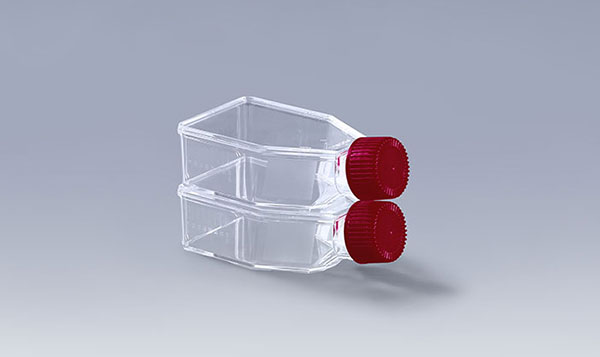
Recommended Medium Volumes for Cell Culture Flasks
2). Stem Cells — Highly Sensitive to Surface and Environment
Stem cells demand controlled microenvironments, making the uniformity and consistency of flasks particularly important.
Mesenchymal stem cells (MSC)
hMSC
UC-MSC
AD-MSC
Pluripotent stem cells
iPSC
ESC
Why suitable:
They grow adherently, require large surface areas, and rely on stable conditions for expansion and differentiation.
3). CHO Cells (Early-Phase Use)
Although CHO cells are suspension-adapted during production, they are often adherent in early development:
CHO-K1 (adherent)
CHO-DG44 (early adherent stage)
CHO-S (may attach during initial adaptation)
Why suitable:
Flasks support stable clone selection, transfection evaluation, and early process development.
4). Primary Cells
Primary cells are fragile, slow-growing, and require stable environments.
Common primary cells include:
Human primary fibroblasts
Primary hepatocytes
Primary lung epithelial cells
PBMC-derived adherent subtypes
Why suitable:
Flasks minimize shear stress and provide consistent surface properties, helping maintain natural phenotypes.
5). Differentiated Cells Derived from Stem Cells
Such as:
Neurons
Cardiomyocytes
Hepatocyte-like cells
Why suitable:
Most remain adherent and are highly sensitive to environmental fluctuations.
3. Why These Cell Types Work Well in Cell Culture Flask
TC-treated surfaces enhance cell attachment and spreading
Closed-system design reduces contamination
Multiple sizes support seed expansion workflows
Transparent, angled surfaces improve cell observation
Suitable for long-term or low-shear cultures
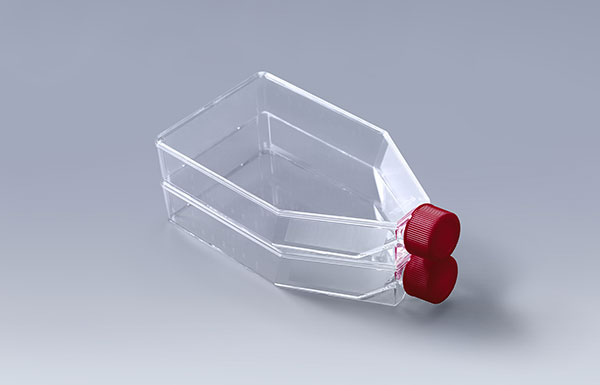
Vented Caps in Cell Culture Flasks
4. Typical Applications of Cell Culture Flask
Seed train expansion for cell banks
Monoclonal selection and stable cell line development
Transfection and expression testing
MSC expansion and differentiation
Viral vector preparation (AAV, LV, ADV)
Vaccine seed batch generation
Routine passaging and research experiments
5. Summary
Cell culture flask provide consistent, controlled environments that support robust growth of a wide range of adherent cells—from HEK293 and CHO (early stage) to Vero, MSCs, and primary cells. Their versatility, closed design, and scalable surface area options make them indispensable for both research laboratories and early-stage bioprocess development.
As foundational tools in cell biology, cell culture flask enable reliable cell expansion, phenotype maintenance, and upstream preparation for advanced therapeutic applications, including vaccines, viral vectors, and regenerative medicine workflows.
For laboratories, biopharmaceutical teams, and distributors evaluating sterile cell culture flasks, FDCELL supports product samples, bulk supply, OEM packaging, and documentation support.