BHK-21 cells are widely used in virology, vaccine research, recombinant protein studies, and other biological applications. For adherent BHK-21 culture, T-flasks provide a practical format for cell recovery, routine expansion, process development, and preparation before moving to larger culture systems.
A reliable expansion process depends not only on flask size, but also on maintaining suitable cell condition from one passage to the next.

cell culture flask
Why BHK-21 Cells Are Used in Cell Expansion
BHK-21 (Baby Hamster Kidney-21) is an established mammalian cell line that can be adapted to different research and bioprocess applications.
During early-stage expansion, researchers often need a culture format that allows easy observation of cell morphology, attachment, confluence, and contamination.
T25, T75, T175, and T225 flasks provide progressively larger growth areas, making them useful for building cell numbers before scale-up.
A typical adherent expansion sequence may progress from:
Cell Recovery → T25 → T75 → T175/T225 → Multilayer Culture
The actual sequence should be determined by the required cell quantity and the established culture process.
Start with Healthy BHK-21 Cells
The condition of the starting culture can influence every subsequent expansion step.
After cell recovery or passage, attention should be given to:
Cell viability
Attachment behavior
Cell morphology
Growth rate
Confluence
Signs of contamination or abnormal growth
Rather than increasing vessel size as quickly as possible, each stage should provide a healthy cell population capable of supporting the next expansion step.
Maintain Consistent Seeding Conditions
When moving BHK-21 cells between different T-flask sizes, the total number of inoculated cells should be considered in relation to the available growth area.
For example, a T225 flask provides three times the nominal growth area of a T75 flask. Simply transferring the same number of cells into both vessels would therefore create very different starting conditions.
Consistent inoculation practices help improve comparability between passages and make it easier to evaluate growth performance during scale-up.
After seeding, the cell suspension should also be distributed evenly across the growth surface. Excessive movement or uneven liquid coverage may contribute to irregular cell distribution.
Monitor Attachment and Confluence
For adherent BHK-21 culture, microscopic observation remains an important part of routine process monitoring.
During expansion, operators can evaluate whether cells:
Attach uniformly
Maintain expected morphology
Spread across the growth surface
Reach the desired confluence within the expected culture period
Uneven attachment or localized areas with low cell density should be investigated before the culture is expanded further.
Possible factors may include inoculation technique, cell condition, liquid distribution, culture surface consistency, or handling conditions.
Plan Harvesting Before Scale-Up
Cell harvesting is another important transition point in BHK-21 expansion.
The dissociation procedure should allow sufficient cell recovery while avoiding unnecessary exposure to conditions that may affect cell viability.
A consistent harvesting workflow generally considers:
Timing of harvest
Washing procedure
Dissociation reagent contact
Cell detachment
Neutralization
Viable cell recovery
Once cells are harvested, viable cell concentration can be used to determine the inoculum required for the next culture stage.
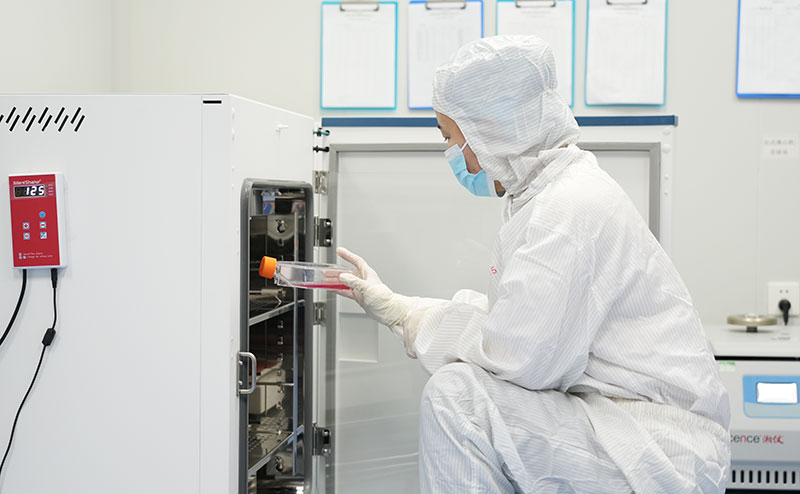
quality control and certificates
Moving from T-Flasks to Larger Culture Formats
As the required BHK-21 cell quantity increases, using a large number of individual flasks may become inefficient.
This is often the point at which laboratories evaluate larger growth-area systems such as multilayer culture vessels.
Before making this transition, it is useful to establish consistent performance in smaller formats, including:
Inoculation strategy
Growth characteristics
Medium requirements
Passage timing
Harvest efficiency
A well-characterized T-flask process can therefore serve as an important development step before larger-scale adherent cell culture.
Consistency Matters During BHK-21 Expansion
Successful BHK-21 expansion is not simply about increasing culture surface area. Each passage should maintain suitable cell condition while producing enough viable cells for the next stage.
T-flasks offer a flexible way to develop and observe this process before scale-up. Consistent growth surfaces, appropriate flask sizes, controlled handling, and documented passage conditions can all contribute to a more reproducible expansion workflow.
FDCELL provides a T25–T225 T-flask range with multiple surface and cap configurations for adherent cell culture, laboratory research, and cell expansion applications.










