Organoid research has become one of the most exciting fields in modern life science and biomedical studies. From cancer modeling to regenerative medicine, organoids provide researchers with more physiologically relevant models compared to traditional 2D cell cultures. As organoid technology continues to expand, selecting reliable laboratory consumables becomes increasingly important. Among them, the Cell Culture Flask plays a foundational role in supporting organoid establishment, expansion, maintenance, and downstream analysis.

What Are Organoids?
Organoids are three-dimensional (3D) cellular structures derived from stem cells or primary tissues that mimic the architecture and biological functions of real organs. They are widely used in:
Cancer research
Drug screening
Personalized medicine
Toxicology studies
Stem cell biology
Infectious disease research
Regenerative medicine
Compared with conventional monolayer cell culture, organoids better reproduce tissue heterogeneity, cell-to-cell interactions, and in vivo microenvironments.
Why Cell Culture Flask Is Important in Organoid Research
Although organoids are commonly cultured in extracellular matrices and specialized plates, the Cell Culture Flask remains essential throughout the workflow. Researchers rely on cell culture flasks for upstream cell expansion, stem cell maintenance, media preparation, and organoid precursor cultivation.
A high-quality Cell Culture Flask ensures:
Stable cell attachment
Uniform surface treatment
High optical clarity
Sterility assurance
Reliable gas exchange
Consistent experimental performance
These factors directly influence organoid viability and reproducibility.
Applications of Cell Culture Flask in Organoid Research
1. Stem Cell Expansion Before Organoid Formation
Organoid generation typically begins with pluripotent stem cells, adult stem cells, or primary cells. Before embedding cells into 3D matrices, researchers often expand them in a Cell Culture Flask to obtain sufficient cell numbers.
Treated cell culture flasks with optimized surface properties help maintain:
Cell viability
Stemness characteristics
Consistent morphology
High proliferation efficiency
For sensitive stem cell lines, flask surface uniformity is especially critical.
2. Cancer Organoid Development
Cancer organoids are increasingly used to study tumor biology and evaluate anti-cancer therapies. Tumor cells are commonly isolated and expanded in Cell Culture Flask systems before organoid establishment.
Applications include:
Patient-derived tumor organoids (PDOs)
Chemotherapy sensitivity testing
Precision oncology research
Biomarker discovery
High-quality cell culture flasks help reduce contamination risks and support stable tumor cell growth.
3. Gastrointestinal Organoid Research
Intestinal and gastric organoids require healthy epithelial stem cells during the initial expansion stage. Researchers often culture intestinal crypt cells in Cell Culture Flask products before transferring them into 3D culture systems.
Cell culture flask applications in GI organoid research include:
Intestinal stem cell proliferation
Epithelial differentiation studies
Host-microbiome interaction research
Nutrient absorption modeling
Reliable flask performance improves culture consistency across experiments.
4. Liver Organoid Studies
Liver organoids are widely used in hepatotoxicity evaluation and drug metabolism research. Hepatic progenitor cells and induced pluripotent stem cells (iPSCs) are frequently expanded in Cell Culture Flask systems before organoid induction.
Researchers use cell culture flasks for:
Hepatocyte expansion
Liver disease modeling
Drug-induced liver injury studies
Viral hepatitis research
High transparency flasks also facilitate routine microscopic observation.
5. Brain Organoid and Neuroscience Applications
Brain organoids require highly controlled cell culture conditions. Neural stem cells are often maintained and expanded in Cell Culture Flask products before differentiation.
Applications include:
Neurodevelopmental disorder research
Alzheimer’s disease studies
Parkinson’s disease modeling
Neurotoxicity testing
Brain tissue engineering
Consistent TC-treated surfaces support reliable neural cell attachment and growth.
Key Features Researchers Look for in a Cell Culture Flask
When selecting a Cell Culture Flask for organoid research, laboratories typically evaluate the following factors:
Surface Treatment Consistency
TC-treated surfaces improve cell adhesion and growth consistency, especially for adherent stem cells and primary cells.
Sterility Assurance
Organoid culture experiments are highly sensitive to contamination. Sterile manufacturing environments and rigorous quality control are essential.
High Optical Clarity
Clear flask walls support easy microscopic observation and monitoring of cell morphology.
Leak-Proof Sealing
Reliable cap sealing helps prevent contamination and media leakage during incubation and transportation.
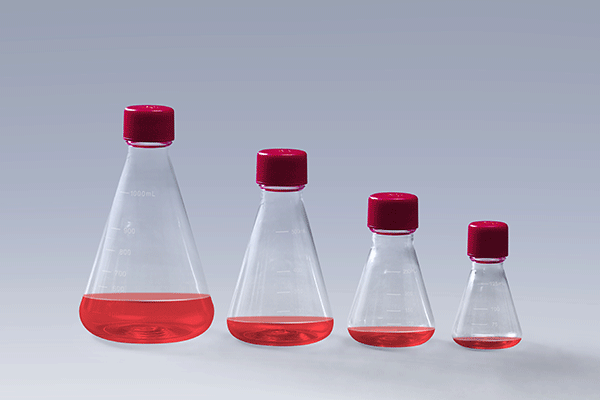
Multiple Size Options
Different research stages require different flask sizes, including:
Scalable options improve workflow flexibility.
Advantages of Using High-Quality Cell Culture Flask Products
Premium Cell Culture Flask products offer several advantages for organoid laboratories:
Improved reproducibility
Reduced contamination risk
Better cell attachment performance
Stable cell proliferation
Enhanced workflow efficiency
Compatibility with automated systems
As organoid research moves toward clinical and industrial applications, consumable consistency becomes increasingly important.
Future Trends in Organoid Research
The global organoid market continues to grow rapidly, driven by advances in personalized medicine and drug discovery. Emerging technologies such as organ-on-a-chip systems, AI-assisted drug screening, and large-scale bioprocessing will further increase demand for reliable cell culture consumables.
In the future, Cell Culture Flask products will continue supporting:
Large-scale stem cell expansion
GMP-compliant organoid manufacturing
Cell therapy development
High-throughput screening platforms
Manufacturers with strong quality systems and automated production capabilities will play a key role in supporting next-generation biomedical research.
Conclusion
Organoid technology is transforming biomedical science by providing more realistic and functional in vitro models. Throughout the organoid workflow, the Cell Culture Flask remains an indispensable laboratory consumable for cell expansion, maintenance, and preparation.
Choosing a high-quality Cell Culture Flask helps researchers improve reproducibility, maintain sterility, and support stable cell growth in demanding organoid applications. As organoid research continues to evolve, reliable cell culture consumables will remain essential for scientific innovation and translational medicine.










