Cell Factory systems and CellSTACK culture chambers are essentially the same type of product: multilayer culture vessels designed for large-scale adherent cell expansion.
The main difference is terminology. “CellSTACK” is a branded product name, while “Cell Factory” is commonly used as a general industry term for multilayer cell culture systems. Both are widely used in vaccine manufacturing, viral vector production, biological research and other adherent cell culture applications.
Although they serve the same basic purpose, products from different suppliers may have small design and performance differences. Therefore, a Cell Factory system may be considered as an alternative to a CellSTACK culture chamber, but it should be evaluated before being introduced into an established process.
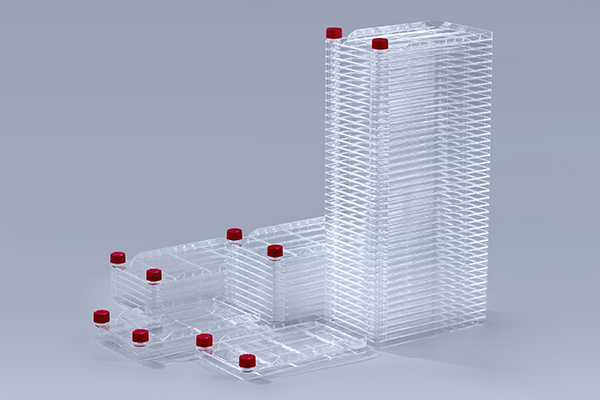
Multilayer Cell Factory
What Small Differences May Exist?
Cell Factory and CellSTACK products usually share a similar multilayer structure, but differences may be found in several areas.
Growth Area
Products with the same number of layers may have slightly different effective culture areas. This can affect total seeding cell numbers, medium requirements and expected cell yield.
Port and Cap Design
The position, diameter and structure of filling ports may vary between suppliers. These differences can influence filling, liquid distribution, harvesting and tubing connection.
Surface Treatment
Both products may be available with TC-treated surfaces, but surface treatment consistency and cell attachment performance should still be confirmed using the intended cell line.
Recommended Working Volume
The appropriate medium volume may differ slightly depending on chamber geometry and supplier recommendations.
Handling Method
The required filling angle, rotation sequence, resting time and harvesting procedure may not be exactly the same.
Closed-System Options
Tubing materials, connectors, filters and customized fluid paths may vary between manufacturers.
These differences are usually manageable, but they should not be ignored when transferring an existing process.
What Should Be Evaluated Before Changing Suppliers?
When qualifying a new Cell Factory supplier, users should focus on both product specifications and actual cell culture performance.
1. Product Specifications
Compare:
Layer configuration
Effective growth area
Vessel and cap materials
Port dimensions
Vent membrane design
Working volume
Sterilization method
Shelf life and packaging
2. Cell Culture Performance
A side-by-side culture test should evaluate:
Cell attachment
Cell morphology
Growth rate
Time to confluence
Cell viability
Final cell yield
Harvest recovery
Testing should be performed with the actual cell line, medium and culture procedure used in production.
3. Filling and Harvesting Workflow
Confirm whether the new Cell Factory is compatible with the existing:
Media transfer process
Tubing assemblies
Pumps
Connectors
Harvest containers
Automated handling equipment
Minor procedural adjustments may be required.
4. Quality Documentation
For biopharmaceutical and vaccine manufacturing, the supplier should be able to provide relevant quality information, such as:
Material specifications
Sterilization information
Batch traceability
Inspection records
Certificate of analysis or conformity
Change notification procedures
Quality management certifications
5. Batch-to-Batch Consistency
A suitable alternative should provide stable product dimensions, surface treatment and culture performance across different batches.
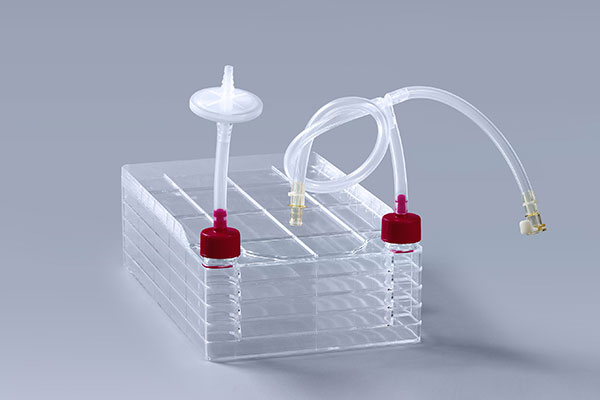
Closed System Cell Factory with Tube
Can a Cell Factory Directly Replace a CellSTACK?
In some applications, the transition may be relatively straightforward. In others, small adjustments to seeding density, medium volume, liquid distribution or handling steps may be necessary.
Therefore, the most accurate conclusion is:
A Cell Factory system can potentially serve as an alternative to a CellSTACK culture chamber, provided that the product is technically evaluated and the culture process is appropriately verified.
Products with the same number of layers should not automatically be considered fully interchangeable without testing.
FDCell Cell Factory Systems
FDCell provides multilayer Cell Factory systems in 1-layer, 2-layer, 5-layer, 10-layer and 40-layer configurations for scalable adherent cell culture.
Available options include:
TC-treated culture surfaces
Vented or sealed caps
Closed-system tubing assemblies
Sterile, ready-to-use formats
Batch traceability
Customized connection solutions
For customers evaluating an alternative multilayer culture vessel supplier, FDCell can provide product specifications, quality documentation and samples to support compatibility testing and supplier qualification.
Conclusion
Cell Factory systems and CellSTACK culture chambers are fundamentally the same category of multilayer cell culture product. The main differences lie in brand terminology and certain details of vessel design, surface treatment, working volume and fluid handling.
When changing suppliers, manufacturers should compare specifications, conduct side-by-side cell culture testing and review the supplier’s quality documentation.
With appropriate evaluation and process verification, a Cell Factory system may provide a practical alternative for large-scale adherent cell culture applications.
Corning and CellSTACK are trademarks of Corning Incorporated. References to third-party trademarks are used only for product identification and technical discussion.










