1. Introduction
Chinese Hamster Ovary (CHO) cells are the workhorse of modern biopharmaceutical manufacturing, supporting the production of monoclonal antibodies, recombinant proteins, and other therapeutic biologics. Before transitioning into bioreactors and large-scale platforms, early-stage CHO process development relies heavily on tissue culture flasks(cell culture flask). These flasks provide a simple, controlled, and reproducible environment for cell banking, clone selection, media screening, and preliminary productivity evaluation.
In early development, decisions made at the flask stage—such as media composition, feeding strategies, and clone stability—have significant impact on the performance of downstream bioreactor processes.

2. Establishing Stable CHO Cell Banks
Tissue culture flasks are the starting point for developing a reliable CHO master and working cell bank. Their sterile, easy-to-handle format enables:
Expansion of single-cell clones derived from limiting dilution or automated cell-picking
Early characterization of growth rate, doubling time, and morphology
Confirmation of genetic stability before scale-up
The use of vented cap flasks ensures consistent gas exchange during exponential growth, supporting optimal cell metabolism and viability.
3. Optimizing Media and Feeding Strategies
Media selection is a critical factor in CHO performance. Tissue culture flasks provide a low-risk, low-cost platform for:
Comparing basal media formulas
Testing supplements, feeds, and additives
Evaluating nutrient consumption and metabolite accumulation
Conducting small-scale DoE (Design of Experiments) studies
By using multiple cell culture flasks in parallel, researchers can screen dozens of conditions efficiently before committing to shake flasks or bioreactors.
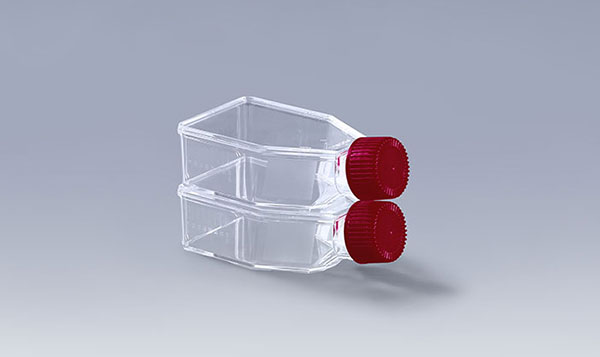
Recommended Medium Volumes for Cell Culture Flasks
4. Early Productivity and Quality Assessments
Early identification of high-producing clones is essential for minimizing cost and development time. Tissue culture flasks are commonly used for:
Quantifying early recombinant protein titers
Monitoring productivity changes over passages
Assessing key quality attributes such as glycosylation patterns
Even though production in flasks is not fully representative of bioreactor conditions, the results often correlate strongly enough to rank and prioritize clones.
5. Process Transfer and Scale-Up Considerations
Findings from flask-based optimization directly inform the parameters used during scale-up:
pH and CO₂control:Defines bioreactor CO₂setpoints
Feeding intervals:Determines perfusion or fed-batch strategies
Growth kinetics:Guides seeding densities
Media formulation:Impacts long-term culture stability
Establishing a solid foundation within tissue culture flasks reduces process variability and improves predictability when transitioning to shake flasks, wave bags, or stirred-tank bioreactors.
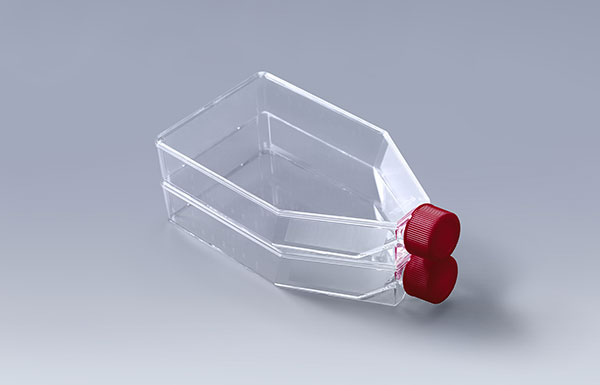
Vented Caps in Cell Culture Flasks
6. Advantages of Using Tissue Culture Flasks in CHO Development
High reproducibility: Standardized surface treatment supports consistent adherence and growth.
Low cost: Ideal for early evaluation without consuming significant resources.
Easy parallelization: Dozens of clones and conditions can be tested at once.
Minimal contamination risk: Closed design and controlled handling procedures enhance sterility.
Clear observation: Transparent polystyrene material allows easy monitoring of morphology and confluence.
These advantages make tissue culture flasks an essential tool for early CHO development workflows.
7. Conclusion
Tissue culture flasks play a foundational role in early CHO process development, enabling reliable expansion, clone screening, media optimization, and initial productivity assessments. Although larger-scale systems eventually take over for process intensification and commercial manufacturing, the decisions and data generated at the flask stage shape the efficiency, scalability, and quality of downstream processes.
As biopharmaceutical pipelines continue expanding, the value of tissue culture flasks in early-stage CHO development remains indispensable.










