For laboratories, distributors, biopharmaceutical companies, and research institutions, purchasing factory-direct cell culture flasks can offer advantages in cost control, supply stability, OEM packaging, and long-term cooperation. However, buyers should not compare products by price alone. A reliable cell culture flask manufacturer should be able to provide stable product quality, clear specifications, sterile packaging, batch traceability, and documentation support.
Before placing a bulk order, buyers need to evaluate whether the supplier can meet actual cell culture requirements, not just basic product appearance. The following points can help buyers compare cell culture flasks more effectively before ordering.

cell culture flask
1. Complete Size Range
A practical cell culture flask range should cover the common formats used in research and process development, such as T25, T75, T175, and T225 flasks. Different sizes support different stages of adherent or suspension cell culture.
T25 flasks are often used for cell recovery, small-scale culture, and early passage work. T75 flasks are widely used for routine cell maintenance and expansion. T175 and T225 flasks are more suitable for larger adherent cell expansion when higher cell yield is required.
For buyers managing multiple customers or applications, choosing a supplier with a complete cell culture flask range can simplify procurement and reduce supplier management costs.
2. TC-Treated and Non-Treated Options
Surface treatment is one of the most important factors for cell culture performance. TC-treated cell culture flasks are designed to support adherent cell attachment, spreading, and growth. Non-treated flasks are more suitable for suspension cells or applications where cell attachment is not required.
Before ordering, buyers should confirm whether the supplier offers both TC-treated and non-treated options. For adherent cells such as Vero, MDCK, HEK293 adherent cells, BHK-21, CHO adherent cells, MSCs, or primary cells, surface consistency should be evaluated under actual culture conditions.
A qualified manufacturer should be able to explain its surface treatment control and provide product information to support customer evaluation.
3. Cap Type and Gas Exchange
Cell culture flasks are commonly available with vented caps or plug seal caps. A vented cap supports gas exchange in CO₂ incubators and is convenient for routine culture. A plug seal cap may be used in certain closed or controlled conditions, depending on the culture protocol.
Buyers should compare cap design, sealing performance, filter quality, handling convenience, and packaging integrity. For bulk purchasing, cap consistency is important because poor sealing or unstable gas exchange can affect pH, cell growth, and culture reproducibility.
4. Sterility and Contamination Control
Sterility is a basic requirement for cell culture consumables. Buyers should confirm the sterilization method, sterility assurance information, packaging type, and storage requirements before ordering sterile cell culture flasks.
For laboratories and biopharmaceutical users, it is also important to ask whether the products are DNase/RNase-free, non-pyrogenic, and manufactured in a controlled environment. The supplier should provide relevant quality documents according to customer requirements.
When evaluating factory-direct suppliers, buyers should not only ask whether the product is sterile, but also how sterility is controlled, packaged, documented, and traced.
5. Material and Optical Clarity
Most cell culture flasks are made from polystyrene because it offers good optical clarity and is suitable for microscopic observation. Buyers should check whether the material is suitable for cell culture applications and whether the flask provides clear observation across the growth surface.
Good optical clarity helps users monitor cell morphology, confluence, contamination, and growth uniformity. For adherent cell culture, flask flatness and surface consistency are also important because they influence liquid distribution and cell settlement.
6. Batch Consistency and Traceability
For bulk orders, batch-to-batch consistency is essential. Buyers should ask whether the supplier can provide lot numbers, production records, quality inspection data, and batch traceability. This is especially important for distributors, biopharmaceutical companies, vaccine research teams, and customers who need repeat purchasing.
A reliable cell culture flask manufacturer should have controlled processes for raw material inspection, production, surface treatment, sterilization, packaging, and final release. Lot traceability helps users investigate quality issues and supports long-term supplier qualification.
7. Documentation Support
Documentation is one of the key differences between a simple low-cost product and a reliable factory-direct supply solution. Before ordering, buyers should ask what documents can be provided.
Common documents may include:
Product specification sheet
Certificate of analysis
Sterility information
DNase/RNase-free statement
Endotoxin-related information
Material information
Lot traceability details
Packaging and labeling information
For distributors and OEM customers, documentation also helps support local registration, customer approval, and product promotion.
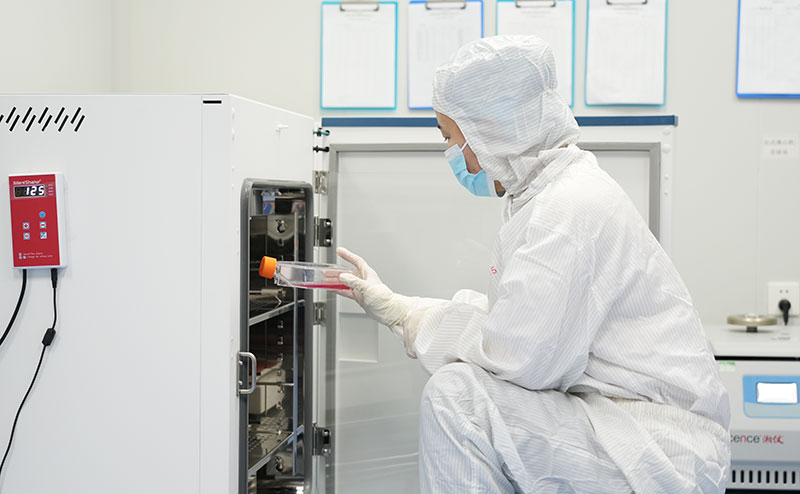
quality control and certificates
8. OEM and Private Label Capability
Many distributors and brand owners choose factory-direct suppliers because they need OEM or private label support. In this case, buyers should compare not only the flask itself, but also packaging flexibility, label design, carton information, barcode options, minimum order quantity, and export experience.
A good OEM supplier should be able to support customized labels, packaging, cartons, and product documentation while maintaining stable product quality. For long-term cooperation, communication efficiency and production scheduling are also important.
9. Sample Testing Before Bulk Orders
Before switching suppliers or placing a large order, buyers should request samples and test them under actual culture conditions. A basic evaluation may include cell attachment, spreading, morphology, confluence rate, viability, final cell yield, and harvest efficiency.
If possible, samples from different lots should be compared. This helps buyers confirm whether the cell culture flasks can provide stable performance across batches. For sensitive cell lines or regulated workflows, supplier qualification should be based on actual test results, not only product claims.
10. Supply Stability and Lead Time
For laboratories and distributors, stable supply can be just as important as product performance. Buyers should ask about production capacity, standard stock, lead time, export packaging, shipping options, and support for repeat orders.
Factory-direct purchasing can reduce intermediate costs, but only when the manufacturer can provide consistent production, clear communication, and reliable delivery. For recurring orders, buyers should also discuss annual volume, forecast planning, and batch reservation options.
Choosing the Right Factory-Direct Cell Culture Flask Supplier
A suitable factory-direct supplier should offer more than a competitive price. Buyers should compare product range, TC-treated surface performance, sterility, material quality, documentation, batch traceability, OEM capability, and long-term supply stability.
FDCELL supplies sterile cell culture flasks in T25, T75, T175, and T225 sizes, with TC-treated and non-treated surfaces available. The flasks are designed for laboratories, research institutions, biopharmaceutical companies, vaccine-related applications, distributors, and OEM/private label projects.
With controlled production, sterilization, batch traceability, and flexible packaging support, FDCELL helps customers source reliable factory-direct cell culture flasks for routine culture, adherent cell expansion, process development, and bulk supply.
For buyers planning a new order, sample testing under actual culture conditions is recommended before large-volume purchasing.










