Early-stage CHO process development typically begins in microplates—96-well or 24-well formats used for clone isolation, viability assessment, and preliminary productivity ranking. However, data obtained from plates often cannot fully predict cellular behavior at larger scales. The transition from microplate cultures to cell culture flask represents a critical step for verifying clone stability, metabolic patterns, and overall scalability.
A well-designed plate-to-flask workflow ensures that the selected clones are not only high-producing but also robust enough for subsequent shake flask and bioreactor development.

1.Why the Plate Stage Is Not Enough
Microplates are valuable for screening large clone libraries, but they present limitations:
Restricted gas exchange can distort pH and metabolic profiles
Small volume exaggerates nutrient depletion or waste accumulation
Adherence and morphology can be harder to evaluate
Automated systems may generate false positives in early productivity readings
Therefore, results obtained in microplates serve as a first filter, but deeper validation must occur in a controlled, scalable environment—namely, the cell culture flask.
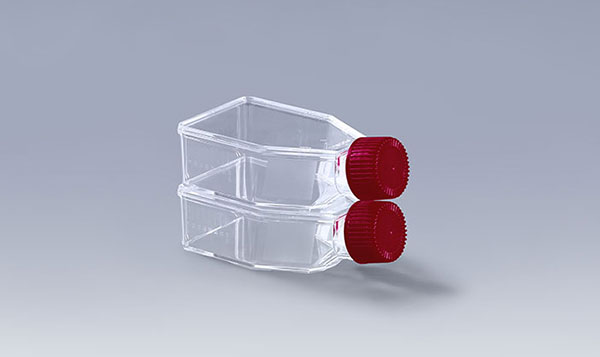
Recommended Medium Volumes for Cell Culture Flasks
2.The Role of Cell Culture Flasks in Early CHO Expansion
Cell culture flask—typically made of TC-treated PS—provide a consistent surface and microenvironment for CHO growth. They are crucial for:
(1) Clone Expansion and Recovery
Gradual volume increase from plates to flasks prevents growth shock
Stable gas exchange supports consistent exponential growth
Clear observation window allows morphology and aggregation monitoring
(2) Assessing Genetic and Phenotypic Stability
Productivity trends across passages are more reliable in flasks
Early drift or loss of expression becomes visible
CHO morphology (vacuolation, granularity) is easier to evaluate
(3) Establishing Growth Kinetics
Doubling time, lag phase, and growth curve parameters
Seeding density optimization
Early evaluation of viable cell density ceilings
These metrics are vital for downstream scale-up design.
3.Media and Feeding Strategy Verification
Media that performs well in microplates may behave differently in flasks due to differences in oxygen availability, CO₂ regulation, and nutrient gradients. Cell culture flasks allow developers to:
Compare basal media formulations
Test feed strategies and nutrient supplementation
Verify metabolic stability (lactate, ammonia accumulation)
Screen additives at realistic culture volumes
By running multiple flasks in parallel, researchers can perform mini-DoE studies efficiently and cost-effectively.
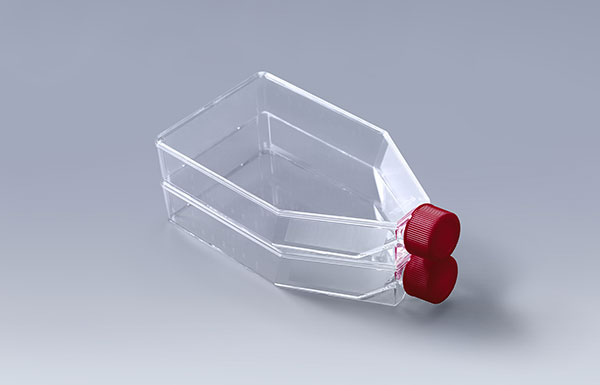
Vented Caps in Cell Culture Flasks
4.Predicting Bioreactor Behavior Through Flask-Level Validation
Although cell culture flasks are not identical to bioreactor environments, the data obtained at this stage strongly correlates with later performance.
Growth kinetics:Defines seeding densities for shake flasks and reactors
Nutrient consumption:Guides feed composition and schedule
Stability across passages:Predicts long-term productivity
Early product quality : Helps identify clones likely to maintain consistent glycosylation
By validating these parameters in flasks, process developers reduce risk during scale-up and minimize costly failures at larger volumes.
5.Advantages of Using Cell Culture Flask in CHO Workflows
Reproducible growth environment with uniform TC-treated surfaces
Low contamination risk due to closed, sterile design
Straightforward scalability from T25 → T75 → T175 → T225
Cost-effective parallel experimentation
Improved morphological assessment compared with microplates
Cell culture flask thus act as the essential bridge between early clone screening and mid-scale process development.
6.Building a Robust Plate-to-Flask Workflow
A strong workflow typically includes:
1. Microplate screening → Identify top 5–20% candidate clones
2. Transfer to T25 cell culture flask → Confirm recovery and stability
3. Scale to T75/T175 → Assess productivity, metabolic behavior
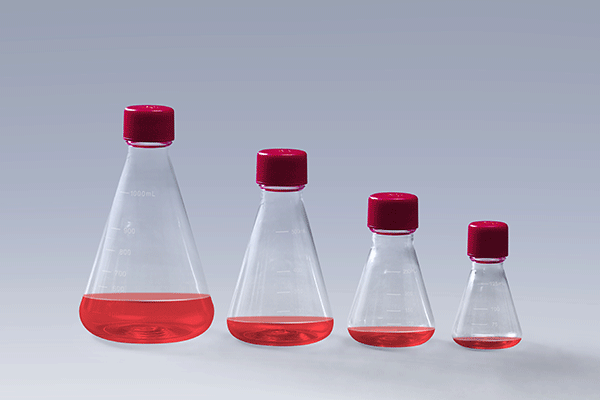
4. Small-scale shake flask → Validate performance under dynamic conditions
5. Bioreactor entry → Only the most stable, consistent clones proceed
This ensures that only robust and scalable clones move forward in the pipeline.
7.Conclusion
The transition from plate to flask is a crucial step in CHO early development. While microplates enable high-throughput selection, cell culture flasks provide the controlled, biologically relevant environment necessary to confirm clone robustness, metabolic stability, and scalability.
By integrating flasks effectively into the CHO workflow, biopharmaceutical developers can accelerate process development, improve predictability, and significantly reduce downstream risks.










