In adherent cell culture, environmental stability is critical for reproducible results. While parameters such as temperature, CO₂ concentration, and medium composition are tightly controlled in incubators, the design of the cell culture flask itself plays an important role in maintaining microenvironment consistency.
Two often-overlooked factors—gas exchange efficiency and edge effects—can significantly influence cell behavior within a cell flask. Understanding these factors helps improve experimental repeatability and culture performance.
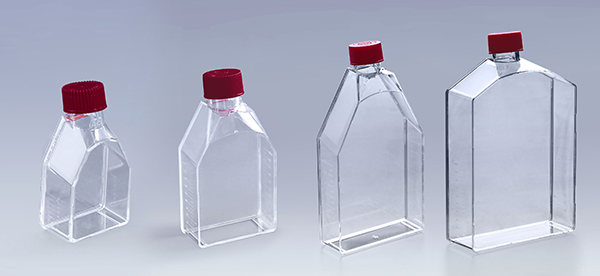
The Importance of Gas Exchange in Adherent Cell Culture
Cells require a balanced exchange of oxygen (O₂) and carbon dioxide (CO₂) to maintain metabolic activity and stable pH conditions. In a cell culture flask, gas exchange primarily occurs through:
The flask cap (vented or filtered design)
The headspace above the culture medium
Diffusion across the medium surface
If gas exchange is insufficient, several issues may arise:
pH fluctuations due to CO₂ imbalance
Reduced oxygen availability in high-density cultures
Slower proliferation or altered cell metabolism
The geometry and cap design of a cell flask influence how effectively gases diffuse between the incubator atmosphere and the culture medium.
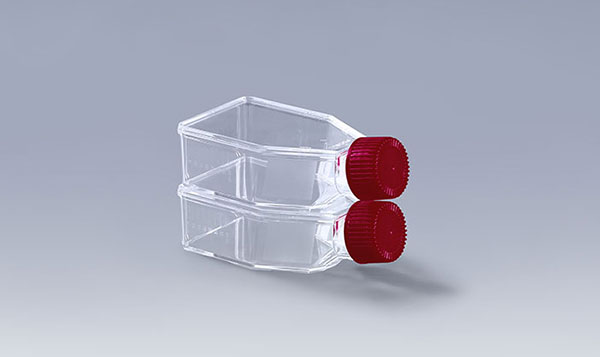
T25 TC-treated Cell Culture Flask
Headspace Design and Oxygen Distribution
The internal headspace volume of a cell culture flask affects oxygen availability and carbon dioxide equilibrium. A well-designed flask maintains adequate space above the medium surface to allow consistent gas diffusion.
Poor headspace design may lead to:
Uneven oxygen distribution across the growth surface
Increased evaporation during extended incubation
Localized microenvironment differences
Maintaining stable gas exchange conditions is especially important in long-term culture or when working with metabolically active cell lines.
Understanding Edge Effects in Cell Culture Flask
Edge effects refer to variations in cell behavior observed near the periphery of the growth surface compared to the center region of the flask. These differences can be influenced by:
Temperature gradients
Evaporation patterns
Slight variations in medium depth
Gas diffusion differences along flask edges
In some cases, cells near the edges of a cell flask may exhibit altered morphology, growth rates, or confluency compared to cells in the central area.
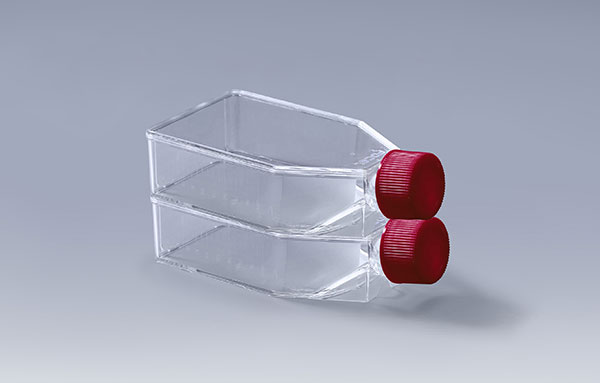
T75 TC-treated Cell Culture Flask
How Geometry Influences Edge Effects
The internal structure of a cell culture flask—including corner radius, bottom flatness, and wall angle—affects how medium distributes across the surface.
If the geometry allows slight pooling or uneven liquid depth, it may contribute to:
Variations in nutrient concentration
Local pH differences
Non-uniform cell density
Carefully engineered cell flasks minimize abrupt transitions at corners and promote uniform medium coverage, helping reduce edge-related variability.
Implications for Experimental Repeatability
Gas exchange limitations and edge effects can introduce subtle but significant variability in experiments involving:
Transient transfection
Drug response assays
Viral vector production
Long-term cell expansion
Even when protocols remain unchanged, differences in cell culture flask design can affect reproducibility across experiments or between suppliers.
Selecting a well-designed cell flask with consistent geometry and validated gas exchange performance helps maintain stable culture conditions and improves confidence in experimental data.
Conclusion
Gas exchange efficiency and edge effects are critical but often underestimated factors in adherent cell culture. The design and structure of a cell culture flask directly influence oxygen transfer, CO₂ equilibrium, medium distribution, and microenvironment stability.
By understanding how these physical parameters affect cell behavior, researchers can make more informed decisions when selecting a cell flask, ultimately supporting improved experimental consistency and reproducibility.










