HEK293 cells are one of the most widely used mammalian cell lines for transient expression, viral vector production, and functional studies. While transfection protocols and reagents are often carefully optimized, one critical variable is frequently overlooked: the surface uniformity of the Cell Culture Flask used for adherent growth.
In HEK293 workflows, small inconsistencies at the flask level can translate into large variations in transfection efficiency, protein yield, and experimental reproducibility.

HEK293 Adherent Growth Is Highly Surface-Dependent
Unlike suspension-adapted systems, adherent HEK293 cultures rely on stable and uniform surface attachment. Cell spreading, cytoskeletal organization, and cell cycle synchronization are all influenced by how evenly cells interact with the culture surface.
When surface properties vary across a Cell Flask—either within a single flask or between production batches—cells experience uneven adhesion and growth conditions. This heterogeneity often leads to:
Variable cell density at the time of transfection
Uneven cell morphology across the growth area
Inconsistent cell cycle states within the same culture
All of these factors directly affect transfection outcomes.
Why Flask Surface Uniformity Matters for Transfection Consistency
Transient transfection efficiency in HEK293 cells is strongly linked to cell health and attachment quality at the moment of DNA or RNA delivery.
A Cell Culture Flask with uniform surface treatment ensures:
Consistent cell attachment across the entire growth area
Predictable cell confluence at transfection time
Reduced edge effects and local overgrowth
In contrast, non-uniform surface treatment can result in patchy cell layers, making transfection efficiency highly dependent on where cells are located within the flask. This variability often appears as batch-to-batch fluctuations, even when the same protocol is followed.
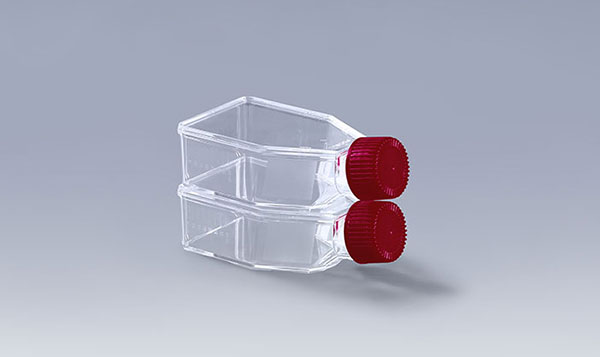
T25 TC-treated Cell Culture Flask
TC-Treated Surfaces and Their Role in HEK293 Workflows
Most adherent HEK293 applications require TC-treated Cell Flasks to support reliable attachment. However, TC treatment alone is not enough—the uniformity and stability of that treatment are what truly matter.
Poorly controlled surface treatment processes may introduce:
Inconsistent hydrophilicity
Variable protein adsorption behavior
Differences in cell spreading and attachment strength
For HEK293 cells, which are commonly used for high-yield transient expression, these subtle differences can significantly influence transfection reproducibility and downstream productivity.
Hidden Risks of Inconsistent Cell Flasks in HEK293 Transfection
In early-stage research, surface variability may go unnoticed. But as HEK293 workflows scale up or move toward process development, inconsistent Cell Culture Flasks introduce hidden costs:
Repeated optimization experiments
Increased reagent and plasmid consumption
Delays in data generation or candidate screening
In viral vector or protein production workflows, these inconsistencies can directly affect yield, quality, and process timelines.
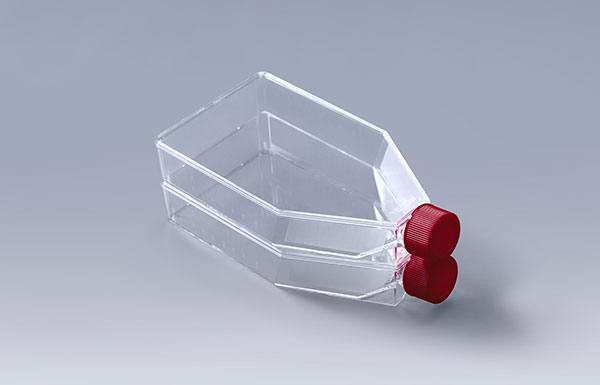
Choosing the Right Cell Culture Flask for Reliable HEK293 Results
When selecting a Cell Flask for HEK293 adherent growth and transfection, researchers and bioprocess teams should prioritize:
Uniform and reproducible surface treatment
Batch-to-batch consistency
Compatibility with standard transfection reagents
Clear quality control documentation
Rather than viewing Cell Culture Flasks as interchangeable consumables, treating them as critical process components can significantly improve experimental reliability.
Conclusion: Consistency Starts at the Flask Level
For HEK293 adherent cultures, transfection consistency does not depend solely on reagents or protocols. The uniformity of the Cell Culture Flask surface plays a foundational role in cell behavior and experimental outcomes.
By choosing Cell Flasks designed for consistent surface performance, researchers can reduce variability, improve reproducibility, and achieve more reliable transfection results across experiments and batches.










