Vero cells have been widely used as a cell substrate for vaccine research and manufacturing. As cell-based vaccine production becomes increasingly controlled and standardized, attention is not limited to virus yield or cell growth. Process-related impurities generated during manufacturing must also be understood and controlled.
One important group of these impurities is host cell proteins (HCPs).
A recent study published in Biotechnology and Bioengineering focused on platform-specific immunoassay development and orthogonal characterization for improved HCP control in Vero cell-derived vaccines.
The research highlights a broader manufacturing issue: when vaccines are produced using cell culture systems, understanding the relationship between the cell substrate, upstream process, purification and analytical control is essential for maintaining product quality.
What Are Host Cell Proteins?
Host cell proteins are proteins produced naturally by the cells used during biopharmaceutical manufacturing.
When Vero cells are used to support virus propagation, thousands of different cellular proteins may be present in the culture environment.
After the virus or target biological material is harvested, downstream purification processes are designed to remove process-related impurities, including HCPs.
However, complete removal of every host cell protein is difficult.
Residual HCPs therefore need to be appropriately monitored and controlled as part of the overall manufacturing and quality strategy.
This makes HCP analysis important not only for final product testing, but also for understanding how effectively the manufacturing process removes cell-derived impurities.
Why Vero Cell-Derived Vaccines Require HCP Control
Vero cells have a long history in vaccine development and are used as a production substrate for multiple viral vaccine platforms.
Their role is fundamentally upstream: the cells are expanded under controlled culture conditions and provide the biological environment required for virus propagation.
A simplified manufacturing pathway may look like:
Cell Bank → Cell Expansion → Virus Propagation → Harvest → Purification → HCP Control → Final Product
HCPs originate from the host cells, but the amount and profile ultimately observed in the manufacturing process can be influenced by multiple factors.
These include:
characteristics of the cell substrate;
cell density and viability;
culture conditions;
infection and harvest strategy;
cell disruption or lysis;
clarification;
downstream purification;
process consistency.
For this reason, HCP control should not be viewed as an isolated analytical test performed only at the end of manufacturing.
It is connected to the design and control of the entire production process.
Why Platform-Specific HCP Assays Matter
One challenge in HCP analysis is that no single generic assay necessarily provides equal coverage for every manufacturing platform.
Different host cells produce different protein profiles.
Even when the same cell type is used, differences in culture conditions and manufacturing processes may affect which proteins are present and at what levels.
This is why platform-specific HCP assays can be valuable.
An assay developed around the relevant host cell and manufacturing platform may provide better representation of the HCP population associated with that process.
The recent Vero-cell study reflects this approach by focusing specifically on improved HCP control for Vero cell-derived vaccine manufacturing.
Why Orthogonal Characterization Is Important
HCP analysis is complex because a single analytical method may not detect every protein equally well.
For this reason, manufacturers and researchers may use orthogonal analytical approaches to obtain a more complete understanding of HCP coverage and residual impurities.
Instead of relying exclusively on one measurement method, complementary techniques can help identify potential analytical gaps and improve characterization.
This becomes increasingly important as manufacturing processes mature.
For vaccine manufacturers, the objective is not simply to generate analytical data, but to understand whether the testing strategy is sufficiently representative of the actual process-related impurities that need to be controlled.
Upstream Cell Culture Can Influence Downstream Quality
Although HCP removal occurs primarily during downstream purification, upstream cell culture conditions can influence the impurity profile entering downstream processing.
Cell health is particularly relevant.
Excessive cell damage or lysis can release additional intracellular proteins into the culture medium, potentially increasing the impurity burden entering harvest and purification.
This creates an important connection between upstream and downstream manufacturing:
Controlled Cell Culture → Consistent Virus Production → Controlled Harvest → Effective Purification → Reliable Quality Control
Maintaining consistent cell culture conditions therefore supports more than cell growth alone.
A well-controlled upstream process can provide a more consistent starting point for subsequent purification and analytical control.
Scale-Up Adds Another Layer of Complexity
As vaccine manufacturing moves from development scale toward larger production volumes, process consistency becomes increasingly important.
Increasing the number of cells or expanding culture capacity can introduce changes in:
cell distribution;
nutrient availability;
gas exchange;
cell viability;
infection conditions;
harvest timing;
material transfer.
These variables can influence both production performance and the composition of the harvested material.
For this reason, scale-up strategies need to consider not only productivity, but also how upstream changes may affect downstream purification and quality attributes.
Scalable cell culture platforms and controlled process transfer can help manufacturers maintain more consistent operating conditions as production expands.
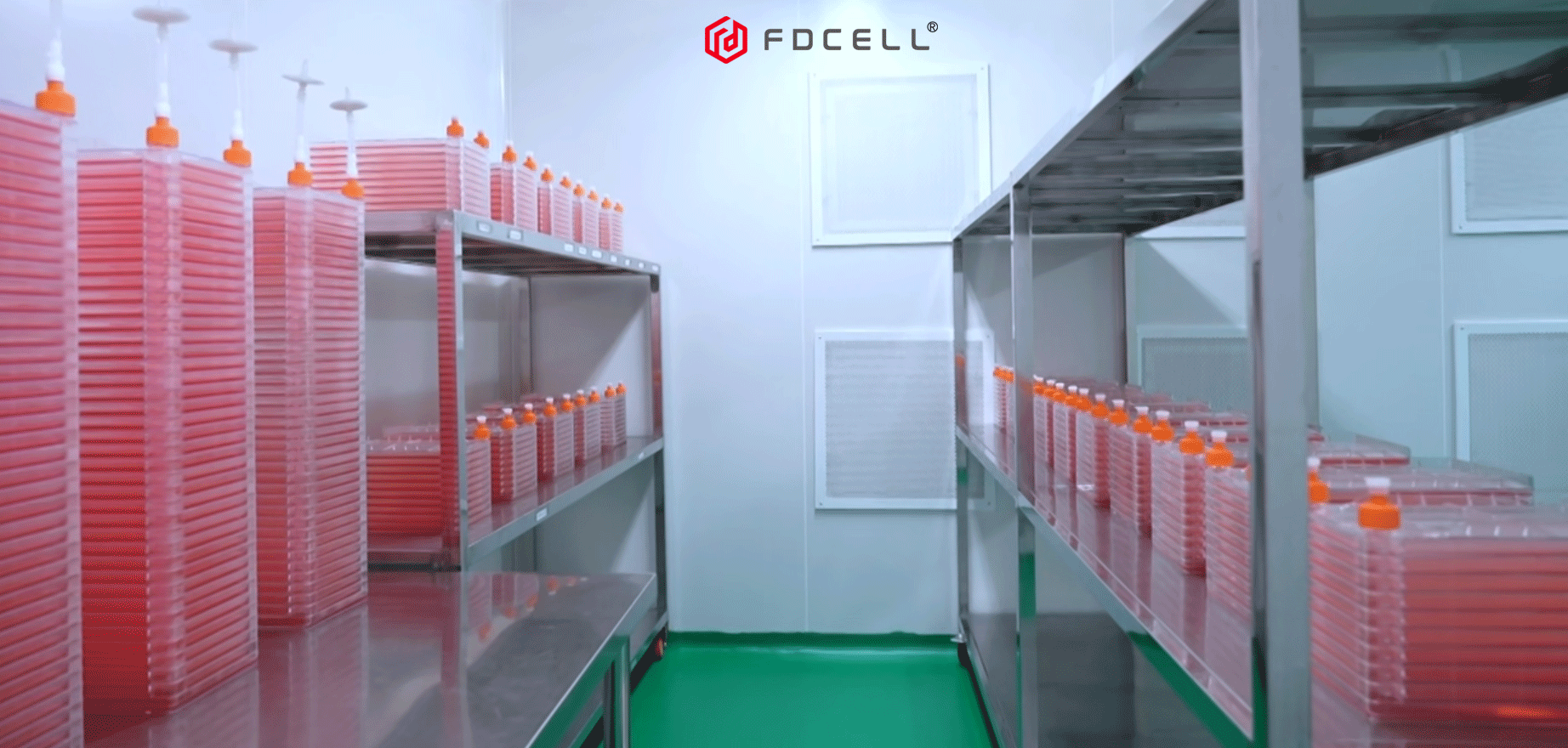
Advantages of Multi-Layer Cell Culture Systems in Vaccine Production
Closed Processing Can Support More Controlled Manufacturing
Material transfer is another important part of cell-based vaccine production.
Media, cells and harvest material may need to move between different stages of the manufacturing process.
Repeated open handling can increase operational complexity and contamination-control requirements.
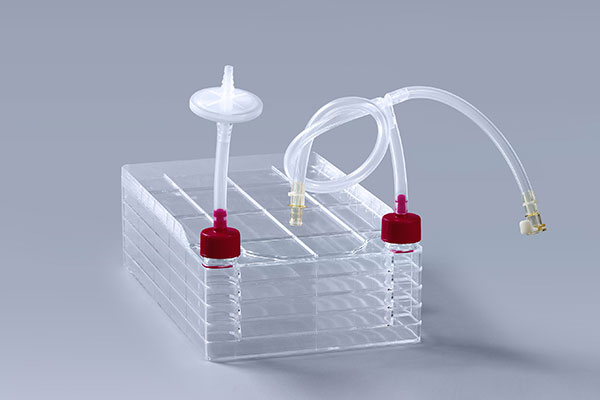
Single-use tubing assemblies, process containers and closed fluid-transfer strategies can help create more controlled connections between individual operations.
A more integrated workflow may follow:
Media Preparation → Cell Expansion → Virus Production → Closed Harvest → Downstream Processing
Closed processing does not directly determine HCP levels, but it can support a more controlled and standardized manufacturing environment.
That distinction is important: HCP control depends on the complete process, while closed processing helps improve operational control around that process.
From Cell Growth to Manufacturing Quality
Vaccine manufacturing increasingly requires manufacturers to look beyond individual process steps.
Cell expansion, virus propagation, harvest, purification and analytical testing are closely connected.
Changes made upstream may influence what downstream processes need to remove and what analytical methods need to detect.
The recent research into Vero cell-specific HCP analysis therefore illustrates a broader principle in modern vaccine manufacturing:
Product quality is built across the process, not tested only at the end.
For manufacturers using cell-based production platforms, this means maintaining control from the cell bank and cell culture stage through purification and final quality assessment.
As vaccine manufacturing becomes more scalable and standardized, understanding these connections will become increasingly important for achieving consistent production and reliable quality control.
Source: Biotechnology and Bioengineering, “Platform-Specific Immunoassay Development and Orthogonal Characterization for Improved Host Cell Protein Control in Vero Cell-Derived Vaccines,” 2026.










