In biopharmaceutical research and manufacturing, cell culture flasks are essential consumables for cell expansion, vaccine production, biologics development, and laboratory research. Choosing the right cell culture flask supplier is not only a purchasing decision but also a critical factor affecting cell growth performance, experimental consistency, and production reliability.
With increasing demands for quality, scalability, and regulatory compliance, biopharma companies typically evaluate multiple factors when selecting a reliable cell culture flask manufacturer.
This article explains the key considerations that help biopharmaceutical companies identify the right supplier for their cell culture needs.

1. Product Quality and Consistency
The first priority for biopharma companies when evaluating a cell culture flask supplier is product quality.
Cell culture experiments require stable and reproducible environments. Variations in flask materials, surface treatment, or manufacturing processes may influence cell attachment, proliferation, and overall cell performance.
A reliable supplier should provide:
High-quality medical-grade polystyrene materials
Consistent flask surface properties
Excellent optical clarity for microscopic observation
Uniform wall thickness and dimensional accuracy
Reliable batch-to-batch performance
For adherent cell culture applications, many companies prefer TC treated cell culture flasks, as the treated surface improves cell attachment and supports efficient cell expansion.
Common products include:
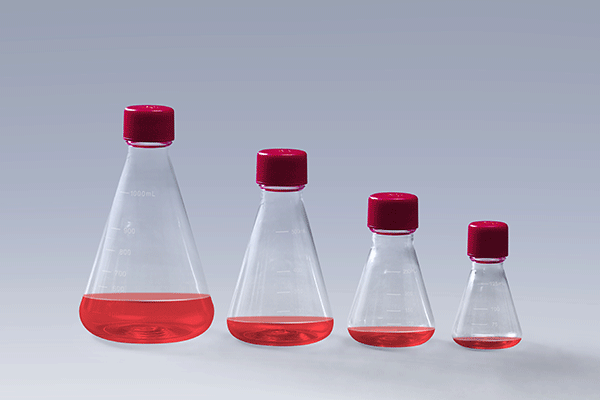
These different sizes support various stages of laboratory research and bioprocess development.
2. Manufacturing Capability and Production Capacity
A professional cell culture flask factory should have strong manufacturing capabilities to support customers from laboratory research to large-scale biopharmaceutical production.
Biopharma companies often evaluate:
Production capacity
Manufacturing equipment
Cleanroom environment
Quality management systems
Supply chain stability
A qualified cell culture flask manufacturer should operate under controlled production conditions to minimize contamination risks and ensure product reliability.
Advanced injection molding equipment, automated production lines, and strict process control help manufacturers maintain consistent product quality.
For companies involved in vaccine production, recombinant protein development, or cell-based therapies, a stable supply of sterile cell culture consumables is especially important.
3. Sterility Assurance and Quality Documentation
Sterility is one of the most important requirements for biopharmaceutical applications.
When selecting a sterile cell culture flask supplier, companies usually require detailed quality documentation, including:
Sterilization validation reports
Quality inspection reports
Batch traceability records
Certificate of Analysis (COA)
Compliance with relevant quality standards
Reliable suppliers should have strict quality control procedures throughout the manufacturing process, including:
Raw material inspection
Production monitoring
Sterility testing
Packaging inspection
Final product release
These quality systems help ensure that each batch of cell culture flask products meets research and production requirements.
4. Surface Treatment Technology
For many cell-based applications, flask surface treatment directly affects cell growth performance.
A professional supplier should provide advanced surface treatment technologies to support different cell types.
TC treated cell culture flasks are widely used for:
Mammalian cell culture
Stem cell research
Vaccine development
Protein expression studies
Biopharmaceutical production
The surface should provide:
Improved cell attachment
Enhanced cell spreading
Stable cell growth
Better experimental reproducibility
When comparing suppliers, biopharma companies often evaluate surface treatment consistency between different production batches.
5. Customization and Technical Support
Biopharmaceutical companies often have specific requirements depending on their applications.
A flexible cell culture consumables supplier should be able to provide customized solutions, including:
Customized packaging
Different cap designs
Special labeling requirements
OEM and ODM services
Product development support
For example, research laboratories may require specific flask configurations, while pharmaceutical manufacturers may need customized supply solutions for long-term projects.
Technical support from the supplier can also help customers select suitable products for different cell culture processes.
6. Regulatory Compliance and Supplier Qualification
Before cooperation, many biopharma companies conduct supplier qualification procedures.
They typically review:
Quality management certifications
Manufacturing facilities
Production processes
Quality control systems
Previous industry experience
A qualified cell culture flask supplier should demonstrate strong quality management capabilities and provide transparent documentation.
This is especially important for companies involved in regulated industries such as:
Vaccine manufacturing
Cell and gene therapy
Biologics production
Clinical research
7. Cost Efficiency and Long-Term Partnership
Price is an important factor, but biopharma companies usually consider overall value rather than simply choosing the lowest-cost supplier.
A reliable supplier can help customers achieve:
Lower production risks
Stable product availability
Reduced quality issues
Better supply chain efficiency
Long-term cooperation with a trusted cell culture flask manufacturer allows companies to maintain consistent product performance and simplify procurement management.

Choosing the Right Cell Culture Flask Supplier
Selecting a suitable cell culture flask supplier requires a comprehensive evaluation of product quality, manufacturing capability, quality systems, technical support, and supply reliability.
For biopharmaceutical companies, the ideal supplier is not only a manufacturer of laboratory consumables but also a long-term partner supporting innovation and production development.
A professional cell culture flask factory with advanced manufacturing technology, strict quality control, and extensive industry experience can provide reliable solutions for research institutions, biotechnology companies, and pharmaceutical manufacturers worldwide.
Whether for laboratory-scale cell culture or large-scale bioprocess applications, choosing the right cell culture flask manufacturer is a key step toward achieving consistent and efficient cell expansion.










