After seeding a Cell Factory, cells usually need a period of undisturbed incubation to allow stable attachment to the culture surface.
However, there is no single attachment time suitable for every process. The appropriate static period depends on the cell type, seeding density, culture medium, surface treatment and operating conditions.
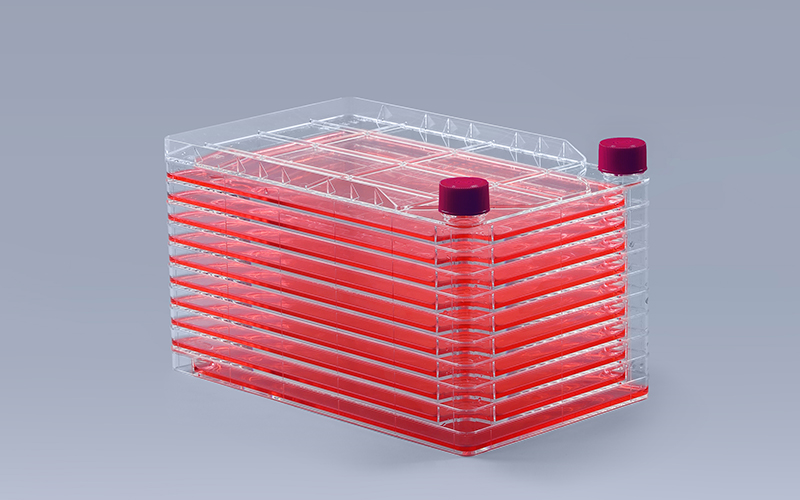
Cell Factory 10 Layers TC-treated
Why Is a Static Period Important?
After inoculation, adherent cells need time to settle onto the TC-treated surface and begin attachment.
If the Cell Factory is moved too much during this early stage, cells may shift before attachment is stable, which can contribute to:
Uneven cell distribution
Different local seeding densities
Irregular confluence
Reduced culture consistency
For this reason, unnecessary movement should be minimized after seeding.
What Affects Cell Attachment Time?
Cell Type
Different cell types show different attachment behavior.
Vero, HEK293, fibroblasts, MSCs and other adherent cells may require different conditions before stable attachment is achieved.
The attachment period should therefore be established according to the specific cell line and process.
Seeding Density
Seeding density affects how cells distribute and grow across the culture surface.
A uniform cell suspension and appropriate seeding density are important before filling the multilayer Cell Factory.
If cells settle in the inoculum container or tubing before transfer is complete, uneven attachment may occur even if the vessel remains static for a long time.
Culture Surface
For adherent cells, surface treatment also influences attachment.
A consistent TC-treated surface helps support cell adhesion and spreading across the available growth area.
This is one reason why surface consistency should be considered when qualifying a Cell Factory supplier.
Good Initial Distribution Matters
The static period cannot correct poor cell distribution during seeding.
Before placing the Cell Factory in the incubator, operators should pay attention to:
Uniform cell suspension
Correct filling procedure
Proper vessel positioning
Even liquid distribution
Bubble control
Air bubbles trapped over the culture surface may prevent cells from contacting certain areas and contribute to uneven growth.
Related Article: How to Reduce Bubble Formation in Cell Factory Culture
Avoid Excessive Movement After Seeding
Once cells have been distributed correctly, transfer the Cell Factory carefully to the incubator.
Repeated repositioning or unnecessary movement during the early attachment stage may cause cells to redistribute.
This becomes especially important when using larger systems such as 10-layer or 40-layer Cell Factories, where small handling differences can affect a much larger culture area.
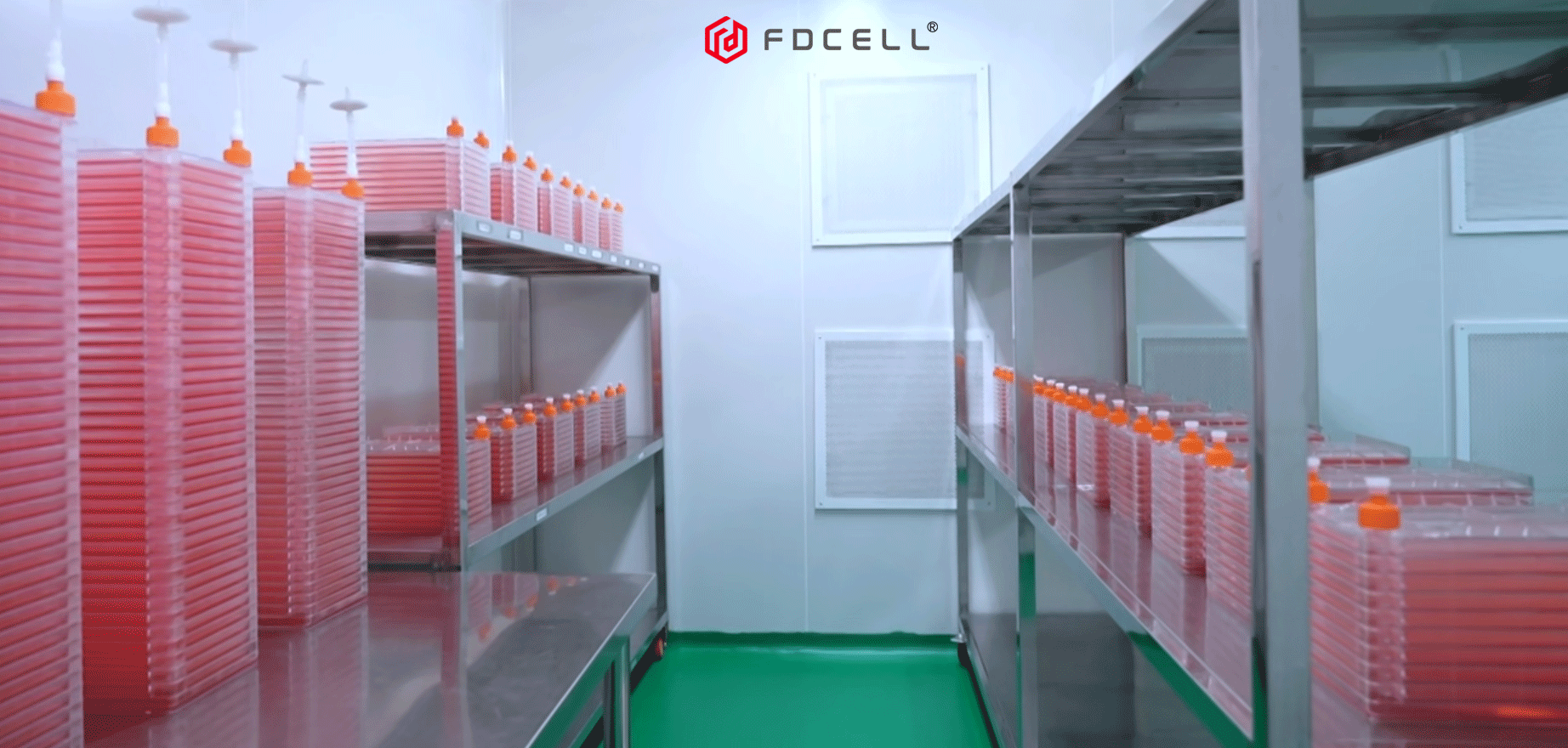
Advantages of Multi-Layer Cell Culture Systems in Vaccine Production
How Do You Know When Cells Have Attached?
Rather than relying only on a fixed number of hours, attachment should be evaluated according to the cell line and validated process.
Typical observations may include:
Cell morphology
Cell spreading
Distribution across the surface
Number of floating cells
Early confluence pattern
Once suitable attachment conditions are established during process development, the static period can be incorporated into the standard operating procedure.
Standardization During Scale-Up
When moving from T-flasks to larger Cell Factory systems, the initial attachment step should also be standardized.
The process should clearly define cell preparation, seeding density, filling, liquid distribution, incubator transfer and the required static period.
For larger-scale applications, a Closed System Cell Factory with sterile tubing assemblies can also support more controlled inoculation and fluid transfer.
FDCELL Cell Factory Systems
FDCELL provides Cell Factory systems in 1-layer, 2-layer, 5-layer, 10-layer and 40-layer configurations for scalable adherent cell culture.
TC-treated surfaces and customized closed-system tubing assemblies are available for applications including vaccine manufacturing, viral vector production and biopharmaceutical research.
Conclusion
There is no universal answer to how long cells should remain static after seeding a Cell Factory.
The appropriate time depends on the cell type, seeding density, medium and culture conditions. More importantly, cells should be uniformly distributed during inoculation and given sufficient undisturbed time to establish stable attachment.
A validated and standardized attachment procedure can help improve consistency during Cell Factory scale-up.










