Seeding density is one of the first parameters to define when establishing a roller bottle cell culture process.Too few cells may extend the culture period and delay monolayer formation, while an excessively high inoculum can lead to rapid confluence, nutrient consumption, and inconsistent growth. For vaccine production and other adherent cell culture applications, the goal is therefore not simply to add more cells, but to establish a reproducible starting point.
When working with roller bottles, seeding density should be determined according to the available growth area, viable cell concentration, cell characteristics, and the intended culture endpoint.
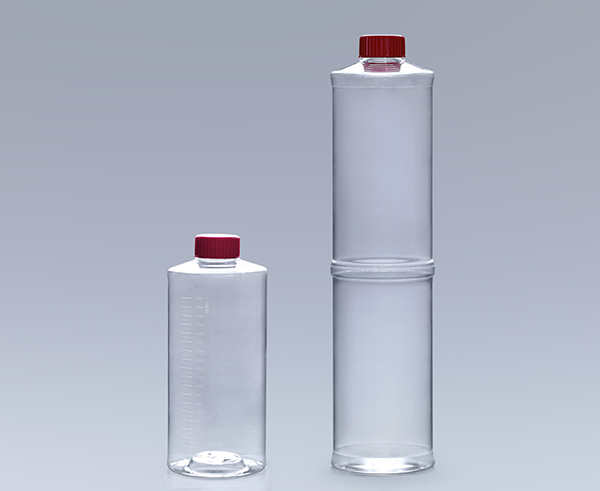
Start with Culture Area, Not Bottle Volume
For adherent cells, seeding density is generally considered in relation to the available culture surface rather than the nominal bottle capacity.
A simple calculation is:
Required viable cells = Target seeding density × Culture area
This becomes especially important when moving between different sizes or designs of cell culture roller bottles.
Two vessels may have similar external dimensions or nominal volumes but different available growth areas. Using the same total number of cells in both can therefore result in different starting densities.
When scaling a process, culture area should be one of the first parameters checked.
Always Calculate with Viable Cells
Total cell concentration alone does not tell you how many cells are actually available for attachment.
If a cell suspension contains non-viable cells, the effective inoculum will be lower than expected.
The viable cell concentration can be calculated as:
Viable cell concentration = Total cell concentration × Cell viability
The required suspension volume can then be calculated from:
Cell suspension volume = Required viable cells ÷ Viable cell concentration
This is particularly important when comparing different culture runs. A similar total cell count with different viability can result in noticeably different attachment and growth performance.
Cell Type Makes a Difference
Different adherent cell lines do not behave the same way in roller bottle culture.
Some cells attach quickly and spread efficiently, while others require a higher starting density or a longer recovery period after passage.
Factors that influence the appropriate inoculation level include:
Cell attachment efficiency
Cell doubling time
Passage history
Cell viability
Sensitivity to low-density culture
Medium and serum conditions
Target culture duration
For this reason, a seeding density established for one cell line should not automatically be applied to another.
This is particularly relevant in vaccine manufacturing, where Vero, MDCK, BHK-21, ST, MDBK and other adherent cell lines may be used in different processes.
Consider the Target Confluence
The correct starting density also depends on what the culture needs to achieve.
If the goal is seed cell expansion, the process may be designed to produce a healthy monolayer for subsequent passage.
If roller bottles are being used for virus propagation, the cells may need to reach a defined condition before virus inoculation.
The starting density therefore needs to work backward from the desired endpoint:
Starting cell number → Cell growth → Target confluence → Next process step
A higher inoculum may shorten the time needed to reach the target cell density, but it can also reduce the available growth period.
A lower inoculum provides more room for expansion but may increase culture time and create greater variability if attachment efficiency is poor.
Medium Volume and Seeding Density Are Connected
Seeding density should not be evaluated independently from medium volume.
As the number of cells increases, nutrient consumption and metabolite accumulation also change. A culture with a relatively high starting density may require different medium management from a lower-density culture.
When optimizing roller bottles, users should consider together:
Cells per cm²
Medium volume
Rotation speed
Culture duration
Feeding or medium exchange
Expected final cell density
Changing one parameter while leaving all others unchanged may not produce the expected result.
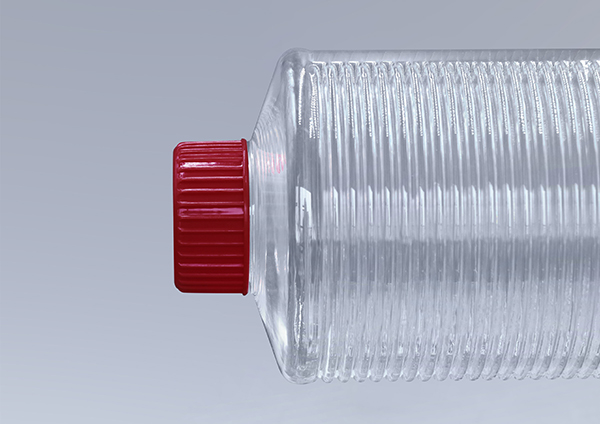
Expanded Surface Polystyrene Roller Bottle
Cell Distribution Is Just as Important as Cell Number
Even when the calculated cell number is correct, poor distribution can still produce an uneven culture.
Before inoculation, the cell suspension should be sufficiently homogeneous. Large aggregates or cells settling during dispensing can cause significant differences between bottles.
During seeding, attention should be paid to:
Consistent mixing of the cell suspension
Similar inoculation volume between bottles
Avoiding excessive cell clumping
Minimizing bubbles
Consistent loading time
Stable initial rotation conditions
For multiple roller bottles in the same production run, consistency in the seeding procedure is essential.
How to Optimize Seeding Density
Rather than choosing one value and assuming it is optimal, a more useful approach is to compare several starting densities under controlled conditions.
Keep other important variables consistent, including:
Cell passage
Medium
Working volume
Roller bottle type
Rotation conditions
Culture time
Incubator conditions
Then compare outcomes such as:
Initial attachment
Cell morphology
Time to reach target confluence
Monolayer uniformity
Final viable cell yield
Cell detachment
Performance in the next process step
The most appropriate seeding density is the one that provides repeatable growth and reaches the required endpoint within the intended process window.
Scaling from Flasks to Roller Bottles
When transferring adherent cells from T-flasks to roller bottles, simply using the same number of cells per vessel is not an appropriate scale-up method.
Instead, compare the available growth areas.
If the established flask process uses a defined number of viable cells per cm², the same density can be used as an initial reference for the larger vessel.
After scale-up, however, the process should still be verified because fluid movement, medium volume, gas exchange, and cell distribution differ between stationary flasks and rotating culture vessels.
This is why a calculated starting point should be followed by actual growth evaluation.
Avoid Treating Seeding Density as a Fixed Number
A common mistake is asking:
“What is the standard seeding density for a roller bottle?”
There is no single number that works for every culture.
A useful seeding density must match the:
Cell line
Culture surface
Cell viability
Medium system
Growth rate
Rotation conditions
Process duration
Target endpoint
For an established vaccine process, seeding density should ultimately become a controlled process parameter rather than an operator-dependent estimate.
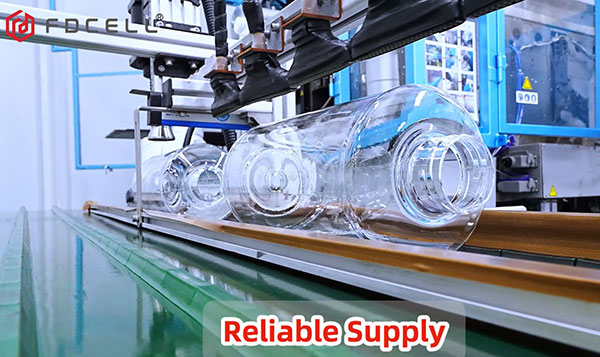
Automated production of roller bottles
Consistency Starts at Seeding
Stable roller bottle cell culture begins before the cells start growing.
Accurate cell counting, suitable viability, consistent inoculation, uniform distribution, controlled rotation, and a reliable TC-treated culture surface all contribute to reproducible results.
FDCELL provides roller bottles for adherent cell expansion, virus propagation, vaccine production, and other biopharmaceutical cell culture applications. Different roller bottle configurations are available to support laboratory and production-scale culture requirements.
When establishing a new process, users should determine the appropriate seeding density with their actual cell line and culture conditions, then confirm the selected parameters through repeated culture runs










