As Cell Factory culture moves from laboratory-scale research to larger bioprocessing applications, fluid handling becomes increasingly important.
Media filling, cell inoculation, medium exchange and harvesting may require repeated liquid transfers. When these operations rely heavily on manual handling, the workflow can become more complex as the number and size of Cell Factory systems increase.
Integrating sterile tubing assemblies with a Cell Factory provides a more controlled way to connect media bags, collection containers and other process components, helping simplify fluid transfer and support closed-system operations.
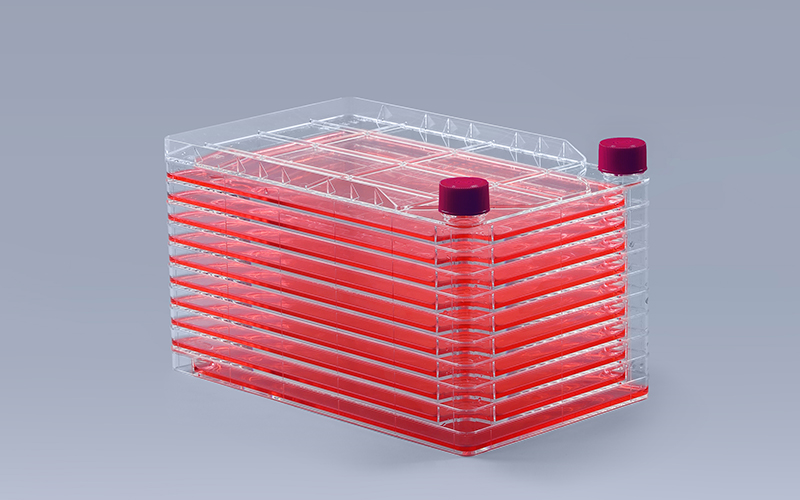
Cell Factory 10 Layers TC-treated
What Is a Cell Factory Tubing Assembly?
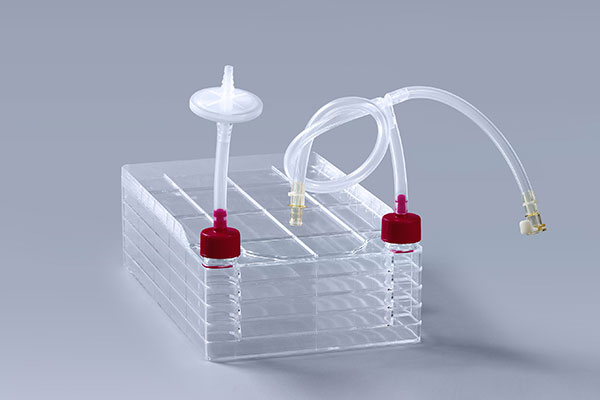
A Cell Factory tubing assembly connects the culture vessel with external fluid containers through a sterile fluid path.
Depending on the process design, an assembly may include:
Silicone or TPE tubing
Connectors and adapters
Clamps
Vent filters
Media bag connections
Sampling or transfer components
The configuration can be customized according to the Cell Factory model and specific process requirements.
Instead of repeatedly opening the vessel for fluid handling, operators can perform multiple transfer steps through the connected tubing system.
Simplifying Media Filling
Filling becomes more demanding when working with larger multilayer Cell Factory systems.
A tubing assembly allows culture medium to be transferred directly from a media bag or preparation container into the Cell Factory.
This can reduce repeated pouring and manual vessel handling while providing a more controlled fluid-transfer pathway.
For larger systems such as 10-layer and 40-layer Cell Factories, this approach can make routine filling operations easier to standardize.
Supporting Closed-System Cell Inoculation
Cell inoculation is another critical step in Cell Factory culture.
With a suitable tubing configuration, prepared cell suspension can be transferred into the Cell Factory through a closed fluid path.
A simplified workflow may look like:
Cell Suspension / Media Bag → Sterile Tubing Assembly → Cell Factory
Reducing unnecessary open handling can help limit environmental exposure during inoculation and support more consistent aseptic operations.
Making Medium Exchange More Efficient
Medium exchange is often repeated during adherent cell culture.
Without a connected tubing system, removing spent medium and introducing fresh medium may require additional manual operations.
A Closed System Cell Factory can connect with media and collection bags through sterile tubing assemblies, allowing fluid transfer to take place within an integrated pathway.
This is particularly useful when multiple Cell Factories are involved in the same production process.
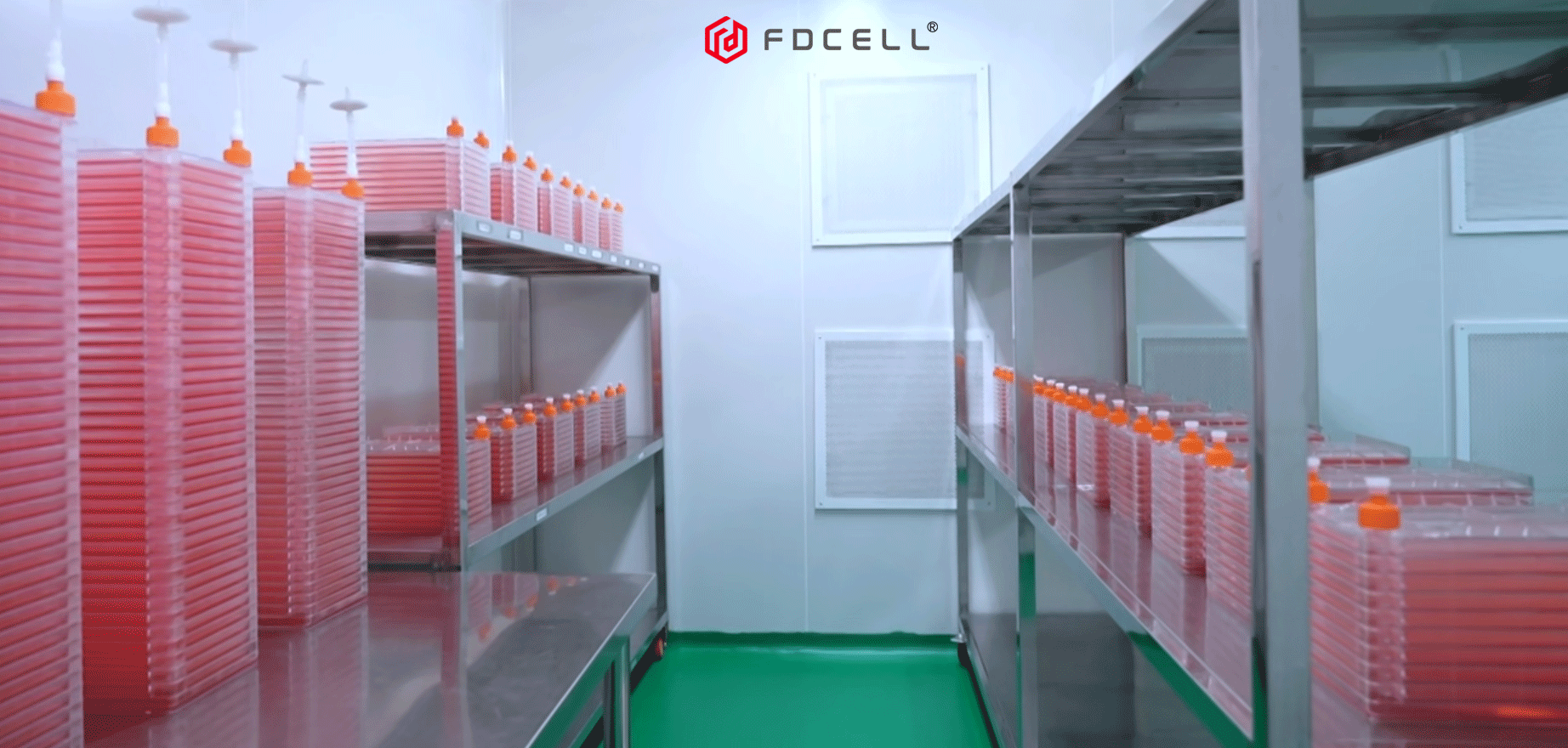
Advantages of Multi-Layer Cell Culture Systems in Vaccine Production
Improving Cell Harvesting Workflows
At the end of culture, tubing assemblies can also support cell or liquid collection.
Depending on the process, harvested material can be transferred directly from the Cell Factory into a collection bag or downstream container.
This helps create a more integrated workflow:
Media Filling → Cell Inoculation → Culture → Medium Exchange → Harvest
Rather than treating each transfer as an independent manual operation, tubing assemblies help connect different stages of the Cell Factory process.
Supporting More Consistent Operations
One important advantage of tubing assemblies is process standardization.
As Cell Factory culture scales up, differences in manual filling, connection and transfer methods can introduce operator-to-operator variability.
A defined tubing configuration can help standardize:
Fluid transfer pathways
Connection methods
Filling procedures
Medium exchange
Harvest collection
This can be particularly valuable in vaccine manufacturing, viral vector production and other biopharmaceutical processes where repeatable operations are important.
Tubing Assemblies Can Be Customized
There is no single tubing configuration suitable for every Cell Factory application.
Different processes may require different tubing materials, lengths, connectors, filters and bag connections.
For this reason, tubing assembly design should consider:
Cell Factory configuration
Media and inoculum containers
Required connectors
Tubing material
Transfer method
Pump compatibility
Downstream collection requirements
A customized assembly allows the fluid pathway to better match the actual production workflow.
FDCELL Closed System Cell Factory
FDCELL provides Closed System Cell Factory solutions for scalable adherent cell culture.
Sterile tubing assemblies can be customized for FDCELL 1-layer, 2-layer, 5-layer, 10-layer and 40-layer Cell Factory configurations.
Available options include different tubing materials, connectors and fluid-transfer configurations to support:
Media filling
Cell inoculation
Medium exchange
Cell harvesting
By integrating the Cell Factory with a customized tubing assembly, users can build a more efficient and standardized closed-system workflow for vaccine manufacturing, viral vector production and other large-scale adherent cell culture applications.
Conclusion
Tubing assemblies do more than connect a bag to a Cell Factory.
They can help simplify media filling, support closed-system inoculation, improve medium exchange and streamline harvesting while reducing unnecessary manual handling.
For Cell Factory processes moving toward larger-scale and more standardized operations, a well-designed tubing assembly can become an important part of the overall cell culture workflow.










