Abstract
Stem cells cultured in cell aggregates exhibit higher cell survival rates and enhanced anti-inflammatory and angiogenic effects compared to single cells, constructing a stable and economical cell aggregate culture system that can accurately adjust the mass transfer distance of nutrients, which contributes to improving the therapeutic effects of stem cell aggregates. In this study, an alginate hydrogel microsphere culture system (Alg-HM) was prepared using electrostatic spraying technology and refined by optimizing the electrostatic spraying technology parameters, such as the sodium alginate concentration, voltage, electrospray injection speed, and nozzle inner diameter. Furthermore, by setting the Tip-dropped culture system (Tip-D culture system, created by dropping the resuspended hMSC aggregate–hydrogel solution with a tip to form the hydrogel microsphere) and Matrigel culture system (created by dropping the resuspended hMSC aggregates–Matrigel solution with a tip to form the Matrigel culture system) as the control group and Alg-HM as the experimental group, the culture effect of hMSC aggregates in the optimized Alg-HM culture system was tested; CCK-8 detection and Ki-67 immunofluorescence staining showed that the Alg-HM culture system significantly enhanced the cell proliferation activity of hMSC aggregates after 7 and 14 days of culture. The Calcein-AM/PI cell staining results showed that the Alg-HM culture system can significantly reduce the central necrosis of hMSC aggregates. The RNA sequencing results showed that the Alg-HM culture system can significantly activate the signaling pathways related to cell proliferation in hMSCs. This culture system is helpful for the culture of cell aggregates in vitro and efficient transplantation in vivo.
Keywords: mesenchymal stem cells; alginate hydrogel; cell aggregate; electrostatic spraying technology

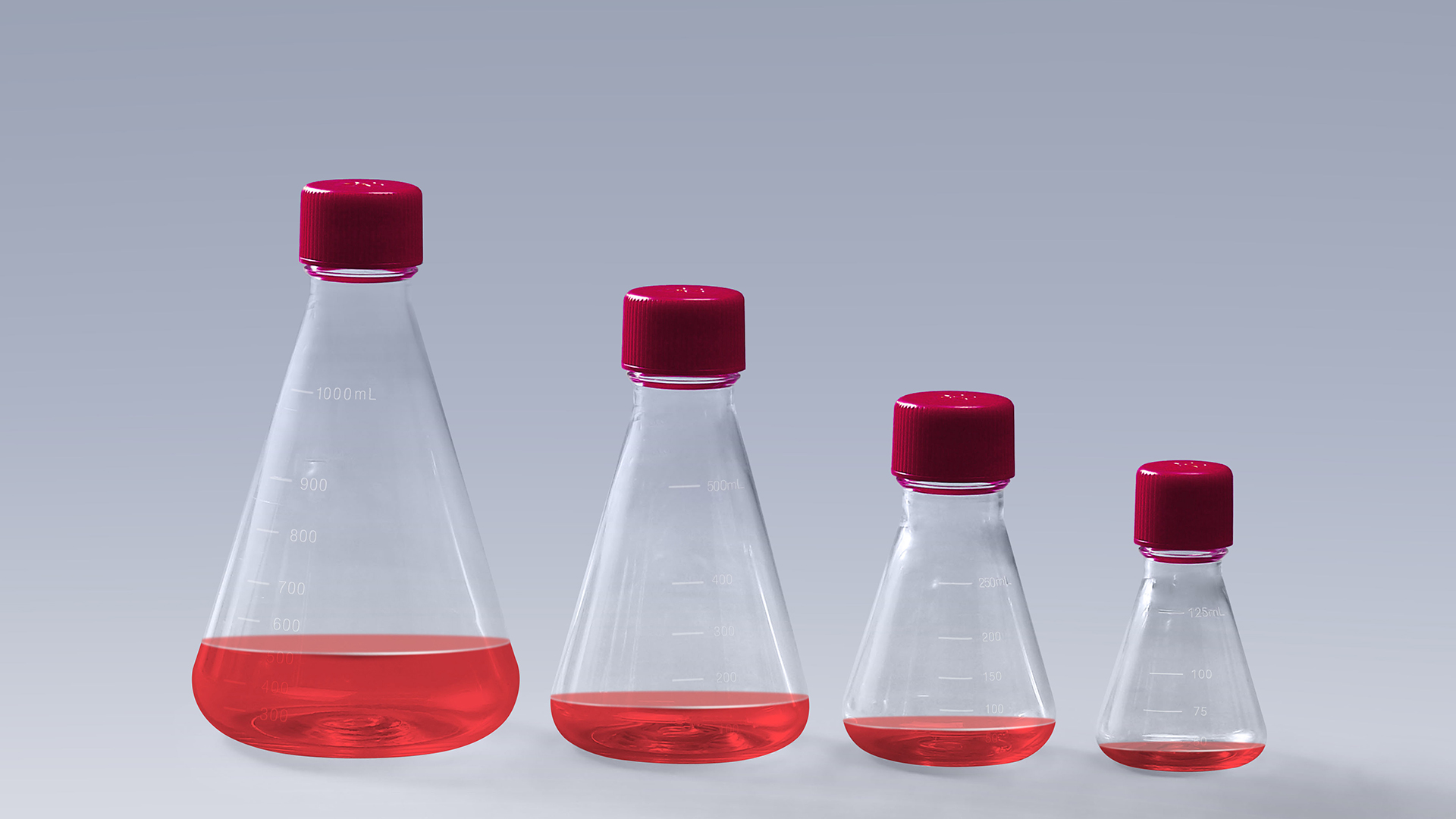
Vented Caps in Cell Culture Flasks
1. Introduction
The specific differentiation and cell factor secretion abilities make human mesenchymal stem cells (hMSCs) the most promising stem cell candidate for cell therapy, which has been widely used in the fields of regenerative medicine, autoimmune diseases, and tissue engineering [1,2]. However, single-cell hMSCs transplantation has limitations, such as the low cell survival rate after transplantation [3,4,5]. A large number of studies have shown that hMSCs cultured in cell aggregates exhibit higher cell survival rates and enhanced anti-inflammatory and angiogenic effects, which help enhance their therapeutic effect in vivo [6,7,8]. Maintaining the viability of cell aggregates during cell culture in vivo remains a key step in cell aggregate research. Currently, in addition to hanging drop culture technology, microgravity rotating cell culture systems (RCCSs), microfluidic chip culture technology, and hydrogel-based culture technology have all been used for cell aggregate culture [9,10,11].
Compared to other culture technologies that require special equipment or complicated operation steps, scaffold culture is relatively simple and can simulate a realistic extracellular matrix (ECM) environment for cell aggregates. Thus, Matrigel, hyaluronic acid hydrogel, and alginate hydrogel have been widely used in three-dimensional cell aggregate culture [12,13]. The mass transfer of nutrients is a key factor affecting the cell viability of the aggregate in a hydrogel culture. As the mass transfer distance within the hydrogel increases, nutrient diffusion to the center becomes exponentially less efficient, which leads to cell necrosis due to hypoxia and nutrient deprivation [14,15]. Studies have shown that the oxygen concentration is relatively stable when the radius of the hydrogel is less than 200 μm; a greater mass transfer distance means that the concentration of nutrients is higher in the outer layer and lower in the center of the hydrogel, eventually leading to central cell necrosis [16,17]. However, conventional hydrogel culture simply mixes the cell aggregates with hydrogels and cannot accurately control the transport distance of nutrients. For instance, in a Tip-dropped culture system (Tip-D culture system, created by dropping the resuspended hMSC aggregate–hydrogel solution with a tip to form the hydrogel microsphere), the smallest diameter of the hydrogel microspheres dripped out is larger than a few millimeters, and the particle size of the microspheres cannot be precisely controlled. Precisely controlling the nutrient transport distance significantly improves the cell viability of cell aggregates in hydrogel culture.
Unlike traditional hydrogel-based culture, studies have shown that hydrogel microsphere culture systems can precisely control the distance of material transmission under culture conditions and show higher nutrient permeability [18,19]. Several studies have demonstrated the advantage of alginate hydrogel microspheres in culturing dispersed cells, showing improved cell viability, less heterogeneity, and enhanced drug metabolic activity [20,21,22]. This microsphere culture system helps shorten, adjust, and control the mass transfer distance within hydrogels, ultimately improving the cell survival rate; however, until now, there is no research on the culture of cell aggregates via a microsphere culture system. Therefore, in this study, a cell aggregate microsphere culture system based on alginate hydrogel material was constructed (alginate hydrogel microsphere, Alg-HM), and the method for preparing microspheres suitable for cell aggregate culture was optimized.
The article is reprinted from MDPI, original link:https://www.mdpi.com/1422-0067/26/13/6435










