The United States Pharmacopeia (USP) 〈1067〉chapter systematically outlines comprehensive guidelines for the lifecycle management of recombinant adeno-associated virus (rAAV) gene therapy products, covering critical aspects such as vector design, manufacturing, quality control, and stability. Below is a distilled summary of core principles to serve as a scientific reference for the industry.
1. rAAV Vector Design and Engineering Optimization
Capsid Engineering: Modify capsids through directed evolution or rational design to enhance tissue targeting, transduction efficiency, and reduce immunogenicity.
Genome Design: Single-stranded AAV has a packaging capacity of ~4.7 kb, while self-complementary (scAAV) is limited to ~2.3 kb. Optimize promoter/enhancer size, codon usage, and CpG content to improve expression and safety.
2. Production Systems and Critical Control Points
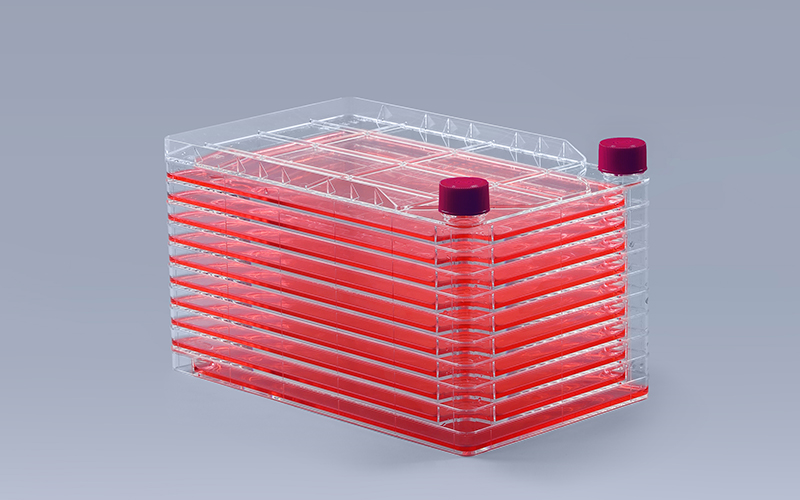
Production Platforms: Common systems include triple-plasmid transfection, baculovirus, or stable cell lines, requiring strict management of seed stocks (MCB/WCB) and viral banks.
Process Requirements:
Use closed, single-use systems and avoid high-risk reagents (e.g., β-lactam antibiotics).
Implement orthogonal virus clearance steps (e.g., chromatography + nanofiltration) to control residual helper viruses.
Monitor process intermediates for host cell DNA/protein, empty/full capsid ratio, and microbiological safety (mycoplasma, endotoxins, etc.).
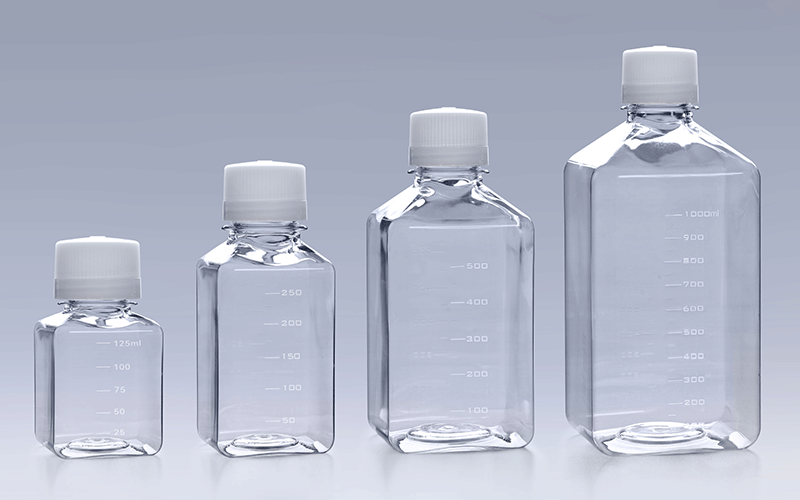
PETG Media Bottles Procurement Guide
3. Quality Control Strategy
Critical Quality Attributes (CQAs):
Identity: Capsid serotyping (ELISA/HPLC) and genome sequencing.
Potency: Transduction efficiency, gene/protein expression, and functional activity assays.
Purity: Empty/full capsid ratio (AUC, TEM, ion-exchange chromatography), aggregates (SEC-MALS).
Safety: Sterility, endotoxin levels, and testing for replication-competent AAV (rcAAV).
Dosage Control: Vector genome titer (ddPCR/qPCR) and total capsid quantification (ELISA/SE-HPLC), with precision ≤15% RSD.

Vented Caps in Cell Culture Flasks
4. Stability and Comparability Studies
Stability: Conduct real-time, accelerated, and forced degradation studies, monitoring potency, capsid integrity, pH, etc. Validate shipping, freeze-thaw, and in-use stability.
Comparability: Process changes require analytical (CQA comparison), nonclinical, and clinical bridging studies, supported by statistical methods (e.g., TOST analysis) for batch equivalence assessment.
5. Formulation Development and Packaging
Formulation Design: Optimize pH (4.0–8.0), osmolarity (preferably isotonic), and surfactants (e.g., Poloxamer 188) to prevent adsorption.
Packaging System: Select compatible primary packaging (e.g., COP vials) and assess extractables/leachables risks.
Conclusion
USP 〈1067〉 provides a systematic framework for standardized manufacturing and quality control of rAAV products. Companies should adapt these guidelines based on product-specific characteristics and regulatory requirements. For the complete document, refer to the official USP publication or consult industry experts.
NOTE:Source from USP,The above content is for reference only. For more information, please click the original text: https://online.uspnf.com/uspnf/document/2_GUID-254EE7B2-DC7B-4D10-A6D0-2345A88A5871_10101_en-US?source=TOC










