Stem cells possess the unique abilities of self-renewal and differentiation, making them indispensable tools in regenerative medicine, drug discovery, and disease modeling. However, maintaining their stability and pluripotency in vitro remains a technical challenge. The Tissue culture flasks, also known as a cell culture flask, provides a standardized and controllable environment for stem cell expansion and differentiation studies. Optimizing culture conditions within this system is critical to ensuring high-quality, reproducible results.
1. Material and Surface Characteristics
Most tissue culture flasks are made of polystyrene (PS) and undergo TC (tissue-culture) surface treatment, which modifies the surface energy and enhances cell adhesion. For adherent stem cells such as mesenchymal stem cells (MSCs) and induced pluripotent stem cells (iPSCs), this treatment provides the right balance between attachment and proliferation.
In some cases, stem cell researchers prefer non-treated Tissue culture flasks to maintain cells in a suspension state—especially when cultivating embryoid bodies or preparing cells for differentiation. The selection of surface type should therefore match the biological behavior of the stem cell line in use.

2. Culture Environment Control
The microenvironment inside a tissue culture flask—temperature, CO₂ concentration, humidity, and gas exchange—is essential for maintaining stem cell viability and phenotype.
Gas Exchange: The flask cap design (vented or sealed) determines oxygen and carbon dioxide diffusion. For pluripotent stem cells, stable CO₂ regulation supports optimal pH and metabolic balance.
Medium Composition: Defined, serum-free media formulations help minimize batch variability and preserve cell identity. Supplementation with growth factors such as bFGF or EGF further supports self-renewal.
Subculture Frequency: Regular medium changes and timely passaging prevent over-confluence, which can trigger unwanted differentiation.
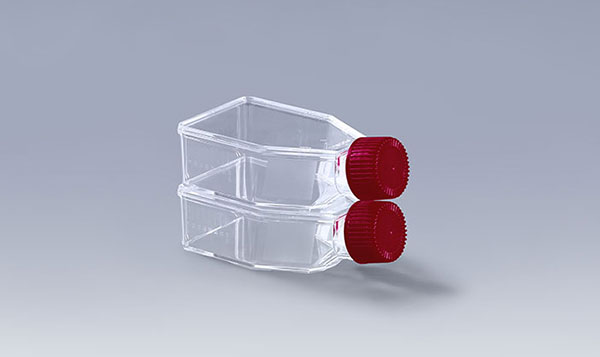
Recommended Medium Volumes for Cell Culture Flasks
3. Minimizing Stress During Expansion
Mechanical stress, temperature fluctuations, and excessive pipetting can alter stem cell morphology and gene expression. Using multiple Tissue culture flasks for parallel expansion, instead of overloading a single container, helps maintain a low cell density and stable growth rate. Additionally, gentle detachment methods—such as using enzyme-free dissociation solutions—can preserve the integrity of cell surface receptors critical for subsequent differentiation.
4. Toward Scalable Production
While tissue culture flasks are ideal for early-stage research and small-scale expansion, the ultimate goal of regenerative medicine is clinical-scale production. Data generated from flask-based optimization—such as growth kinetics, nutrient consumption, and differentiation markers—serve as the foundation for transitioning to multilayer systems or bioreactors. By establishing consistent parameters at the flask level, researchers can ensure smooth scale-up without compromising cell quality.
5. Conclusion
Tissue culture flasks remain fundamental tools in stem cell biology. Through careful optimization of surface characteristics, environmental control, and handling techniques, researchers can achieve reproducible, high-quality cultures suitable for advanced applications. Whether in academic laboratories or biopharmaceutical development, the Tissue culture flasks continues to play a crucial role in bridging bench-scale studies and scalable stem cell manufacturing.










