In suspension cell culture and microbial cultivation, oxygen availability is one of the most critical factors influencing cell growth, viability, and productivity. While researchers often focus on media composition and incubation conditions, the design and operation of the Erlenmeyer Shake Flask can have a significant impact on oxygen transfer efficiency.
For laboratories involved in cell line development, protein expression, vaccine production, and bioprocess optimization, understanding oxygen transfer in shake flasks is essential for achieving consistent and scalable results.
This article explores the factors affecting oxygen transfer in Erlenmeyer Shake Flasks and how to optimize culture performance.
Why Oxygen Transfer Is Important in Cell Culture
Cells require oxygen for metabolic activity, energy production, and growth. Inadequate oxygen transfer can lead to:
Reduced cell growth rates
Lower cell viability
Decreased protein expression
Reduced product yield
Inconsistent experimental results
As cell density increases, oxygen demand rises rapidly. If oxygen transfer cannot keep pace with cellular consumption, oxygen limitation may occur, negatively affecting culture performance.
For this reason, oxygen transfer is a key consideration when selecting a Cell Culture Shake Flask.
How Oxygen Transfer Occurs in Erlenmeyer Shake Flasks
In an Erlenmeyer Flask for Cell Culture, oxygen transfer occurs through several steps:
Oxygen moves from the incubator atmosphere into the flask.
Oxygen passes through the flask closure or vent filter.
Oxygen dissolves into the culture medium.
Cells absorb dissolved oxygen for metabolism.
The efficiency of this process is commonly described by the oxygen transfer coefficient (kLa), which reflects how effectively oxygen moves from the gas phase into the liquid phase.
A higher kLa value generally indicates better oxygen availability for growing cells.
Key Factors Affecting Oxygen Transfer
Flask Design
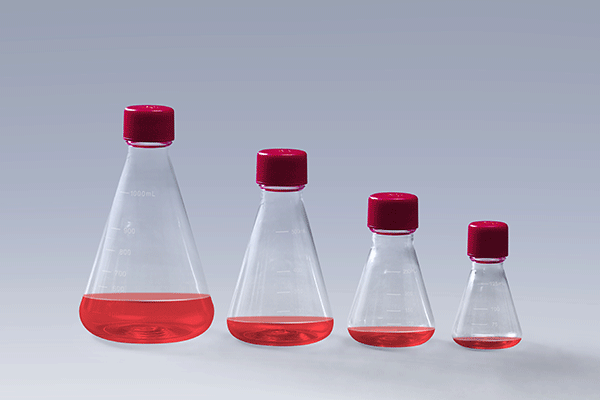
The geometry of an Erlenmeyer Shake Flask directly influences mixing efficiency and gas exchange.
Wide-bottom designs create larger liquid surface areas and improved mixing patterns, which can enhance oxygen transfer.
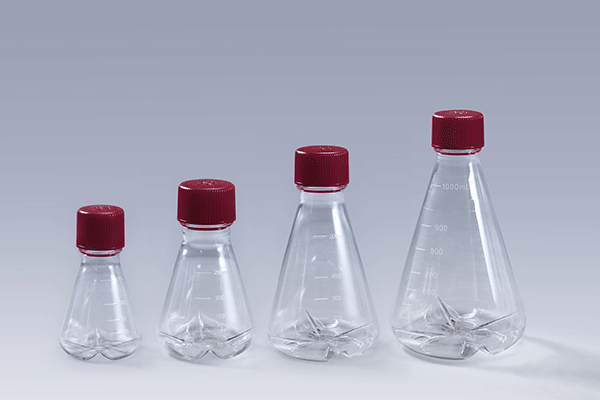
Modern shake flasks often feature optimized baffled or smooth-wall configurations depending on the culture application.
Vented Caps and Filter Closures
One of the most important factors affecting oxygen transfer is the flask closure.
A Vent Cap Shake Flask utilizes a breathable membrane filter that allows gas exchange while maintaining sterility.
Benefits include:
Improved oxygen availability
Enhanced carbon dioxide release
Reduced contamination risk
Better culture performance at high cell densities
Compared with sealed closures, vented caps significantly improve oxygen transfer rates during cell culture.
Shaking Speed
Agitation promotes mixing and continuously renews the liquid-air interface.
Increasing shaking speed can:
Improve oxygen transfer
Enhance nutrient distribution
Prevent cell settling
However, excessively high agitation may create shear stress, which can damage sensitive mammalian cells.
Finding the optimal shaking speed is essential for balancing oxygen supply and cell health.
Orbit Diameter
The orbital diameter of the shaker influences liquid movement inside the flask.
Larger orbit diameters generally create stronger mixing and higher oxygen transfer rates.
Common orbital diameters include:
19 mm
25 mm
50 mm
The optimal setting depends on cell type and culture volume.
Working Volume
Culture volume has a major impact on oxygen transfer efficiency.
As fill volume increases:
Liquid depth increases
Gas-liquid surface area decreases
Oxygen transfer efficiency declines
A common recommendation is to use only 20–30% of the flask's nominal volume as working volume.
For example:
250 mL flask → 50–75 mL culture volume
500 mL flask → 100–150 mL culture volume
1000 mL flask → 200–300 mL culture volume
Maintaining appropriate fill volumes helps maximize oxygen transfer.
User Guide for Erlenmeyer Shake Flask
Oxygen Transfer in Suspension Cell Culture
In Suspension Cell Culture, oxygen demand increases as cells proliferate.
Common applications include:
CHO cell culture
HEK293 cell expansion
Hybridoma cultivation
Vaccine production
Recombinant protein expression
High-density cultures require efficient oxygen transfer to maintain productivity and cell viability.
For these applications, many laboratories utilize Disposable Shake Flasks with vented caps and optimized designs to improve gas exchange.
Choosing the Right Shake Flask for Better Oxygen Transfer
When selecting a Cell Culture Shake Flask, consider the following factors:
Flask Material
High-quality PETG or polycarbonate flasks offer excellent transparency and durability.
Vent Filter Quality
Hydrophobic membrane filters help ensure sterile gas exchange without compromising oxygen availability.
Flask Size
Choose a flask size that allows sufficient headspace for effective aeration.
Sterility Assurance
Pre-sterilized disposable shake flasks reduce contamination risk and improve workflow efficiency.
Manufacturing Consistency
Reliable production standards ensure reproducible oxygen transfer performance across batches.
Working with an experienced Shake Flask Manufacturer can help ensure consistent culture conditions and experimental reproducibility.
Supporting Cell Culture Scale-Up
One of the primary advantages of Erlenmeyer Shake Flasks is their role in process development and scale-up.
Shake flasks are commonly used as an intermediate step between:
Cell culture flasks
Spinner flasks
Bioreactors
By optimizing oxygen transfer conditions at the shake flask stage, researchers can establish scalable culture parameters that support successful bioreactor implementation.
Proper oxygen transfer management helps reduce scale-up risks and improves process predictability.
Conclusion
Oxygen transfer is a critical factor influencing the success of suspension cell culture and bioprocess development. The design of the Erlenmeyer Flask, along with shaking speed, working volume, and closure type, can significantly affect oxygen availability and overall culture performance.
By selecting high-quality Cell Culture Shake Flasks with effective vented caps and optimizing operating conditions, laboratories can improve cell growth, enhance productivity, and support successful scale-up from research to manufacturing.
As cell culture applications continue to evolve, understanding oxygen transfer in shake flasks remains essential for achieving reliable and reproducible results.










