The choice of culture vessel material plays a critical role in modern cell culture workflows. As laboratories increasingly focus on reproducibility, safety, and efficiency, the traditional glass Erlenmeyer Flask is being reconsidered alongside newer disposable alternatives. Among these, PETG-based Erlenmeyer Shake Flasks have become widely adopted in life science laboratories.
This article compares PETG/PC and glass Erlenmeyer flask and outlines key considerations for selecting the right option for cell culture applications.
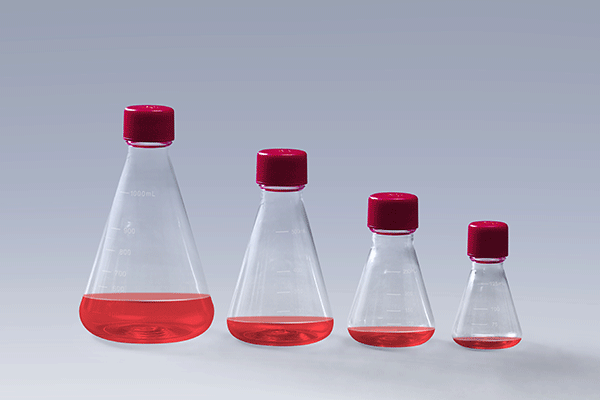
Traditional Glass Erlenmeyer Flask: Strengths and Limitations
Glass Erlenmeyer flasks have long been used in microbiology and chemistry laboratories due to their thermal stability and chemical resistance. In early cell culture workflows, glass flasks were the standard choice for shaking and mixing applications.
However, in modern cell culture environments, glass flasks present several limitations:
Risk of breakage, especially during shaking or handling
Labor-intensive cleaning and sterilization processes
Higher contamination risk due to reuse
Limited suitability for high-throughput or GMP-related workflows
While glass Erlenmeyer flask remain useful in certain research settings, their practicality is increasingly challenged in fast-paced laboratory environments.
PETG/PC Erlenmeyer Shake Flask: Designed for Modern Cell Culture
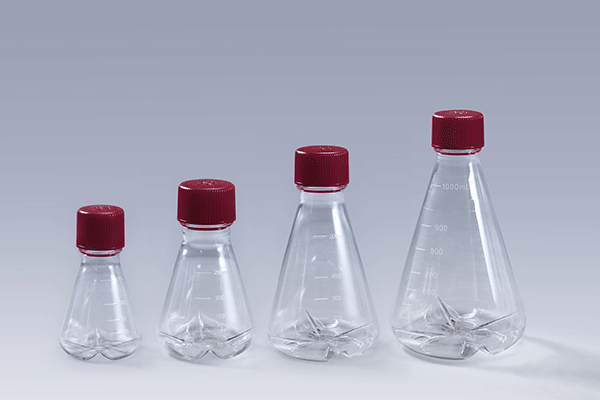
PETG/PC Erlenmeyer Shake Flasks have been developed to address many of the limitations associated with reusable glass vessels. PETG is a transparent, durable polymer widely accepted in cell culture applications.
Key advantages of PETG/PC Erlenmeyer flasks include:
Excellent biocompatibility, suitable for sensitive cell lines
Single-use convenience, eliminating cleaning and autoclaving
Improved laboratory safety due to reduced breakage risk
Low extractables and leachables, supporting reliable culture outcomes
Consistent performance across batches
These benefits make PETG flask particularly attractive for suspension cell culture and process development.
User Guide for Erlenmeyer Shake Flask
Performance Considerations in Shaking Culture
When used as an Erlenmeyer Shake Flask, vessel performance extends beyond material properties. PETG flasks are engineered with uniform wall thickness and optimized geometry to ensure stable shaking behavior.
Compared with glass Erlenmeyer flasks, PETG/PC shake flasks often provide:
More consistent mixing during orbital shaking
Reliable sealing between flask and cap
Compatibility with vent caps for sterile gas exchange
These features support reproducible results in bacteria, yeast, plant, and animal cell suspension cultures.
Sterility, Compliance, and Workflow Efficiency
Modern cell culture laboratories increasingly operate under strict quality and compliance requirements. PETG Erlenmeyer Shake Flasks are commonly produced under cGMP conditions, supplied pre-sterilized, and individually packaged.
In contrast, glass Erlenmeyer flasks require in-house sterilization and validation, adding time and variability to daily workflows. For regulated environments and high-throughput operations, disposable PETG flasks offer clear advantages.
Application-Based Selection Guide
|
Application |
PETG/PC Erlenmeyer Shake Flask | Glass Erlenmeyer Flask |
| Suspension cell culture | Recommended | Limited |
| Microbial fermentation | Recommended | Common but declining |
| GMP-related workflows | Highly suitable | Less suitable |
| Media preparation | Suitable | Suitable |
| High-throughput labs | Preferred | Not ideal |
Conclusion
In modern cell culture workflows, PETG/PC Erlenmeyer Shake Flasks have become a practical alternative to traditional glass Erlenmeyer Flasks. By offering improved safety, convenience, and consistency, PETG flasks align well with the demands of contemporary life science laboratories.
While glass flasks still serve specific purposes, the shift toward disposable PETG solutions reflects a broader trend toward efficiency, reproducibility, and compliance in cell culture operations.










