In cell culture applications, the reliability of experimental results depends not only on biological factors but also on the quality and consistency of the laboratory consumables used. The Cell Culture Flask, as a primary vessel for adherent cell growth, must meet strict quality standards to ensure stable performance.
To achieve this, manufacturers implement a series of quality control (QC) tests throughout production. These tests are designed to verify that each cell flask provides consistent surface properties, structural integrity, and sterility, supporting reproducible cell culture outcomes.

Why Quality Control Matters in Cell Culture Flask
A Cell Culture Flask directly influences cell attachment, growth behavior, and experimental reproducibility. Even minor inconsistencies in surface treatment, material quality, or manufacturing precision can lead to:
Variability in cell adhesion and proliferation
Differences in experimental results between batches
Increased risk of contamination or failure
Robust QC testing ensures that every cell flask performs consistently under standard laboratory conditions.
Surface Treatment Verification
Surface treatment is critical for adherent cell culture. Most Cell Culture Flasks undergo TC (tissue culture) treatment to enhance cell adhesion by modifying the surface to be more hydrophilic.
Quality control for surface treatment typically includes:
Surface energy testing to confirm hydrophilicity
Contact angle measurement to assess wettability
Cell attachment assays to validate biological performance
Consistent surface treatment ensures that cells attach and spread evenly across the cell flask.
Dimensional and Structural Inspection
Accurate dimensions and structural stability are essential for reliable cell culture performance. QC processes for a Cell Culture Flask include:
Measurement of growth surface area
Verification of wall thickness and uniformity
Inspection of flask geometry (bottom flatness, corner design)
These tests ensure that each cell flask provides a consistent growth environment and fits properly within standard laboratory equipment.
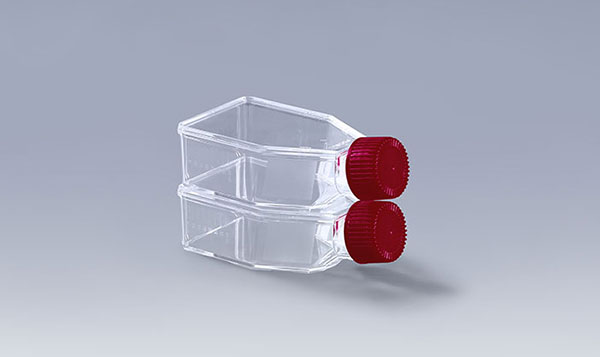
Recommended Medium Volumes for Cell Culture Flasks
Material Quality and Optical Clarity Testing
The material used in a Cell Culture Flask must be biocompatible, stable, and optically clear for microscopic observation.
Quality control tests typically evaluate:
Polymer purity and consistency
Optical clarity and transparency
Resistance to deformation under incubation conditions
High-quality materials help maintain a stable culture environment and allow accurate monitoring of cell morphology.
Sterility Assurance Testing
Sterility is a fundamental requirement for any Cell Culture Flask. Contamination can compromise entire experiments and lead to unreliable results.
Sterility testing may include:
Microbial contamination testing (bacteria, fungi)
Endotoxin testing where applicable
Packaging integrity verification
Ensuring sterility throughout manufacturing and packaging is critical for maintaining the usability of each cell flask.
Leak Testing and Seal Integrity
A properly sealed Cell Culture Flask prevents contamination and maintains internal environmental stability.
Quality checks include:
Leak testing under pressure conditions
Cap fit and sealing performance evaluation
Assessment of container integrity during transport
Reliable sealing ensures that the cell flask remains secure during handling and incubation.

Batch Consistency Evaluation
In addition to individual product testing, manufacturers perform batch-level evaluations to ensure consistency across production runs.
This may involve:
Sampling multiple units from each batch
Comparing surface treatment and structural parameters
Performing biological validation tests
Batch consistency is essential for reproducibility, especially in experiments requiring repeated use of Cell Culture Flask products over time.
What to Ask Your Supplier
When selecting a supplier for Cell Culture Flasks, it is essential to ensure that their quality control processes are robust and consistent. Here are a few important questions to ask:
How do you verify surface treatment consistency across batches?
Can you provide detailed specifications for your material quality and optical clarity?
What sterility assurance tests are conducted during production?
Do you perform leak and seal integrity testing on every batch?
What QC measures are in place for dimensional accuracy and structural stability?
Asking these questions ensures that the Cell Culture Flasks you receive will meet your laboratory’s standards for quality and reproducibility.
Conclusion
Quality control testing is essential to ensure that every Cell Culture Flask delivers consistent performance in cell culture applications. From surface treatment and material verification to sterility assurance and structural inspection, each step in the QC process contributes to reliable and reproducible results.
For researchers and laboratories, selecting a cell flask that has undergone comprehensive quality control testing is a key factor in maintaining experimental stability and achieving accurate outcomes.










