Veterinary vaccine manufacturing often relies on adherent cell culture for virus propagation. Two commonly used approaches are roller bottles and microcarrier bioreactors.
Both systems can support large-scale adherent cell growth, but they differ significantly in operation, scale-up strategy, equipment requirements, and process complexity.
For vaccine manufacturers, the choice is not simply about which technology is more advanced. It depends on the existing production process, target capacity, cell line, investment level, and validation requirements.
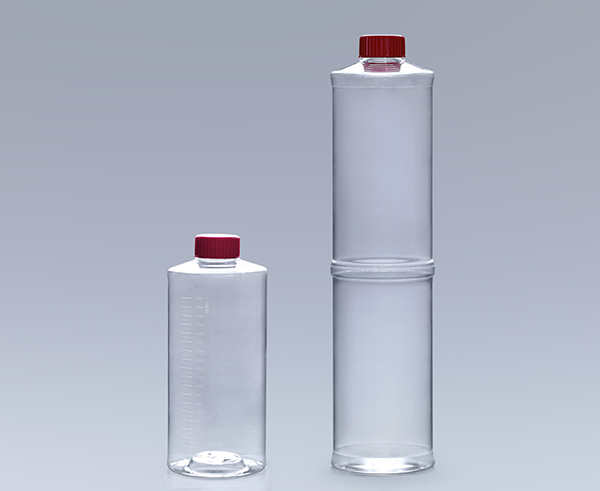
Roller Bottles: A Familiar and Flexible Culture System
Cell culture roller bottles provide a larger growth surface than conventional T-flasks while maintaining a relatively simple operating principle.
Cells attach to the TC-treated inner surface of the bottle, while continuous rotation allows the culture medium to repeatedly cover the cell monolayer.
Roller bottles are commonly used for:
Seed cell expansion
Virus propagation
Veterinary vaccine production
Small- to medium-scale adherent cell culture
Multi-product manufacturing environments
One important advantage is operational familiarity. Many established vaccine processes already use roller apparatus, making roller bottles easier to introduce without major equipment changes.
Scaling up is also straightforward: manufacturers can increase the number or size of roller bottles according to production requirements.
Microcarrier Bioreactors: Higher Scale in a Single Vessel
Microcarrier bioreactors use small carrier particles that provide a surface for adherent cells inside a stirred vessel.
Compared with roller bottles, they can provide a much larger total culture area within one bioreactor and are therefore attractive for higher-volume production.
Microcarrier systems can also offer more centralized monitoring of parameters such as:
Temperature
pH
Dissolved oxygen
Agitation
Nutrient supply
However, this increased control also brings greater process complexity.
Cell attachment to microcarriers, agitation speed, carrier concentration, mixing, oxygen transfer, and cell harvesting all need to be optimized for the specific cell line and vaccine process.
Differences in Scale-Up
The two systems use very different scale-up strategies.
With roller bottles, production is generally expanded by increasing the number of bottles or moving from smaller to larger bottle formats. This approach is relatively easy to understand and can be suitable for facilities producing several veterinary vaccines in different batch sizes.
Microcarrier bioreactors scale primarily by increasing culture volume and carrier surface area within the vessel.
This can reduce the number of individual culture units required, but moving from one bioreactor scale to another may require additional process development to maintain comparable cell growth and virus production.
Process Control and Operational Complexity
Roller bottle culture is comparatively simple, but managing large numbers of bottles can increase manual operations.
Typical activities include:
Filling
Seeding
Loading and unloading roller apparatus
Medium exchange
Virus inoculation
Cell or virus harvest
As the number of bottles increases, consistency between individual vessels becomes increasingly important.
Microcarrier bioreactors can consolidate much of the culture process into one controlled system. However, operation requires more specialized equipment and process knowledge.
For example, excessive agitation may damage cells, while insufficient mixing may result in uneven distribution of cells, nutrients, or microcarriers.
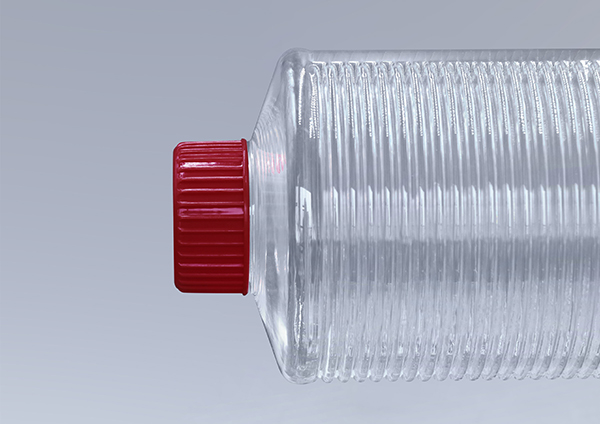
Expanded Surface Polystyrene Roller Bottle
Equipment Investment
Roller bottle systems generally require lower initial equipment investment, particularly for manufacturers that already have roller apparatus installed.
This can make them practical for:
Existing veterinary vaccine facilities
Smaller production batches
Multiple vaccine products
Seed-train expansion
Processes already validated with roller bottles
Microcarrier bioreactors typically require greater investment in bioreactor equipment, sensors, control systems, and process development.
For high-volume commercial production, however, increased automation and a smaller equipment footprint may provide long-term benefits.
Process Validation Is an Important Consideration
Veterinary vaccine manufacturers often operate mature production processes that have already been validated using a specific culture system.
Changing from roller bottles to microcarrier bioreactors is not simply an equipment replacement.
The manufacturer may need to evaluate:
Cell growth characteristics
Cell morphology
Virus susceptibility
Virus yield
Culture medium requirements
Harvest procedures
Product quality
Process consistency
For this reason, established roller bottle processes may continue to be used even when newer scale-up technologies are available.
A technology that performs well in a new process does not automatically justify changing a stable, validated production system.
When Are Roller Bottles More Suitable?
Roller bottles may be a practical choice when:
Production volume is small or medium
Multiple vaccine products share one facility
Existing processes are already validated
Flexible batch sizes are required
Initial equipment investment needs to remain controlled
The process is still in seed expansion or early scale-up
They can also provide a useful intermediate step between T-flasks and larger production systems.
When Are Microcarrier Bioreactors More Suitable?
Microcarrier systems may be considered when:
Production volume is increasing significantly
Large culture areas are required
Automation is a priority
The facility wants to reduce the number of individual culture vessels
Process monitoring and centralized control are important
The manufacturer is developing a new production process rather than modifying an established one
The suitability of microcarrier culture also depends strongly on the characteristics of the cell line.
Choosing the Right System for Veterinary Vaccine Production
There is no single culture system that is best for every veterinary vaccine manufacturer.
Microcarrier bioreactors can offer greater scale and process control, while roller bottles remain valuable for flexible production, established vaccine processes, seed cell expansion, and facilities where simpler operation is preferred.
For manufacturers already using roller bottle culture, consistent bottle dimensions, reliable rotation, uniform TC treatment, sterile packaging, and lot-to-lot performance are important for maintaining process stability.
FDCELL provides sterile TC-treated cell culture roller bottles in 2 L and 5 L formats for adherent cell expansion, virus propagation, veterinary vaccine production, and other biopharmaceutical applications.
When choosing between roller bottles and microcarrier bioreactors, manufacturers should consider not only production capacity, but also process maturity, validation requirements, equipment investment, cell characteristics, and long-term manufacturing strategy.










