Lentiviral vectors (LVVs) have become an important tool in cell and gene therapy, particularly for applications requiring stable gene delivery. As more therapies progress toward clinical development and commercialization, however, producing LVVs consistently and at larger scale remains a significant manufacturing challenge.
Recent work from VIVEbiotech highlights how the industry is addressing this challenge through stable producer cell lines and scalable upstream manufacturing processes.
In October 2026, VIVEbiotech highlighted new research published in Pharmaceutics involving its EvoLVcell stable producer cell line platform. The work explores the development and scale-up of lentiviral vector production, including the transition toward bioreactor-based manufacturing.
The development reflects a broader trend in viral vector manufacturing: productivity alone is no longer enough. Scalability, process consistency and manufacturing readiness are becoming equally important.
Why Lentiviral Vector Manufacturing Is Difficult to Scale
Producing lentiviral vectors involves living producer cells whose condition directly affects the manufacturing process.
Cell growth, viability, productivity and culture conditions can all influence vector output.
This creates additional challenges when moving from laboratory-scale development toward larger manufacturing systems.
A process that performs well at small scale must maintain acceptable performance as cell numbers and production volumes increase.
Manufacturers therefore need to consider several interconnected factors:
producer cell line performance;
cell growth and viability;
culture conditions;
media and raw materials;
process timing;
vector productivity;
harvest strategy;
batch-to-batch consistency.
Changes in any of these parameters can affect overall process performance.
Stable Producer Cell Lines Are Gaining Attention
Traditional viral vector manufacturing often relies on transient transfection, where plasmids are introduced into producer cells during each production batch.
This approach provides flexibility and remains widely used during development.
However, repeated transfection can add complexity when processes move toward larger-scale and routine manufacturing.
Stable producer cell lines offer another strategy.
By incorporating key vector-production components into a defined cell line, manufacturers may be able to reduce some of the variability and operational complexity associated with repeated transient transfection.
But developing a stable producer cell line is only the beginning.
For the system to support manufacturing, the cell line must also demonstrate reliable growth and productivity under the intended culture conditions.
Cell Line Performance and Upstream Culture Must Be Developed Together
Producer cell line development and upstream process development cannot be treated as completely separate activities.
A high-performing clone at small scale does not automatically guarantee equally strong performance after scale-up.
As production moves toward larger culture systems, manufacturers need to understand how cells respond to changes in their environment.
Factors such as cell density, nutrient availability, gas exchange, mixing and process duration can influence cell behavior and ultimately vector production.
This creates a closely connected manufacturing pathway:
Producer Cell Line → Cell Expansion → Upstream Culture → Vector Production → Harvest → Downstream Processing
Each step needs to support the next.
For this reason, scalable cell culture strategies become increasingly important as viral vector programs progress toward clinical and commercial manufacturing.
Scale-Up Is More Than Increasing Culture Volume
Scaling lentiviral vector production does not simply mean transferring the same process into a larger vessel.
Increasing scale can change the physical and biological environment experienced by the cells.
Manufacturers therefore need to evaluate whether critical process parameters remain controlled as production expands.
This may include monitoring:
cell growth profiles;
viability before vector production;
culture uniformity;
process timing;
nutrient availability;
vector yield and quality;
harvest consistency.
The objective is not necessarily to reproduce every small-scale condition exactly.
Instead, the goal is to establish a manufacturing process that consistently provides the required cell performance and product quality at the intended production scale.
Single-Use and Closed Processing Support Scalable Workflows
As viral vector manufacturing becomes larger and more standardized, the way cells, media and process fluids move between manufacturing stages also becomes increasingly important.
Repeated manual transfer can introduce additional operational complexity.
Single-use technologies and closed fluid-transfer strategies can help create more controlled connections between upstream operations.
A manufacturing workflow may include:
Media Preparation → Cell Expansion → Vector Production → Harvest → Collection
Connecting these steps through appropriate tubing, bags, connectors and other single-use components can reduce unnecessary open handling and support more standardized material transfer.
This becomes particularly relevant when processes move from development laboratories into GMP manufacturing environments.
Process Consistency Becomes More Important as Programs Advance
Early-stage development often prioritizes speed and flexibility.
As a therapy advances, manufacturing priorities gradually change.
Processes must become more defined, repeatable and suitable for producing multiple batches under controlled conditions.
This makes consistency increasingly important across:
Cells → Raw Materials → Culture Conditions → Process Operations → Harvest → Final Product
Producer cell line performance is therefore one part of a much larger manufacturing system.
A robust cell line can provide an important foundation, but manufacturing success ultimately depends on how effectively the entire upstream and downstream process is controlled.
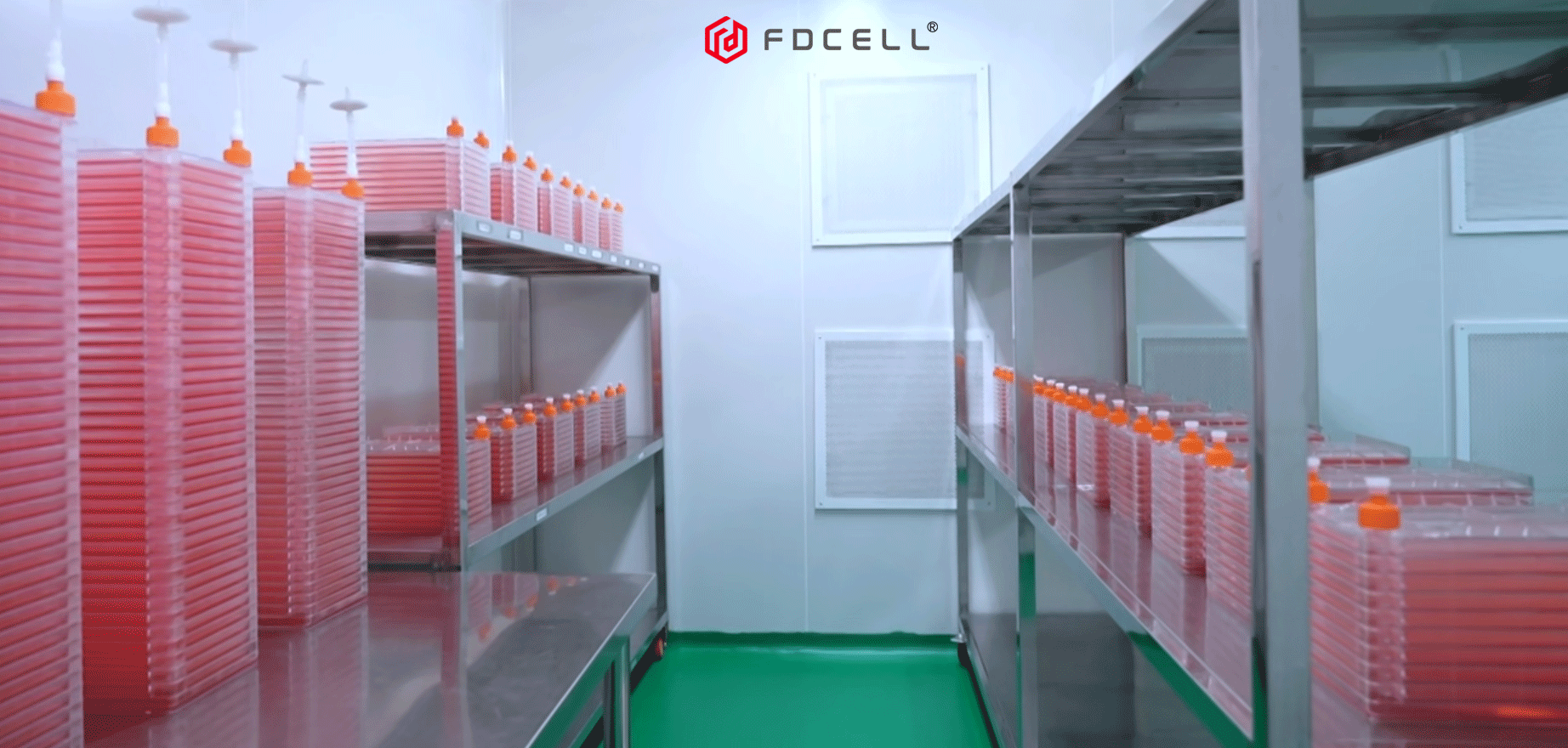
Advantages of Multi-Layer Cell Culture Systems in Vaccine Production
Building More Scalable Lentiviral Vector Manufacturing
The latest work highlighted by VIVEbiotech reflects the continued evolution of lentiviral vector manufacturing.
The industry is moving beyond the question of whether a vector can be produced toward a more demanding question:
Can it be produced consistently, efficiently and at the scale required for clinical and commercial manufacturing?
Stable producer cell lines, scalable upstream culture, single-use technologies, closed processing and improved process control are all contributing to this transition.
As more cell and gene therapies progress toward later-stage development, the ability to connect cell line performance with a robust and scalable manufacturing process will become increasingly important.
For viral vector manufacturers, successful scale-up will depend not on a single technology, but on building a manufacturing platform in which cells, culture conditions, process equipment and material transfer work together consistently.
Source: VIVEbiotech, October 2026; research published in Pharmaceutics on scalable lentiviral vector manufacturing.










