The T25 flask is commonly used when the available cell number is limited or when a newly established culture requires close observation. Its 25 cm² growth area makes it suitable for post-thaw recovery, early passage culture, clone expansion, and small-scale process development.
Compared with larger cell culture flasks, a T25 flask requires fewer cells to achieve an appropriate seeding density. It can therefore provide a practical starting point before cells are expanded into T75, T175, T225, or multilayer culture vessels.
However, the T25 format is not automatically suitable for every recovery process. Cell condition, seeding density, working volume, attachment characteristics, and the intended next stage of expansion should all be considered.

cell culture flask
Why Use a T25 Flask for Cell Recovery?
Cells may require a recovery period after cryopreservation, cell sorting, transfection, transportation, or other stressful procedures. During this stage, the main goal is usually to restore stable attachment, morphology, viability, and proliferation before larger-scale expansion.
A T25 flask can be useful because it provides:
A manageable growth area for limited cell numbers
Easier microscopic observation
Lower total medium requirements than larger flasks
Simple handling during early culture
A practical transition point before scale-up
Separation of different cell populations or experimental conditions
For adherent cells, maintaining an appropriate seeding density is often more important than immediately maximizing the available growth area.
1. Post-Thaw Cell Recovery
After thawing, cells may show reduced viability, delayed attachment, altered morphology, or slower proliferation. Seeding a small number of cells into an excessively large flask may result in a low density that delays recovery.
A T25 flask allows the available cells to be concentrated within a smaller growth area. This may help cells establish sufficient contact with the culture surface and, for some cell types, maintain beneficial cell-to-cell interactions.
During post-thaw recovery, users should monitor:
Initial attachment
Floating cells and debris
Cell morphology
Spreading after attachment
Medium colour and clarity
Development of confluence
Evidence of contamination
The appropriate recovery period depends on the cell line and culture protocol. Cells should be evaluated based on their condition rather than transferred to a larger flask according to a fixed schedule.
2. Early Passage Culture
Early passage culture requires careful control because cells may still be adapting to the culture environment. This is particularly important for newly thawed cells, primary cells, newly established cell lines, or cultures transferred from another laboratory.
The T25 flask provides enough surface area for early expansion while keeping the culture easy to observe and manage.
It can be used to evaluate:
Whether cells attach consistently
Whether normal morphology is maintained
How quickly cells reach the expected confluence
Whether the selected medium supports recovery
Whether the cells can be passaged reproducibly
Whether contamination or abnormal growth is present
Once cell growth becomes stable, the culture can be transferred to a larger flask while maintaining a comparable viable cell seeding density per square centimetre.
3. Recovery After Cell Sorting or Clone Selection
Cell sorting and clone selection may produce only a small number of viable cells. In this situation, a T25 flask may offer too much surface area for very low cell numbers, but it can become useful after an initial recovery step in smaller vessels.
For example, cells may first be recovered in a well plate or culture dish and then transferred into a T25 flask when sufficient growth has been achieved.
At this stage, the T25 format supports:
Expansion of selected cell populations
Separation of individual clones
Observation of morphology and growth rate
Preparation for further characterization
Transition to larger-scale culture
The transfer should be based on available cell number and seeding density rather than flask size alone.
4. Small-Scale Process Development
T25 flasks are also useful for testing culture conditions before using larger cell culture flasks.
Different T25 flasks can be used to compare:
Culture media
Serum concentrations
Surface requirements
Seeding densities
Feeding schedules
Dissociation methods
Harvest times
Treated and untreated conditions
Using a smaller format reduces the amount of cells, medium, and reagents required during early process development.
Once suitable conditions are identified, they can be evaluated in a T75 or larger flask. During scale-up, surface-based parameters should remain as consistent as practical.
Seeding Density Matters More Than Flask Size
A T25 flask is most useful when the available cell number is appropriate for its 25 cm² growth surface.
When planning a culture, users should consider:
Number of viable cells available
Target seeding density per cm²
Expected attachment efficiency
Cell doubling time
Required final cell yield
Intended confluence at passage
Sensitivity to low-density culture
If too few cells are seeded, recovery may be delayed and growth may become uneven. If too many cells are seeded, the culture may reach confluence too quickly and require an earlier passage.
The correct seeding density should be established for the specific cell type and culture process.
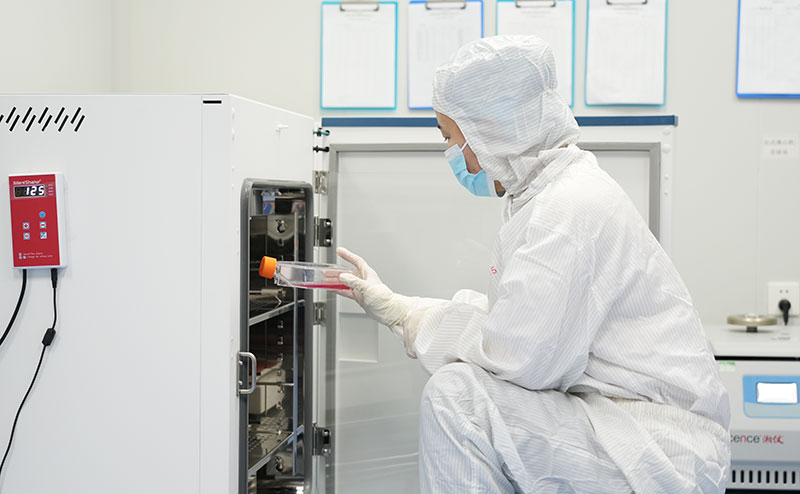
quality control and certificates
Working Volume and Medium Coverage
The working volume should be sufficient to cover the complete growth surface while supporting nutrient availability, pH control, and gas exchange.
Using too little medium may result in incomplete coverage or rapid changes in culture conditions. Excessive volume may make handling more difficult and may not improve cell recovery.
After seeding, the flask should be placed on a level surface so that the medium and cell suspension spread evenly across the growth area.
Users should also check for air bubbles, which can temporarily prevent cells from contacting parts of the TC-treated surface and create localized areas of low cell attachment.
When Should Cells Move from T25 to T75?
A culture may be ready to move from a T25 flask to a T75 flask when:
Cell viability has stabilized
Attachment and morphology are acceptable
Growth is reproducible
The culture has reached the intended passage confluence
Sufficient viable cells are available for the larger surface
The harvesting and reseeding procedure is established
Moving to a T75 flask provides three times the nominal growth area of a T25 flask. The total seeding cell number and medium volume should therefore be adjusted according to the larger surface area and the established culture protocol.
Scale-up should not be based only on visual confluence. Viable cell count, recovery after harvesting, and expected growth in the next vessel should also be considered.
When a T25 Flask May Not Be the Best Choice
A T25 flask may be less suitable when:
The available cell number is extremely low
The culture requires single-cell clone isolation
Several experimental conditions must be screened at once
A large cell yield is immediately required
The cells do not perform well at low density
Frequent sampling is required
The process is already stable at a larger scale
For very limited cell numbers, multiwell plates or smaller culture vessels may provide more appropriate growth areas. For established high-volume expansion, T75, T175, T225, or multilayer systems may reduce the number of vessels and handling steps.
Practical Tips for T25 Flask Culture
To improve consistency during cell recovery and early passage culture:
Confirm viable cell number before seeding
Use an appropriate density per cm²
Prepare a uniform cell suspension
Dispense slowly to minimize air bubbles
Distribute cells gently across the surface
Use the correct working volume
Place the flask on a level incubator shelf
Minimize movement during initial attachment
Record the flask lot number and culture conditions
Evaluate morphology and growth before scale-up
A standardized procedure makes it easier to compare recovery between different passages, cell banks, operators, and flask lots.
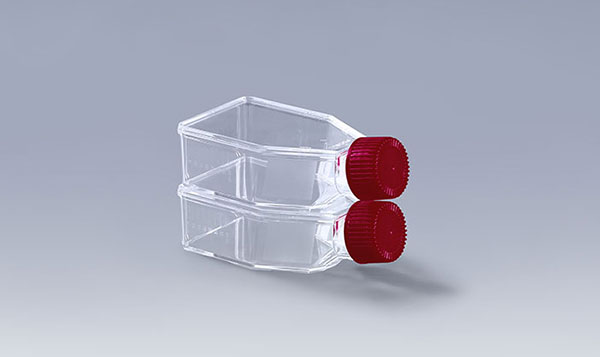
Choosing T25 Cell Culture Flasks
The T25 flask is a practical vessel for cell recovery, early passage culture, low-volume expansion, and initial process evaluation. Its main advantage is not simply its smaller size, but its ability to match a limited cell number with a controlled growth area.
FDCELL supplies sterile cell culture flasks in T25, T75, T175, and T225 formats, with TC-treated and non-treated surfaces and vented or plug seal cap options.
Before moving from a T25 flask to a larger format, laboratories should evaluate cell viability, attachment, morphology, confluence, viable cell yield, and recovery after passage under consistent culture conditions.










