The Multilayer Cell Factory is an indispensable and critical component in fields such as biopharmaceuticals, monoclonal antibodies, and cell therapy. It provides fundamental support for the production of biological drugs through large-scale cell culture. In these highly technological facilities, the growth and proliferation of cells are strictly controlled and monitored by various factors, among which temperature plays a vital role influencing cellular metabolic activity and growth rate.
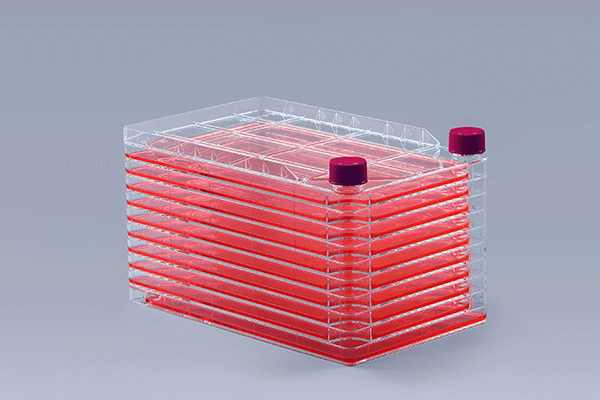
The optimal growth temperature for cells typically lies between 37°C and 38°C. Within this range, cells exhibit high metabolic activity and maintain normal growth and division rates. If the temperature drops too low, for instance, between 25°C and 35°C, cell growth slows significantly, and metabolic activity decreases, though this is not fatal. Under extreme cold conditions (below 0°C), cell viability is greatly compromised, but it generally does not lead to immediate cell death.
Conversely, high temperatures pose a more severe threat to cells. When exposed to temperatures of 39°C to 40°C, cells may sustain some damage but can potentially recover. However, once the temperature exceeds 41°C, the damage becomes irreversible. Culturing cells between 41°C and 42°C for several hours can cause severe damage or even cell death. This is because high temperatures lead to enzyme inactivation, lipid disruption, inhibition of nuclear division, and protein denaturation within the cell, ultimately resulting in cellular dysfunction and death.
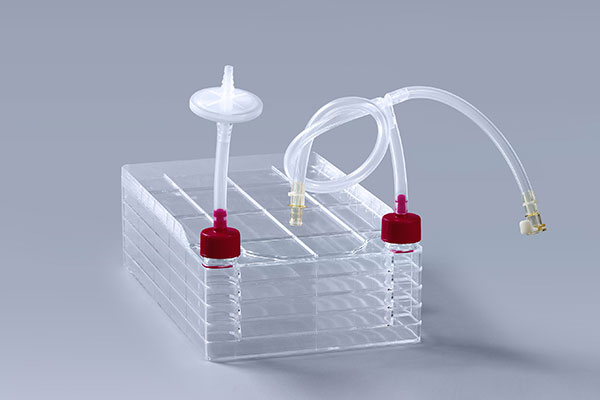
Therefore, when using a cell factory for culture, it is crucial to control the cultivation temperature to prevent temperatures that are too high or too low from adversely affecting cell growth. Additionally, factors such as osmotic pressure, a sterile environment, gas composition, and pH value collectively influence cell growth, metabolism, and product quality.
In summary, the environment within a cell factory must remain stable and consistent to ensure that cells can grow and proliferate under optimal conditions. This guarantees the quality and yield of biological drugs, providing a solid foundation and assurance for their research, development, and production.










