In biopharmaceutical manufacturing, where product purity and safety are paramount, the choice of packaging materials plays a decisive role in ensuring the quality of upstream and downstream processes. Among the many regulatory standards used to qualify materials for pharmaceutical contact, USP Class VI stands out as one of the most recognized and stringent benchmarks.
PETG square media bottle—also known as sterile media bottles, media bottles, or media storage bottles—have become increasingly popular across modern laboratories and GMP facilities precisely because they are manufactured using USP Class VI–certified materials. This certification ensures the biocompatibility, safety, and stability required for sensitive biological formulations.
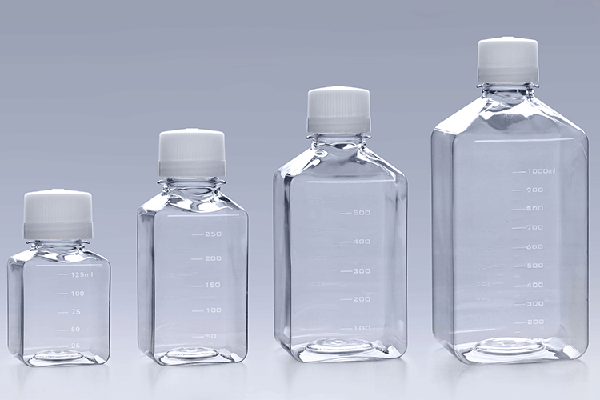
PETG Media Bottles Procurement Guide
1. What Is USP Class VI and Why Does It Matter?
USP Class VI is a material certification defined by the United States Pharmacopeia.
It evaluates the biological reactivity of plastics through a series of rigorous tests, including:
Systemic toxicity
Intracutaneous reactivity
Implantation toxicity
Extraction and leachables testing
Only materials that demonstrate no adverse biological reactions can receive USP Class VI certification.
For biopharmaceutical packaging, this classification is essential because it ensures:
✓ No harmful leachables enter the product
✓ Material is safe for contact with cells, proteins, buffers, and media
✓ Stability under sterilization and storage conditions
This makes USP Class VI–compliant PETG ideal for applications involving cell culture, media preparation, vaccine production, and biologics manufacturing.
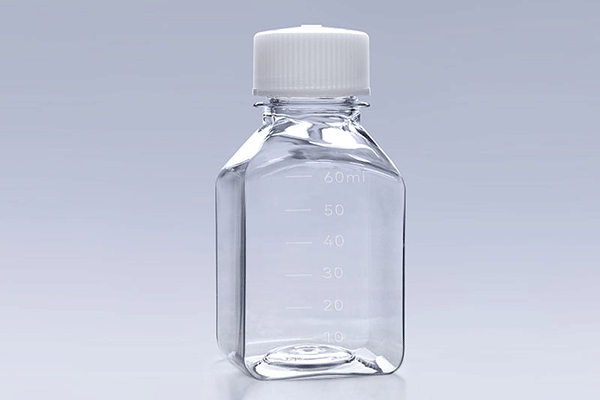
2. PETG square media bottle: Designed for High-Purity Environments
PETG square media bottle offer inherent advantages over traditional glass or lower-grade plastics. When produced using USP Class VI–certified PETG, these containers meet the increasing purity and performance demands of modern bioprocessing.
Key benefits include:
High chemical resistance
Stable for pH-sensitive and reactive solutions.
Low extractables and leachables
Ensures product purity and stability.
Excellent clarity
Ideal for liquid inspection and volume verification.
Wide temperature tolerance
Suitable for conditions down to –80°C.
Lightweight and shatter-resistant
Safer and easier to handle compared with glass.
Because of these properties, PETG square media bottle are now widely used in:
Cell culture media storage
Buffer preparation
Serum handling
Bulk intermediate storage
Vaccine formulation workflows
3. How USP Class VI Strengthens Quality and Compliance
Using USP Class VI–certified PETG materials helps manufacturers meet the key requirements of FDA, EMA, and other regulatory bodies.
(1) Compliance with global pharmacopeias
PETG bottles with USP Class VI materials can also support compliance with:
USP /
FDA 21 CFR Part 177
European Pharmacopoeia 3.1 (EP 3.1 plastics)
This makes them suitable for use in GMP production environments.
(2) Compatibility with sterile manufacturing
Most sterile PETG square media bottles are produced in Class C (ISO 7) cleanrooms and sterilized using Cobalt-60 gamma irradiation, providing:
Sterility assurance level (SAL) 10⁻⁶
Free of pyrogen, DNase, RNase
(3) Reduced risk of contamination
The combination of high-purity material, sterile production, and validated processes provides strong protection against:
Chemical degradation
Microbial contamination
Endotoxin introduction
This reliability is essential for biopharmaceutical products with long development cycles and strict quality requirements.
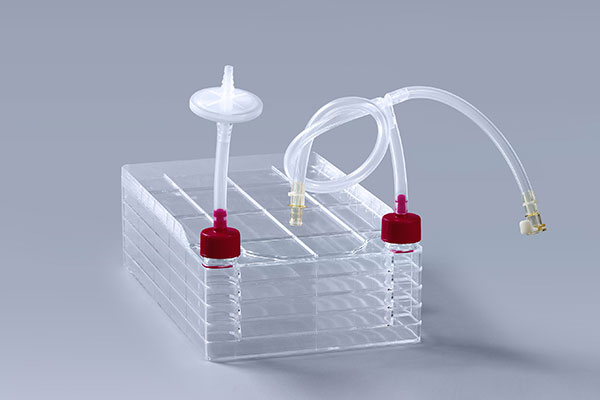
4. PETG square media bottle as Part of the Modern Bioprocessing Workflow
As biologics, vaccines, and cell therapies expand globally, the need for safe, traceable, and compliant packaging materials increases.
USP Class VI–certified PETG bottles support every step of the manufacturing process:
Upstream:
Media preparation
Seed train development
Buffer storage for CHO cell cultures
Downstream:
Purification buffers
Intermediate storage
Formulation support
QC/QA:
Sample retention
Stability studies
With rising regulatory expectations and the shift toward single-use systems, PETG square media bottles continue to gain importance in compliant, contamination-free workflows.
Conclusion
USP Class VI certification is more than a material standard—it is a guarantee of safety, purity, and reliability.
By choosing PETG square media bottles manufactured with USP Class VI materials, biopharmaceutical companies can significantly reduce risks, enhance regulatory compliance, and protect the integrity of high-value biological products.
As the industry continues its transition toward single-use, high-performance plastic solutions, USP Class VI–certified PETG bottles will remain a cornerstone of modern bioprocessing and laboratory operations.










