CAR-T cell therapy has emerged as one of the most promising breakthroughs in cancer immunotherapy. By genetically modifying a patient's T cells to recognize and attack tumor cells, researchers have achieved remarkable clinical outcomes in the treatment of hematological malignancies. Throughout the development and optimization of CAR-T therapies, laboratory cell culture systems play a critical role.
Among the essential tools used in CAR-T research, the Cell Culture Flask remains one of the most widely adopted platforms for T cell isolation, activation, expansion, and process development. High-quality cell culture vessels provide researchers with a controlled environment that supports cell growth, viability, and reproducibility during early-stage studies.

Why Cell Culture Flasks Are Important in CAR-T Research
The development of CAR-T therapies involves multiple cell culture steps, each requiring reliable and sterile cultivation conditions. A Cell Culture Flask offers several advantages for researchers working on T cell engineering and expansion.
Efficient T Cell Cultivation
After peripheral blood mononuclear cells (PBMCs) are isolated, T cells must be activated and expanded before genetic modification. A TC Treated Cell Culture Flask provides an optimized surface that supports the attachment of accessory cells and facilitates cell handling during experimental procedures.
Researchers commonly use cell culture flasks for:
Initial T cell culture
Cell activation studies
Viral transduction process optimization
Media screening
Small-scale cell expansion
Quality control testing
The transparent flask design also allows convenient microscopic observation throughout the cultivation process.
Supporting Process Development for CAR-T Manufacturing
Before moving to large-scale production systems, scientists typically conduct process optimization in laboratory-scale culture vessels. The Cell Culture Flask serves as a valuable platform for evaluating culture conditions and establishing reproducible protocols.
Key parameters often studied include:
Cell density
Culture medium composition
Cytokine supplementation
Transduction efficiency
Cell viability
Expansion kinetics
Because flasks are available in multiple growth areas, researchers can easily scale experiments while maintaining consistent culture conditions.
The Importance of Surface Treatment
Surface characteristics can significantly influence cell behavior in culture. A TC Treated Cell Culture Flask undergoes specialized surface modification to improve hydrophilicity and enhance cell interaction with the culture surface.
For CAR-T research, surface-treated flasks offer benefits such as:
Improved cell handling
Consistent experimental performance
Enhanced reproducibility
Reduced variability between batches
High-quality surface treatment is particularly important when researchers are developing standardized protocols for future clinical manufacturing.
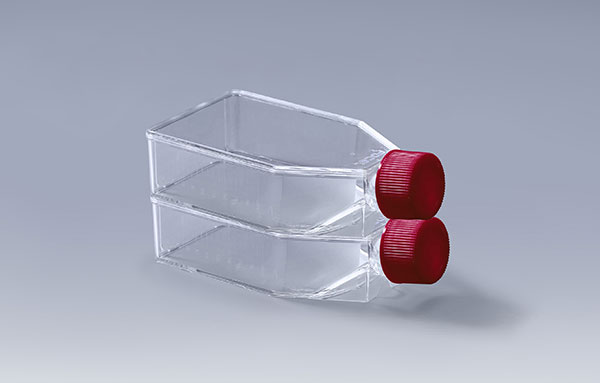
T75 TC-treated Cell Culture Flask
Maintaining Sterility and Cell Quality
Cell therapy research requires strict contamination control. Modern Cell Culture Flasks are manufactured in cleanroom environments and sterilized to ensure a contamination-free culture system.
Important flask features for CAR-T applications include:
Vented and Plug Seal Caps
Different cap configurations allow researchers to select the most appropriate gas exchange conditions for their experiments.
High Optical Clarity
Clear flask walls enable continuous monitoring of cell morphology and culture status without disrupting the culture environment.
Leak-Proof Design
Secure sealing minimizes contamination risks during incubation, transportation, and routine laboratory handling.
From Research to Cell Therapy Manufacturing
Although large-scale CAR-T production may eventually utilize bioreactors, cell factories, or closed-system platforms, the Cell Culture Flask remains indispensable during early research and process development stages.
Applications include:
Proof-of-concept studies
Gene transfer optimization
T cell activation research
Media development
Cell expansion protocol establishment
Preclinical process validation
As CAR-T therapies continue to evolve, reliable cell culture consumables will remain essential for accelerating innovation and improving manufacturing efficiency.
Choosing the Right Cell Culture Flask for CAR-T Research
When selecting a Cell Flask for CAR-T applications, researchers should consider:
Surface treatment quality
Sterility assurance
Material consistency
Growth area options
Cap design
Manufacturing quality standards
A dependable flask helps ensure consistent experimental outcomes and supports the successful development of advanced cell therapies.
Conclusion
The Cell Culture Flask plays a fundamental role in CAR-T research by providing a reliable environment for T cell culture, process optimization, and early-stage cell expansion. From laboratory investigation to manufacturing process development, high-quality TC Treated Cell Culture Flasks help researchers achieve reproducible results while maintaining cell viability and culture integrity.
As the global cell therapy industry continues to expand, advanced cell culture consumables will remain critical tools for supporting the next generation of CAR-T innovations.










