Viral vectors play a crucial role in modern biotechnology — serving as essential tools for gene therapy, vaccine development, and cell-based therapies. Whether producing adeno-associated viruses (AAVs), lentiviruses (LVs), or adenoviruses, the quality and consistency of the production process depend heavily on the cell culture system used. Among various culture vessels, the tissue culture flasks remains the foundation for early-stage viral vector manufacturing and process development.

Guide to Choosing a Cell Culture Flask
1. Importance of Early-Stage Culture Systems
Before viral vector production can be scaled up to bioreactors or multilayer cell factory, initial cell growth and transfection are typically performed in tissue culture flasks.
These flasks provide a controlled and uniform environment for adherent cells such as HEK293, Vero, and A549, which are the most common host cell lines used in viral vector production.
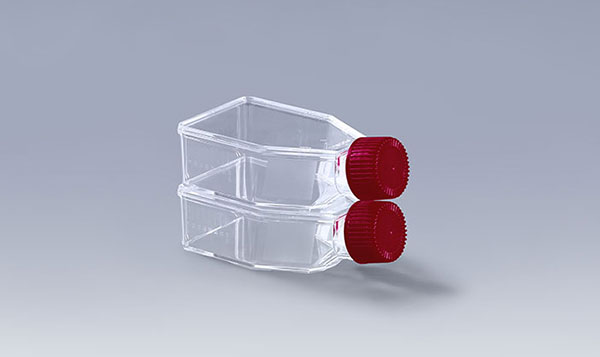
By using high-quality, TC-treated PS tissue culture flasks(Cell Culture Flask), researchers can ensure that cells achieve optimal confluence, morphology, and health — all critical factors that influence viral yield and functional titer.
2. Surface and Material Considerations
The surface properties of a tissue culture flask directly affect viral vector production efficiency.Flasks are manufactured from medical-grade polystyrene (PS) and undergo tissue culture surface treatment, introducing oxygen-containing functional groups that improve hydrophilicity and protein adsorption.
This modification enhances the attachment and transfection efficiency of adherent cells such as HEK293, leading to higher viral expression levels and greater reproducibility.
Additionally, the excellent optical clarity of PS allows for easy microscopic observation of cell health and transfection status, facilitating process monitoring and optimization.

Vented Caps in Cell Culture Flasks
3. Maintaining Sterility and Process Consistency
Viral vector production requires stringent aseptic conditions to prevent cross-contamination or biological risks.
FDCELL tissue culture flasks(Cell Culture Flask) are produced in C-grade cleanrooms under ISO 9001 and ISO 13485 quality systems.
Each batch is sterilized, tested, and traceable with a unique inspection report.
The vented caps ensure efficient CO₂ exchange while maintaining sterility — a balance that supports stable pH conditions and healthy cell growth throughout the production cycle.
4. Transition from Flask to Large-Scale Systems
Once optimal conditions are established in tissue culture flasks, the process is scaled up to multilayer cell factories or bioreactor systems.
Maintaining process consistency between the small-scale flask and large-scale vessel is critical to ensuring reproducibility and regulatory compliance.
The same cell culture surface chemistry and design philosophy are therefore applied across FDCELL’s product range — from tissue culture flasks to 10-layer and 40-layer cell factories — to simplify the seed train expansion process.
Recommended Medium Volumes for Cell Culture Flasks
5. Applications in Gene and Vaccine Manufacturing
Tissue culture flasks are widely used in:
AAV and lentiviral vector production for gene therapy research.
Adenoviral vector amplification in vaccine development.
Cell line establishment and quality testing during process validation.
By offering a reliable and contamination-free platform, these flasks support both research-grade and GMP-transition viral vector workflows.
Conclusion
The tissue culture flask remains an indispensable tool in viral vector production, bridging the gap between small-scale research and industrial manufacturing.
Its well-characterized surface, optical transparency, and sterile design make it ideal for developing and optimizing cell-based viral expression systems.
At FDCELL, we continue to refine flask design and production technology to support the evolving needs of gene and vaccine manufacturers worldwide — delivering reliability from the very first step of viral vector production.










