Cell therapy manufacturing is moving steadily toward greater automation. As processes become more integrated, however, automation alone is not enough. Maintaining a controlled and increasingly closed workflow is becoming equally important.
A recent collaboration between Catalent and Ori Biotech highlights this trend.
On October 6, 2026, Catalent announced that it had joined Ori Biotech’s Preferred Partner Network. Catalent’s Princeton facility will become a Center of Excellence for Ori’s IRO® platform, supporting process development and GMP manufacturing for autologous cell therapies.
The development reflects a broader shift in the industry:
Manual Processing → Automation → Closed Processing → GMP Manufacturing → Commercial Scale
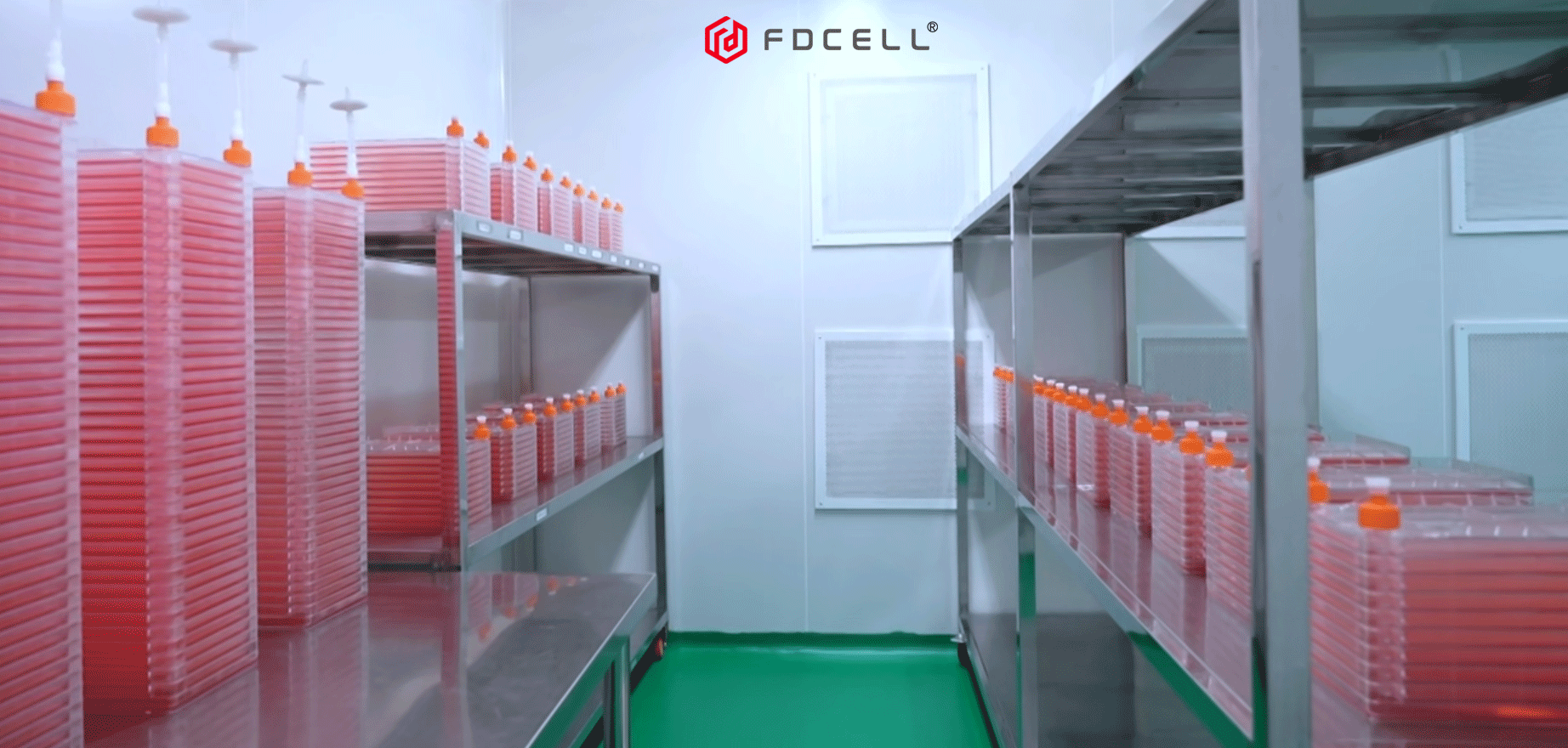
Advantages of Multi-Layer Cell Culture Systems in Vaccine Production
Why Cell Therapy Manufacturing Is Difficult to Scale
Unlike many conventional biopharmaceutical processes, cell therapy manufacturing involves living cells that must pass through multiple processing steps.
Depending on the therapy, these may include cell isolation, activation, expansion, modification, washing, concentration, formulation and final filling.
When these operations rely heavily on manual handling and repeated open connections, process complexity increases as manufacturing scales.
This can create several challenges:
greater dependence on operator technique;
more manual transfers between processing steps;
increased contamination-control requirements;
variability between manufacturing runs;
more complex process documentation;
difficulty transferring a process between facilities.
Automation can reduce some of these challenges, but the way materials move between individual process steps remains equally important.
Automation and Closed Processing Are Closely Connected
A truly automated manufacturing process cannot depend on frequent manual opening, pouring or reconnecting between individual operations.
This is where closed processing becomes important.
Closed systems are designed to keep cells, media and process fluids within controlled fluid pathways during transfer and processing. Depending on the manufacturing step, these systems may involve single-use tubing assemblies, bags, connectors, filters and other integrated components.
The objective is not simply to eliminate human involvement.
Instead, the goal is to create a more controlled process in which material movement can be standardized and unnecessary open handling can be reduced.
This makes closed processing a natural partner to automation.
Cell Expansion Is Part of the Closed Manufacturing Workflow
Cell expansion remains a critical upstream step in many cell therapy processes.
As cell numbers increase, manufacturers may need to move cells and media between different culture and processing stages.
A typical workflow may gradually develop into:
Cell Culture → Cell Expansion → Media Transfer → Cell Harvest → Downstream Processing
At small scale, some of these operations may still be performed manually.
As production moves toward larger or more standardized manufacturing, however, repeated manual transfers become increasingly difficult to manage consistently.
Using scalable cell culture platforms together with closed fluid-transfer strategies can help simplify the connections between individual stages.
This is particularly important when a process needs to move from early development into GMP manufacturing.
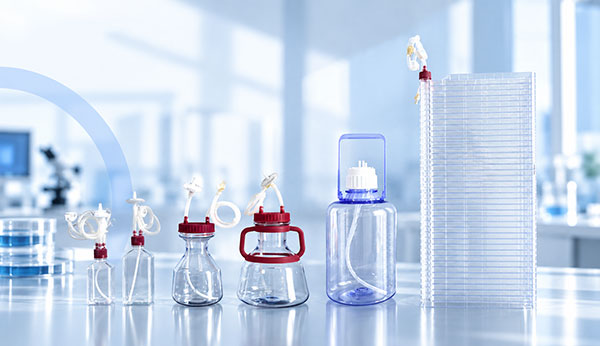
Single-Use Systems Support More Integrated Manufacturing
Single-use technologies have become an important part of modern cell and gene therapy manufacturing.
They can reduce the need for cleaning and sterilization between batches while allowing manufacturers to configure fluid pathways for specific production processes.
When combined with closed processing, single-use components can support controlled transfer between:
Media Preparation → Cell Culture → Cell Expansion → Harvest → Collection
The value of these systems is therefore not limited to individual consumables.
Their greater value comes from how different components can be connected into a reproducible manufacturing workflow.
For manufacturers, this means equipment, culture vessels, tubing, connectors and process containers increasingly need to be considered as parts of an integrated system rather than isolated components.
Closed Processing Does Not Mean Every Step Is Completely Closed
It is important to distinguish between the goal of closed processing and the assumption that every cell therapy process can immediately become fully closed.
Different therapies have different manufacturing requirements.
Some operations may already be performed within closed systems, while others may still require controlled open manipulation.
The practical objective is therefore often to identify where open operations can be reduced and where closed or functionally closed connections can be introduced without negatively affecting the process.
This requires evaluation of:
process compatibility;
tubing and connector configuration;
aseptic connection strategy;
fluid-transfer efficiency;
material compatibility;
process scale;
operator workflow.
The appropriate system depends on the specific manufacturing process.
From Individual Equipment to Integrated Workflows
The Catalent–Ori Biotech collaboration is significant because it reflects a wider change in how cell therapy manufacturing platforms are being developed.
The industry is gradually moving away from manufacturing processes built around multiple isolated manual operations.
Instead, the direction is toward more integrated workflows where automation, single-use technologies, closed fluid transfer and digital process control work together.
This transition can be summarized as:
Cell Expansion → Closed Transfer → Automated Processing → Process Control → GMP Manufacturing
As more cell therapies move from clinical development toward commercial production, the ability to reproduce the same process across batches and manufacturing sites will become increasingly important.
Building Cell Therapy Manufacturing for the Next Stage
Automation will continue to reshape cell therapy manufacturing, but automation alone does not solve every manufacturing challenge.
The surrounding process architecture—including cell culture, fluid transfer, single-use components, closed connections and contamination control—must evolve at the same time.
For this reason, closed processing is becoming more than an individual manufacturing feature. It is increasingly part of the infrastructure required to build scalable and reproducible cell therapy production.
The latest Catalent and Ori Biotech collaboration provides another indication of this transition.
As cell therapy manufacturing moves toward greater automation, the future is likely to depend not only on automating individual operations, but on connecting the entire manufacturing workflow in a more controlled, closed and consistent way.
Source: Catalent, Catalent Joins Ori Biotech’s Preferred Partner Network to Accelerate Adoption of Advanced Manufacturing Technologies, October 6, 2026.










