Uneven cell attachment is a common challenge when scaling adherent cell culture from T-flasks to multilayer Cell Factories. Cells may attach well in some areas while other regions remain sparsely populated, eventually leading to uneven confluence and variable cell yields.
In most cases, the problem is not caused by a single factor. Cell preparation, seeding density, liquid distribution, air bubbles, handling procedures and the culture surface can all influence how evenly cells attach.
Understanding these factors can help improve consistency when using Cell Factory systems for vaccine manufacturing, viral vector production and other large-scale adherent cell culture applications.
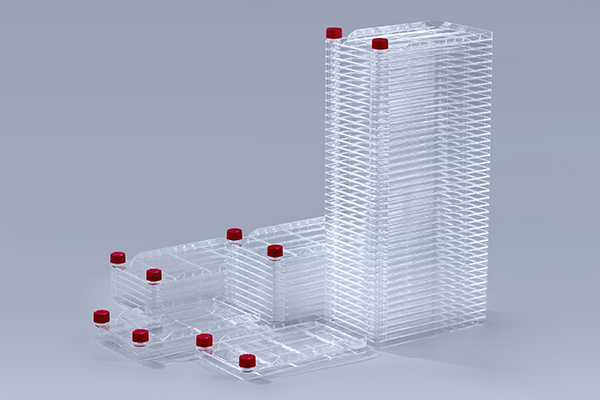
Cell Seeding Density and Medium Volume Guide
Why Does Uneven Cell Attachment Occur?
During inoculation, the cell suspension must be distributed across multiple growth layers. If cells settle too quickly or the suspension is not distributed evenly, different areas of the Cell Factory may receive different numbers of cells.
Common contributing factors include:
Uneven cell suspension before inoculation
Inappropriate seeding density
Incomplete liquid distribution
Air bubbles over the growth surface
Excessive delay during inoculation
Improper vessel positioning
Inconsistent surface treatment
Identifying where the variation occurs is the first step toward improving the process.
1. Prepare a Uniform Cell Suspension
Uniform attachment starts with the inoculum.
Before introducing cells into a Cell Factory, the cell suspension should be well mixed so that cells are distributed consistently throughout the medium. Cell aggregates or settling during preparation can lead to different cell concentrations entering different parts of the vessel.
For larger-scale operations, attention should also be paid to the time between preparing the suspension and completing inoculation.
The goal is to deliver a consistent cell concentration throughout the entire filling process.
2. Use an Appropriate Seeding Density
Seeding density directly influences subsequent cell growth and confluence.
If the initial density is too low, cells may require more time to reach the desired confluence. If the inoculum is distributed unevenly, local differences become even more apparent as culture continues.
Instead of simply transferring the total cell number used in smaller vessels, calculate the inoculum according to the effective culture area of the multilayer Cell Factory and the requirements of the specific cell line.
The appropriate seeding density should be established during process development rather than treated as a universal value.
3. Pay Attention to Liquid Distribution
One of the most important differences between a T-flask and a Cell Factory is the multilayer structure.
After inoculation, the cell suspension needs to reach each culture layer and spread across the available growth surface. Improper positioning or handling can result in more cells accumulating in certain areas.
A standardized filling and distribution procedure should therefore define:
Vessel orientation
Filling sequence
Liquid distribution steps
Resting position
Handling time before incubation
Follow the manufacturer's operating instructions for the specific Cell Factory configuration being used.
4. Minimize Air Bubbles
Air bubbles trapped over the culture surface can temporarily prevent cells and medium from contacting that area.
During cell seeding, this may create localized regions with poor attachment.
Bubble formation can often be reduced by controlling the filling process, avoiding excessive agitation and minimizing unnecessary air introduction through tubing.
For more information, see How to Reduce Bubble Formation in Cell Factory Culture.
5. Avoid Excessive Movement After Seeding
Once cells have been distributed across the culture surface, unnecessary movement can cause them to migrate before stable attachment occurs.
This may lead to cell accumulation near edges or specific areas of the culture chamber.
After completing the required distribution procedure, transfer the Cell Factory carefully to the incubator and maintain the established culture position.
The appropriate attachment period depends on the cell line and culture conditions, so it should be determined as part of the validated process.
6. Maintain Consistent Culture Conditions
Uneven confluence observed later in culture is not always caused by poor initial attachment.
Differences in temperature, medium distribution, pH, nutrient availability or medium exchange can also contribute to non-uniform growth.
For this reason, troubleshooting should distinguish between:
uneven initial attachment and uneven growth after successful attachment.
Monitoring cells at different stages of culture can help determine when the variation first appears.
7. Evaluate the Cell Culture Surface
When operating procedures have been standardized but uneven attachment continues to occur, the TC-treated culture surface should also be considered.
For adherent cell culture, consistent surface treatment across the entire growth area is important for reproducible cell attachment and spreading.
When evaluating a Cell Factory supplier, manufacturers should consider:
TC surface treatment consistency
Growth surface uniformity
Batch-to-batch consistency
Sterility and packaging integrity
Product traceability
For regulated or large-scale manufacturing, these factors can become increasingly important as the number of culture vessels and production batches increases.
8. Standardize the Process During Scale-Up
A protocol that performs well in a smaller culture vessel may require adjustment when moving to a 10-layer or 40-layer Cell Factory.
During Cell Factory scale-up, manufacturers should establish consistent procedures for cell preparation, inoculation, liquid distribution and vessel handling.
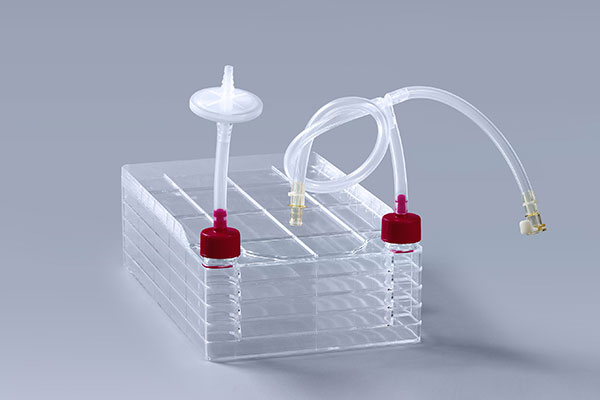
Closed-system tubing assemblies can also support more standardized inoculation and media transfer by reducing repeated manual operations.
FDCELL Cell Factory Systems
FDCELL provides Cell Factory systems in 1-layer, 2-layer, 5-layer, 10-layer and 40-layer configurations for scalable adherent cell culture.
TC-treated growth surfaces are designed to support cell attachment and expansion, while closed-system tubing options are available for applications requiring more controlled fluid transfer.
FDCELL Cell Factory systems can be used in applications such as vaccine manufacturing, viral vector production, biopharmaceutical research and large-scale adherent cell expansion.
Conclusion
Avoiding uneven cell attachment in multilayer Cell Factories requires control of the entire seeding process rather than focusing on a single parameter.
A uniform cell suspension, appropriate seeding density, proper liquid distribution, careful bubble control and consistent vessel handling can all contribute to more uniform attachment. Culture surface consistency and standardized operating procedures should also be considered, particularly when scaling up production.
When uneven growth occurs, identifying whether the problem begins during initial attachment or develops later in culture can make troubleshooting much more effective.










