Cell Culture Vessels are fundamental tools in cell biology, biopharmaceutical research, vaccine production, and life science laboratories. Selecting the appropriate cell culture vessel is critical for ensuring cell viability, reproducibility, and scalable production outcomes.
This article provides an overview of the most commonly used cell culture vessels, including cell culture flasks, cell factories, shake flasks, roller bottles, cell culture plates, and cell culture dishes, helping laboratories and manufacturers understand their applications and selection criteria.
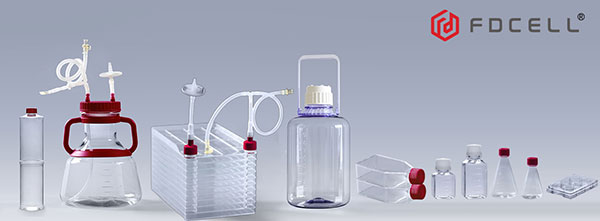
What Are Cell Culture Vessels?
Cell Culture Vessels refer to laboratory containers specifically designed to support the in vitro growth, maintenance, and expansion of cells under controlled conditions. These vessels are engineered to ensure:
Sterility and biocompatibility
Consistent surface quality for cell attachment or suspension
Compatibility with incubators, shakers, or roller systems
Reliable scalability from research to production
Different cell types and workflows require different vessel formats, making proper selection essential.
Cell culture flasks are among the most widely used cell culture vessels for routine adherent cell culture.
Key Features:
Flat growth surface optimized for cell attachment
Available in multiple sizes (e.g., T25, T75, T175, T225)
Treated surfaces to promote uniform cell adhesion
Vent or plug caps for controlled gas exchange
Applications:
Cell culture flasks are ideal for cell line maintenance, small-scale experiments, and early-stage research where flexibility and ease of handling are required.

Cell factories are multilayer cell culture vessels designed for large-scale adherent cell expansion.
Key Features:
Multiple stacked culture layers to maximize surface area
Uniform layer-to-layer fluid distribution
Closed-system design reduces contamination risk
Compatible with automation and GMP environments
Applications:
Cell factories are commonly used in vaccine production, cell therapy manufacturing, and biopharmaceutical processes where high cell yields and process consistency are essential.
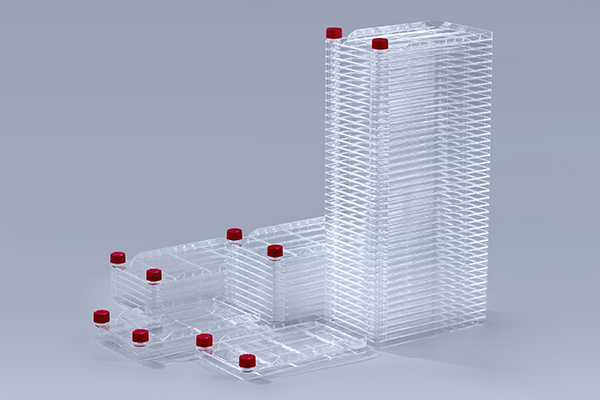
Closed System Cell Factory with Tube
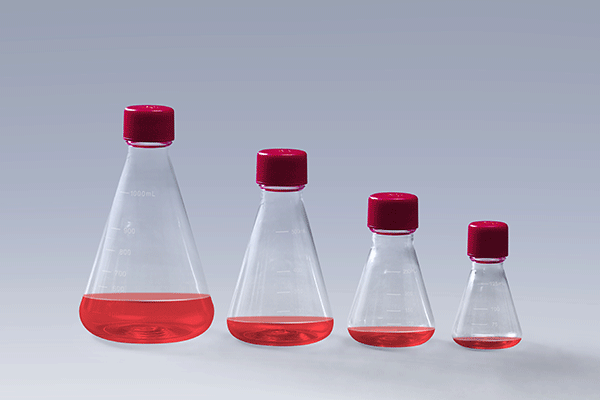
Shake flasks are specialized cell culture vessels used primarily for suspension cell culture.
Key Features:
Suitable for orbital shaking platforms
Available with vented or sealed caps
Optional baffled designs to improve oxygen transfer
Made from PETG or PC materials for durability
Applications:
Shake flasks are widely used for suspension cell lines, microbial culture, media preparation, and process development studies.
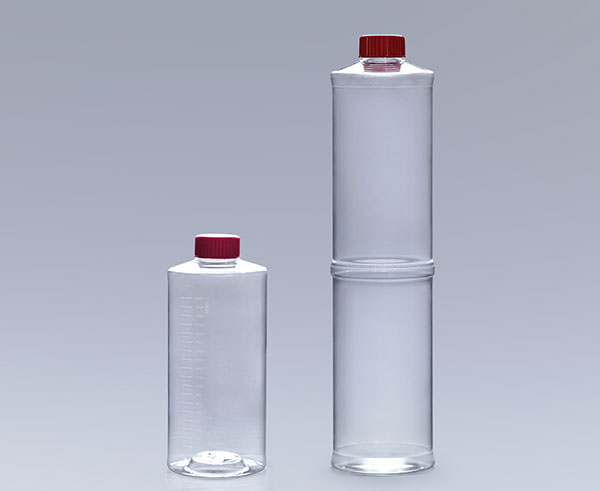
Roller bottles are cylindrical cell culture vessels that rotate continuously to provide even nutrient distribution.
Key Features:
Large surface area for adherent cells
Continuous rolling improves gas exchange
Compatible with roller bottle incubators
Applications:
Roller bottles are often used for virus propagation, vaccine production, and protein expression where gentle cell growth conditions are required.
Cell culture plates are multi-well cell culture vessels designed for parallel experiments.
Key Features:
Available in 6-, 12-, 24-, 48-, and 96-well formats
Treated surfaces for consistent cell attachment
Suitable for automated handling and high-throughput screening
Applications:
Cell culture plates are commonly used in drug screening, cytotoxicity assays, and comparative cell-based studies requiring standardized conditions.
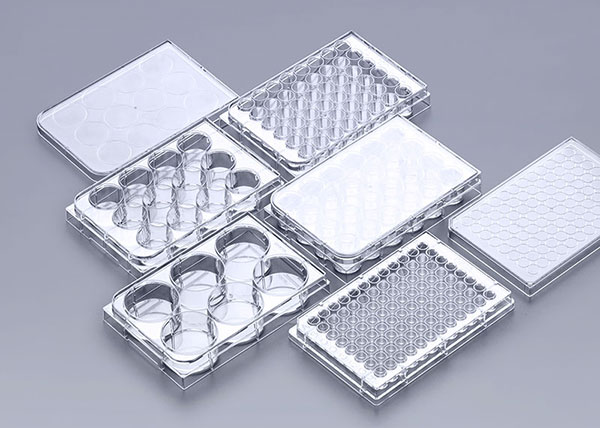
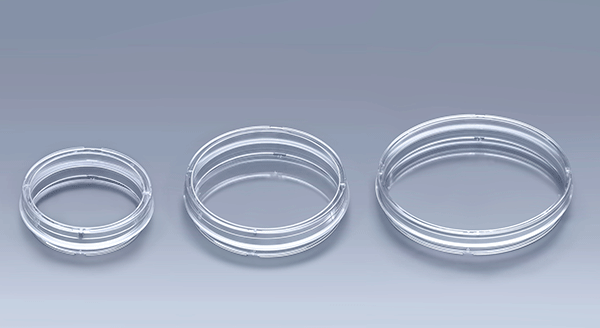
Cell culture dishes provide a simple and open format for cell observation and manipulation.
Key Features:
Clear optical properties for microscopy
Uniform growth surface
Easy access for pipetting and sampling
Applications:
Cell culture dishes are often used for primary cell culture, microscopy-based studies, and short-term experiments.
How to Choose the Right Cell Culture Vessels
When selecting cell culture vessels, consider the following factors:
Cell type (adherent vs. suspension)
Culture scale (research, pilot, or production)
Surface treatment requirements
Sterility and quality control standards
Compatibility with existing equipment
Matching the vessel design to the application ensures stable cell growth and reproducible experimental results.
Conclusion
Cell Culture Vessels play a critical role in modern life science research and biomanufacturing. From standard cell culture flasks to scalable cell factory systems, each vessel type serves a specific purpose within the cell culture workflow.
Understanding the characteristics and applications of different cell culture vessels helps laboratories and manufacturers optimize cell growth, improve efficiency, and support reliable scale-up from research to production.










