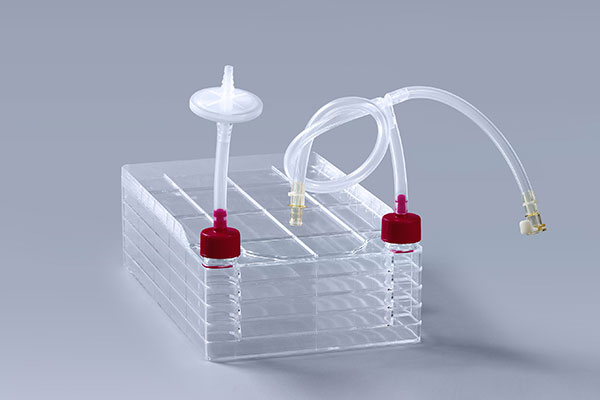
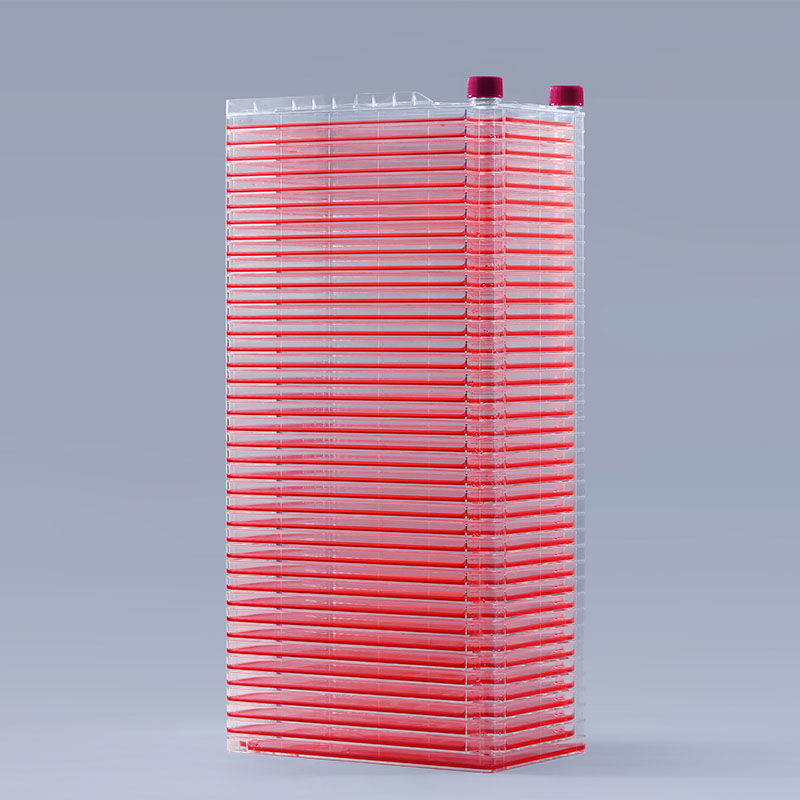
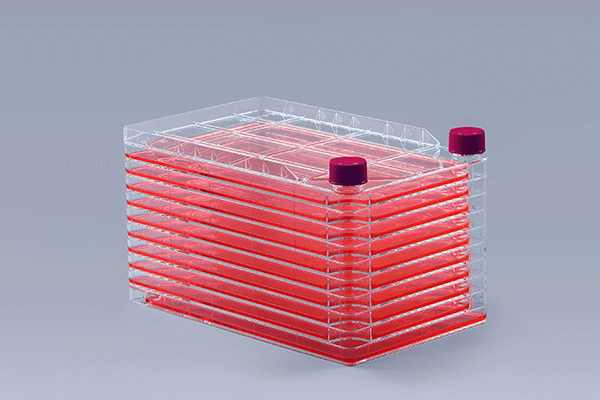
The Cell Factory is a multi-layered modular culture system primarily used for large-scale adherent cell culture. Its multi-layer design (e.g., 1-layer, 2-layer, 10-layer, 40-layer, etc.) significantly increases the available culture surface area while saving space, making it suitable for industrial production or large-scale laboratory needs. Below are the common cell types and application areas for this system.
I. Suitable Cell Types
Adherent-Dependent Cells (require a surface for attachment):
Mammalian Cells:Vaccine Production Cells: Vero cells (rabies, polio vaccines), MRC-5 (human diploid cells for rubella, hepatitis B vaccines), HEK293 (adenoviral vector vaccines/gene therapy).
Stem Cells: Mesenchymal stem cells (MSCs), induced pluripotent stem cells (iPSCs) for differentiation and expansion.
Cancer Cell Lines: HEp-2 (laryngeal carcinoma), A549 (lung cancer cells), etc., used in drug screening or research.
Primary Cells: Human skin fibroblasts, hepatocytes, etc. (require optimized culture conditions).
Special Applications:Microcarrier Suspension Culture: Certain adherent cells can be adapted to stirred-tank bioreactors using microcarriers (e.g., Cytodex), though Cell Factories are typically used for static adherent culture.
II. Unsuitable Cell Types
Suspension Cells: Hybridoma cells (monoclonal antibody production), CHO cells (commonly adapted for suspension culture), etc., are better suited for bioreactors or shake flasks.
Shear-Sensitive Cells: If the Cell Factory is used in perfusion systems, fluid shear stress must be considered.
III. Key Application Areas
Vaccine Production:Viral vaccines: Influenza, rabies, adenoviral vector vaccines (e.g., COVID-19 vaccines).
Biopharmaceuticals:Recombinant protein production (e.g., clotting factors, antibodies) using adherent cell lines.
Cell Therapy:Large-scale expansion of CAR-T cell precursors or mesenchymal stem cells (adherent phase required).
Research Applications:High-volume cell experiments (e.g., metabolic analysis, toxicology testing).
IV. Advantages and Limitations
Advantages:
High surface-area-to-volume ratio, saving incubator space.
Closed-system design reduces contamination risk and supports automation.
Limitations:
Cell harvesting requires enzymatic digestion (e.g., trypsin), and multi-layer processing may complicate workflows.
Not ideal for suspension cells or dynamic culture requirements.
The Multilayer Cell Factory System is best suited for large-scale expansion of adherent-dependent cells, particularly in vaccines, gene therapy, and cell therapy. Selection should be based on cell type, scale requirements, and process compatibility. For suspension cells, bioreactors or shake flask systems are recommended alternatives.










