In the field of vaccine production, the Multilayer Cell Factory is quietly transforming traditional production models. This multi-layered cell culture system, with its unique advantages, has become an indispensable core equipment in modern vaccine manufacturing. From influenza vaccines to COVID-19 vaccines, cell factories are providing strong technical support for global public health initiatives.
Revolutionary Breakthroughs Brought by Multi-Layer Structural Design
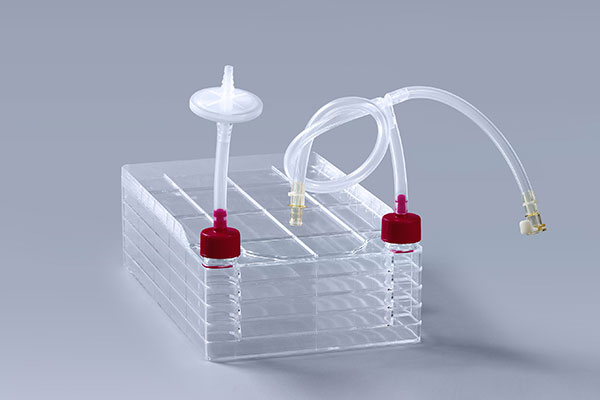
The most notable feature of the Multilayer Cell Factory is its innovative multi-layer culture design. Through vertically stacked culture layers, it achieves a geometric growth in culture area within a limited space. A standard 10-layer cell factory can provide an effective culture area of approximately 6 square meters, equivalent to the sum of dozens of traditional culture flasks. This significant improvement in space utilization has directly led to a qualitative leap in production efficiency. What's more, the multi-layer structure, combined with a closed pipeline system, allows for easy serial connection of multiple factories, building a large-scale closed culture space.
A Key Supporting Platform for Vaccine Production
In practical applications, cell factories demonstrate strong adaptability. Taking influenza vaccine production as an example, its need for rapid propagation of large quantities of viruses perfectly matches the large-scale culture capacity of cell factories. Similarly, in the production of COVID-19 mRNA vaccines, cell factories provide a stable and reliable environment for viral vector amplification. This versatility enables the same cell factory system to be adapted to the production needs of multiple vaccines, greatly improving the flexibility of production lines and equipment utilization.
Strict Quality Control System
The cell factory's guarantee of vaccine quality is reflected in multiple aspects. Multiple factories can be connected in series through dedicated pipelines to form a closed culture space, effectively blocking external contamination and providing a clean environment for cell culture. The standardized interface design ensures the consistency of culture conditions, while the modular structure facilitates process monitoring and quality traceability. These characteristics together form the quality cornerstone of vaccine production, enabling the final products to meet strict pharmacopoeial standards.
From the laboratory to industrialization, the Multilayer Cell Factory has built a bridge for the transformation of scientific research achievements. It not only solves the technical bottleneck of large-scale vaccine production but also drives the development of the entire industry through continuous innovation. In today's world where the demand for vaccines is growing, cell factories are guarding the defense line of human health with their unique value.










