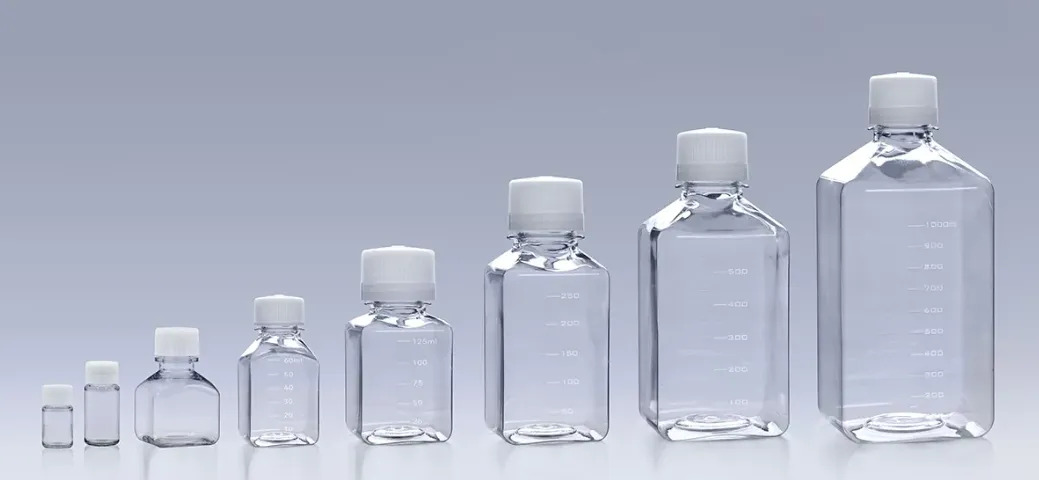
When choosing the right Culture Media Bottle for your lab’s needs, the choice of material is critical. Two popular choices are PET (polyethylene terephthalate) and PETG (polyethylene terephthalate glycol-modified). Both materials have unique properties that make them suitable for a variety of applications, especially in the storage and sampling of active pharmaceutical ingredients and bulk intermediates. In this blog, we will explore the properties of square media bottles made from these materials and help you make an informed decision.
PET is a widely used thermoplastic polymer known for its high strength, lightweight, and excellent barrier properties. It is commonly used to produce bottles and containers for beverages and food. PETG, on the other hand, is a modified version of PET that includes ethylene glycol, which improves its clarity, impact resistance, and thermal stability. This makes PETG an ideal choice for applications that require clarity and durability, such as laboratory culture medium bottles.
Square media bottles, whether made of PET or PETG, are suitable for a variety of laboratory applications. They are particularly suitable for the storage and sampling of active pharmaceutical ingredients and bulk intermediates. Their square shape allows for efficient use of space and easy stacking and storage. In addition, these bottles are ideal for the preparation and storage of buffers, sera, and culture media, as well as for long-term storage of pH-sensitive liquids. The choice of material can significantly affect the performance and safety of the stored substances.
PET media bottles are a popular choice in laboratories due to their multiple benefits. They are lightweight, which reduces shipping costs and simplifies handling. PET bottles also have excellent chemical resistance, making them suitable for storing a wide range of substances. Additionally, they are recyclable, contributing to environmental sustainability. However, it is important to note that PET may not be suitable for long-term storage of certain pH-sensitive liquids, as it can be affected by temperature fluctuations and prolonged exposure to light.
In contrast, PETG square media bottles offer better performance in specific applications. The glycol modification in PETG increases its transparency, making it easier to see the contents of the bottle. This is especially useful when monitoring culture growth or sample appearance. In addition, PETG has excellent impact resistance, reducing the risk of breakage during handling. Its thermal stability also allows for autoclaving, making it suitable for sterilization processes. PETG is often the first choice for labs that handle sensitive materials.
Ultimately, choosing between PET or PETG square media bottles depends on your specific lab needs. If you need a lightweight, cost-effective, general-purpose storage solution, PET media bottles may be your best choice. However, if your application involves sensitive materials that require enhanced clarity, impact resistance, and thermal stability, PETG square media bottles may be a better choice. By understanding the characteristics and benefits of each material, you can select the best media bottle for your lab and ensure the safety and integrity of your valuable samples.










