Excipient, Composition (3.2.P.1)
1. Should nitrogen be included in the finished product composition? Feb 2025
Where nitrogen gas is used for backfilling (head space gas), it should be included in thefinished product composition. However, in such cases it should not be included in the maincomposition table but placed outside of this table (using an asterisk/footnote). In such casesnitrogen should not be listed as an excipient in the SmPC.
Container closure system(3.2.P.7)
1. Should suppliers of container closure systems for the finished product beincluded in the dossier? Feb 2025
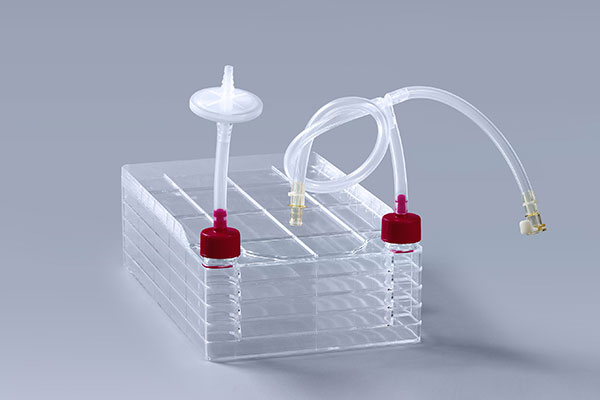
The suppliers of container closure systems for the sterile finished product(e.g. rubber stoppersand glass cartridges)should be stated in CTD 3.2.p7
Prior knowledge
1. Where should prior knowledge be placed in the CTD? Feb 2025
Justifications based on prior knowledge should be included in the sections of the dossier wherethe product-specific data it is complementing or replacing would have been included.
Non-novel excipients manufactured using recombinanttechnology(3.2.P.4,3.2.A.3)
1. What are the data requirements for excipients manufactured usingrecombinant technology? September 2023
For excipients manufactured using recombinant technology, that are not considered novel, thesubmission of certain manufacturing and control information is required to ensure consistentquality. In addition to the CTD module 3.2.P.4 "Control of excipients" (specifications, analyticamethods, method validation and justification of specifications), applicants should also providedetailed information on the following aspects: manufacturers, description of the manufacturingprocess, control of materials, process validation, characterization, impurity testing, stability andviral safety assessment (including proof of process capability to remove/clear relevant modelviruses). Information should be presented in section 3.2.A.3 Excipients.
Post approval change management protocol(PACMP)
Comparability,(3.2.R)
1. How should a comparability exercise be presented in a post approval changemanagement protocol(PACMP)?October 2024
A comparability exercise should be presented in a PACMp in such a manner that it would besuitable for the implementing variation submission, i.e. that all tests (routine and extendedcharacterisation) are completely described and that similarity criteria are well-defined andunequivocal.
Adjustment to chromatographic separations testprocedures as per Ph. Eur. general chapter 2.2.46
Introductory note:
This 0&A provides information on how Ph. Eur, general chapter 2.2.46 Chromatographic separation techniques (inparticular with respect to the adjustment of chromatographic conditions) can be used for non-compendial (in house)analytical procedures and when the conditions described in the pharmacopoeia text apply.
Background information:
When a pharmacopoeial test procedure is used as intended, the test procedure is not required to be described in thedossier, instead a cross-reference to the current respective Ph, Eur, monoarabh is considered suficient
A pharmacopeial test procedure adjusted within the limits prescribed in Ph. Eur. general chapter 2.2.46Chromatographic separation techniques is considered to be the pharmacopeial test procedure.
In all other cases, the test procedure is considered to be an in-house test procedure. This means that the fuldescription of the test procedure and validation data should be provided in the dossier.
1. Should a variation application be submitted in case of adjustments tochromatographic parameters of an analytical test procedure, when theadjustments introduced are within the limits prescribed in Ph. Eur. generachapter 2.2.46?
a) If the applicant is using the pharmacopoeial test procedure as described in therespective monograph
No, a variation application is not necessary.
b)If the applicant is using an in-house test procedure for the finished product, that isbased on the one described in the respective monograph of the active substance
Yes, a variation must be submitted according to the relevant variation guidance and therelevant documentation should be provided.
C)If the applicant is using an in-house test procedure for the activesubstance/finished product/excipient (regardless of whether reference to thecorresponding Ph.Eur.general chapter(s)is made)
Yes, a variation must be submitted according to the relevant variation guidance and therelevant documentation should be provided.
2. If yes, how should such variations be classified?
Where an adjustment of chromatographic test parameter(s) is made to a non-compendial (in-house) test procedure, within the limits and conditions defined in Ph. Eur. general chapter2.2.46, it is considered that the method of analysis remains the same. The analytical proceduredescription in the dossier should be updated accordingly. The change can be notified to thecompetent authority as a minor Type IA variation (for veterinary medicines: variation notrequiring assessment (VNRA))under the relevant classification category.
Where an adjustment of chromatographic test parameter(s) is made to a non-compendial (in-house) test procedure outside the limits and conditions defined in Ph. Eur. general chapter2.2.46, it is considered that the method of analysis has changed. The analytical proceduredescription in the dossier should be updated accordingly. The change can be submitted to thecompetent authority as a minor Type IB variation (for veterinary medicines: variation requiringassessment)under the relevant classification category.
3. Is method revalidation required in case of adjustments to chromatographicparameters of an in-house analytical procedure, when the adiustmentsintroduced are within the limits and conditions prescribed in Ph. Eur. generachapter 2.2.46?
General chapter 2.2.46 describes the extent to which various parameters of a chromatographictest procedure, as described in an individual monograph, may be adjusted withoutfundamentally modifying the pharmacopoeial analytical procedure.
The same principles as those described in Ph. Eur. 2.2.46 may also be applied in case oiadjustments to chromatographic parameters of non-compendial (in-house) analyticaprocedures.
Adjustments other than those indicated in Ph. Eur. 2.2.46 require revalidation of the testprocedure.
4. To meet the conditions for a Type IA variation /VNRA, what are "appropriatevalidation studies" to show that the updated test procedure is at least equivalent ^to the former test procedure?
If the adjustment has been performed within the limits and conditions described in Ph. Eurgeneral chapter 2.2.46, compliance with system suitability test (SST) criteria and otherconditions described in the chapter (e.g. selectivity and elution order of any specified impuritiesshould be equivalent) is considered sufficient to show that the updated test procedure is atleast equivalent to the former test procedure. In this case, further validation of the testprocedure is not deemed necessary.
An SST covering the relevant critical analytical procedure attributes should be described in thedossier. After adjustment of an analytical procedure, it should be considered whether the SSTrequirements are still adequate and sufficient for the adiusted analytical procedure.
Source: EMA