Foam formation is a familiar sight in shake flask culture. A small amount of transient foam may have little impact on a process, but persistent or excessive foaming can interfere with culture performance, sampling, and process consistency.
In an Erlenmeyer Shake Flask, foam formation is influenced by more than shaking speed. Working volume, medium composition, cell density, flask geometry, and culture conditions all contribute. Identifying the actual cause is therefore more useful than simply trying to eliminate the foam.
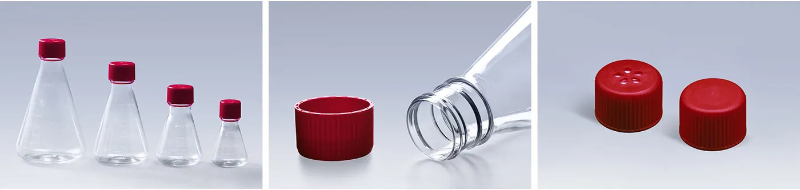
Why Does Foam Form in Shake Flask Culture?
Foam develops when gas becomes dispersed in a liquid containing compounds that stabilize bubbles. Culture media often contain proteins, peptides, surfactants, cellular components, or other substances capable of supporting a stable foam layer.
Orbital shaking continuously renews the gas-liquid interface. As agitation increases, more air can become incorporated into the liquid, particularly when the culture medium already has a tendency to foam.
Foaming may also become more noticeable as a culture progresses. Cell growth, cell lysis, extracellular products, and changes in medium composition can alter surface properties over time.
For this reason, a culture that shows little foam immediately after inoculation may behave differently at higher cell density.
Shaking Speed: More Is Not Always Better
Increasing shaking speed can improve mixing and oxygen transfer, but it also increases liquid movement and surface disturbance.
If excessive foam appears after changing shaker settings, agitation should be one of the first parameters reviewed. However, reducing rpm without considering the rest of the process may create insufficient mixing or oxygen transfer.
The appropriate shaking condition depends on the Erlenmeyer Flask size, shaker orbit, working volume, cell type, and oxygen demand.
Rather than selecting the lowest speed that produces less foam, the objective should be to find a condition that provides sufficient mixing and aeration without generating unnecessary foam or shear.
Check the Working Volume
Working volume changes the hydrodynamics inside an Erlenmeyer Shake Flask.
At different fill volumes, the same flask and shaking speed can produce substantially different liquid movement. An unsuitable combination of fill volume and agitation may increase splashing and foam formation.
When troubleshooting, keep the flask size constant and evaluate working volume together with shaking speed. Changing both parameters simultaneously makes it difficult to determine which factor is responsible.
Working volume should also leave adequate headspace for gas exchange and liquid movement during orbital shaking.
Medium Composition Can Be the Main Cause
If foaming occurs even under previously acceptable shaking conditions, look at the medium.
Proteins, hydrolysates, serum components, and certain supplements can increase foam stability. In microbial processes, extracellular proteins and metabolites may further change the foaming behavior as biomass increases.
A new medium formulation or raw-material lot can therefore produce different foam characteristics even when the Erlenmeyer Shake Flask and operating parameters remain unchanged.
When comparing culture runs, record medium and supplement lots along with physical operating conditions.
Cell Density and Culture Stage Matter
Foaming should be evaluated over the entire culture rather than at a single time point.
As cell density increases, metabolic activity and oxygen demand change. Dead cells and cellular debris may also accumulate. These changes can affect both liquid properties and foam stability.
If excessive foaming consistently appears at a particular stage of culture, compare it with viable cell density, viability, growth rate, and other process observations.
This can help distinguish a general flask operating problem from a culture-stage-specific effect.
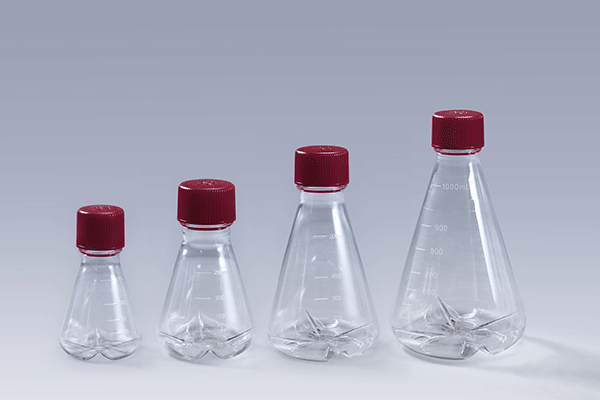
User Guide for Erlenmeyer Shake Flask
Does Flask and Cap Design Affect Foaming?
The geometry of an Erlenmeyer Shake Flask determines how liquid moves during orbital shaking. Flask diameter, bottom geometry, neck design, and working volume all influence wave formation.
The cap is also part of the culture system. For aerobic cultures, vent caps allow gas exchange while maintaining a sterile barrier. Cap selection should therefore consider the gas exchange requirements of the process rather than foam control alone.
When switching between different flask designs or suppliers, comparable nominal capacity does not necessarily mean identical hydrodynamic behavior.
For an established process, side-by-side culture evaluation is preferable to assuming that two Erlenmeyer flasks will perform identically.
Should Antifoam Be Used?
Antifoam agents are used in some fermentation and cell culture processes, but they should not automatically be the first response to foaming.
Depending on the application, antifoam may influence oxygen transfer, downstream processing, analytical results, or product recovery. Its suitability and concentration therefore need to be evaluated for the specific process.
Before introducing an antifoam agent, check whether the foam can be controlled through appropriate working volume, agitation, medium formulation, or other process adjustments.
For validated or regulated processes, any change in antifoam use should also be considered within the relevant process control and change-management requirements.
A Practical Troubleshooting Sequence
When excessive foam appears in an Erlenmeyer Shake Flask culture, avoid changing several variables at once.
Start by checking whether anything has changed in the cell source, medium, supplements, flask, or operating conditions. Then review shaking speed and shaker orbit, followed by working volume and culture density.
If the problem coincides with a change in flask size or supplier, conduct a controlled comparison under the same culture conditions.
A useful investigation may include:
Foam appearance and persistence
Viable cell density and viability
Growth profile
Working volume
Shaking speed and orbit
Medium and supplement lots
Flask and cap configuration
Culture time at which foaming begins
This approach provides more useful information than treating foam as an isolated visual problem.
Why Foaming Matters During Process Development
At laboratory scale, occasional foam may seem like a minor inconvenience. During process development, however, unexpected foaming can indicate that the culture is operating under different hydrodynamic or biological conditions.
If an Erlenmeyer Flask is used in a seed train, inconsistent culture conditions at this stage can affect the quality of the inoculum transferred downstream.
For teams qualifying a different flask size or an alternative Erlenmeyer Shake Flask supplier, foaming behavior can therefore be included alongside cell growth, viability, oxygen-transfer-related performance, and other process-specific indicators during comparative studies.
The goal is not necessarily a completely foam-free culture. The more important objective is a culture condition that remains predictable and reproducible from run to run.
Conclusion
Foaming in shake flask culture can result from the interaction of agitation, working volume, medium composition, cell density, and flask design. Because these factors are interconnected, there is no single adjustment that works for every culture.
A systematic approach—starting with what changed and evaluating one major variable at a time—can help identify the source of excessive foaming without compromising mixing or cell growth.
By controlling operating conditions and maintaining consistent Erlenmeyer Shake Flask performance, laboratories can reduce unnecessary variability and establish more reliable suspension culture processes.










