For more than four decades, HEK293 cells have been deeply embedded in nearly every major advancement in modern biotechnology. Whether used for recombinant protein expression, viral vector construction, gene editing, or drug screening, HEK293 has become a foundational platform cell line for research laboratories, biopharmaceutical companies, and gene therapy developers.
1. Why HEK293 Became the “Universal Cell Platform”
HEK293’s versatility stems from its biological characteristics:
Exceptionally high transfection efficiency, ideal for transient expression and viral packaging.
Robust protein processing, suitable for complex and glycosylated proteins.
Compatibility with both adherent and suspension culture, enabling seamless scale-up.
Genetic adaptability, giving rise to high-performance derivatives such as 293T, 293F, and 293E.
Stable morphology and reproducible performance, ideal for signaling and pharmacological studies.
These advantages make HEK293 one of the most widely adopted mammalian cell lines in biotechnology.
2. A Core Platform for Viral Vector Production
In the rapidly expanding gene therapy field, HEK293 is the dominant host for AAV and lentiviral manufacturing.
Fully compatible with 3-plasmid and 5-plasmid systems
Cell health and transfection efficiency directly affect vector titers
Widely used in research-grade and clinical-grade workflows
293T, a derivative expressing SV40 Large T antigen, is considered the gold standard for viral packaging.
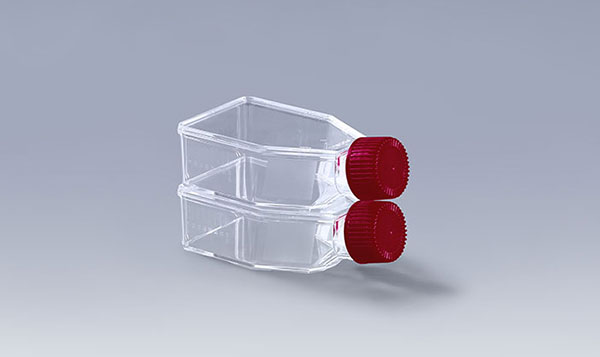
Recommended Medium Volumes for Cell Culture Flasks
3. Applications in Recombinant Protein Expression
HEK293 offers significant advantages for transient protein production:
High-level expression of antibodies
Correct folding and post-translational modification of complex proteins
Ideal for antibody screening, structural biology, and high-throughput expression testing
Compared with CHO, HEK293 is often preferred for early-stage and exploratory R&D.
4. An Ideal Model for Genetic Engineering and Cell Line Development
HEK293 is highly compatible with CRISPR, RNAi, and overexpression tools.
Applications include:
Pathway activation or inhibition studies
Receptor and GPCR biology
Pharmacology and toxicity screening
Mechanistic studies of signaling pathways
Its ease of manipulation has made HEK293 a backbone for molecular biology research.

Vented Caps in Cell Culture Flasks
5. Expanding from Research Labs to Industrial Manufacturing
Different HEK293 sublines support diversified upstream systems:
Adherent culture for viral packaging and fundamental research
Suspension culture (293F/293E) for pilot- and industrial-scale production
Serum-free and chemically defined media compatibility for bioprocessing
With the rise of gene therapy and protein engineering, HEK293 is now indispensable in bioproduction pipelines.
6. Future Perspectives
Emerging trends include:
Engineered HEK293 strains with higher expression productivity
Improved viral vector–specific cell lines
Cell models optimized for automated and high-density systems
Integration with AI-driven genetic circuit design and drug discovery
HEK293 will remain a cornerstone of next-generation biotechnology platforms.










