HEK293 cells are among the most widely used mammalian cell lines in research and bioproduction. Known for their high transfection efficiency and robust growth characteristics, HEK293 cells are commonly expanded in adherent systems such as the T75 flask before downstream applications.
To achieve consistent growth and reproducible results, careful attention must be paid not only to media and incubation conditions, but also to the performance of the T75 cell flask itself. This article outlines best practices for maintaining stable HEK293 culture in a T75 format.
Selecting the Right T75 Cell Flask for HEK293 Culture
A standard T75 flask provides approximately 75 cm² of growth surface area, making it suitable for routine expansion, plasmid amplification workflows, and transient transfection preparation.
When culturing HEK293 cells, the Cell Culture Flask should offer:
Uniform TC-treated surface for reliable attachment
Consistent growth area for accurate seeding calculations
Stable material quality for clear microscopic observation
Surface uniformity is especially important for HEK293 cells, as uneven attachment can lead to variable confluency and inconsistent experimental timing.
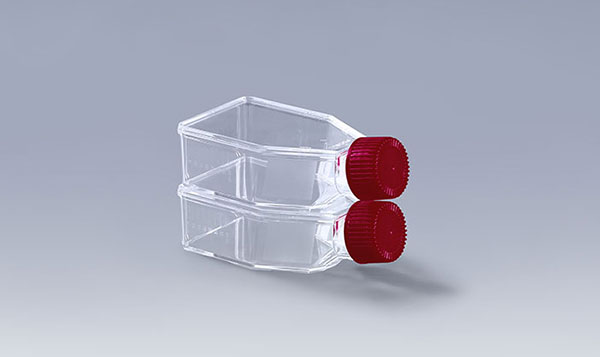
Recommended Medium Volumes for Cell Culture Flasks
Optimizing Seeding Density in T75 Flask
Proper seeding density is critical for maintaining healthy HEK293 morphology and growth kinetics. Over-seeding may result in early over-confluency, while under-seeding can slow proliferation.
Best practices include:
Calculating cell numbers precisely based on the 75 cm² growth surface
Ensuring even distribution after seeding
Avoiding excessive agitation immediately after plating
A well-designed T75 cell flask supports uniform cell settlement and predictable expansion rates.
Medium Volume and Nutrient Stability
The typical working volume in a T75 flask ranges between 12–20 mL, depending on experimental requirements. Medium volume affects:
Nutrient availability
Gas exchange efficiency
Metabolic waste dilution
Maintaining appropriate medium depth helps prevent localized nutrient depletion and supports steady HEK293 growth across the entire surface of the Cell Culture Flask.
Monitoring Morphology and Confluency
HEK293 cells typically exhibit an epithelial-like morphology under healthy conditions. Regular microscopic observation is essential to ensure consistent growth.
A high-clarity T75 cell flask allows:
Clear visualization of cell morphology
Early detection of contamination
Accurate assessment of confluency prior to passaging or transfection
Consistent morphology is a strong indicator of stable culture conditions.
Managing Gas Exchange and Environmental Stability
Efficient gas exchange within the Cell Culture Flask is essential for maintaining pH balance and oxygen supply. During HEK293 culture, stable CO₂ equilibrium supports optimal cell metabolism.
Key considerations include:
Using appropriate vented caps when required
Avoiding overfilling the T75 flask
Ensuring stable incubator placement to reduce vibration
Proper gas exchange minimizes environmental stress and helps maintain reproducible growth behavior.

Passage Timing and Reproducibility
HEK293 cells typically require passaging at 70–90% confluency. Delayed passage may lead to morphological changes and altered growth kinetics.
Using consistent batches of T75 flasks helps reduce variability in attachment and expansion rates across experiments. Batch-to-batch consistency in Cell Culture Flask performance contributes to more predictable cell behavior over multiple passages.
Conclusion
HEK293 culture in a T75 flask requires careful control of seeding density, medium volume, environmental stability, and passage timing. Beyond biological parameters, the quality and consistency of the T75 cell flask play a critical role in supporting uniform attachment, stable growth, and experimental reproducibility.
By selecting a reliable Cell Culture Flask and following standardized culture practices, laboratories can achieve consistent HEK293 expansion and improved experimental confidence across research and development workflows.










