Meta Description: Learn how roller speed and medium volume affect cell attachment, nutrient exchange, cell growth, and culture consistency in roller bottle cell culture.
Roller bottles provide a practical way to expand adherent cells for vaccine manufacturing, virus propagation, and other biopharmaceutical applications. Unlike stationary culture flasks, roller bottles rotate continuously, allowing the culture medium to repeatedly cover the cell growth surface.
Two parameters have a particularly important influence on this process: roller speed and medium volume.
They affect how cells attach, how the medium moves across the surface, and how consistently nutrients and gases are available during culture. For this reason, both parameters should be evaluated together rather than adjusted independently.
Why Roller Speed Matters
After cells are inoculated into a roller bottle, they need time to settle, attach, and spread on the TC-treated surface.
If the bottle rotates too quickly during the early attachment stage, cells may remain suspended in the moving medium instead of establishing stable attachment. Excessive movement can also contribute to uneven distribution or cell detachment.
Cell culture guidance for roller bottles therefore generally recommends relatively slow rotation during initial attachment, with further adjustment according to the attachment characteristics of the specific cell line.
However, slower is not always better.
If rotation is too slow or inconsistent, cells and medium may not distribute evenly around the bottle. This can lead to localized cell accumulation and uneven monolayer formation.
The appropriate roller speed depends on several factors:
Cell line and attachment ability
Culture stage
Roller bottle diameter
Medium volume
Seeding density
Roller apparatus design
Established production process
For vaccine manufacturers, roller speed should therefore be treated as a validated process parameter rather than a fixed value copied from another cell culture system.
How Medium Volume Affects Culture
Medium volume determines how much nutrient is available to the cells and also changes the way liquid moves inside the rotating bottle.
Using too little medium may reduce the available nutrient reserve during longer culture periods. It may also require more frequent medium exchange.
Increasing the medium volume can provide more nutrients and reduce feeding frequency, but simply adding more medium does not necessarily improve cell culture performance. General cell culture guidance emphasizes maintaining an appropriate cell-to-medium ratio because medium depth and volume can influence the culture environment.
In roller bottles, the working volume also affects the liquid layer that passes over the cells during each rotation.
This means that medium volume should be considered together with:
Culture surface area
Cell density
Rotation speed
Culture duration
Medium formulation
Gas-exchange conditions
A working volume suitable for one roller bottle size should not automatically be transferred to another size.
Roller Speed and Medium Volume Work Together
Roller speed and medium volume are closely connected.
When the bottle rotates, the medium repeatedly moves across the inner culture surface. Changing either the rotation speed or the amount of liquid changes this movement.
For example, a higher medium volume combined with faster rotation may create a different liquid-flow pattern than a lower volume at the same speed.
This can influence:
Cell attachment: Newly seeded cells need sufficient contact time with the surface.
Cell distribution: Stable rotation helps distribute cells more evenly around the bottle.
Nutrient exchange: The moving medium repeatedly contacts different areas of the cell monolayer.
Cell detachment: Cells that are poorly attached or stressed may be more sensitive to excessive liquid movement.
Culture uniformity: Differences between bottles can increase when rotation or filling conditions are not standardized.
Continuous rotation is one of the key features of roller bottle culture and is used to support adherent cell culture and more uniform exposure of the growth surface to the medium.
Different Culture Stages May Need Different Conditions
Another common mistake is using exactly the same operating conditions throughout the entire culture.
During initial cell attachment, the priority is allowing cells to establish stable contact with the TC-treated surface.
After the cells have attached and begun spreading, the culture may tolerate different rotation conditions. Later in the process, cell density, nutrient consumption, medium exchange, and—in vaccine production—virus inoculation may introduce additional requirements.
Therefore, process development should consider at least three stages:
Initial Attachment
Focus on stable attachment and uniform cell distribution.
Cell Expansion
Maintain suitable nutrient supply and consistent rotation as the monolayer develops.
Virus Inoculation or Production
For vaccine-related processes, parameters may need to be reviewed again after virus introduction according to the validated production protocol.
The same settings should not automatically be assumed to be optimal for all three stages.
Signs That the Parameters May Need Review
Several culture observations can indicate that roller speed, medium volume, or both should be investigated:
Uneven cell attachment
Dense bands of cells
Cells concentrated at one end
Increased floating cells
Premature cell detachment
Slow growth
Differences between roller bottles
Irregular monolayer formation
These problems do not necessarily mean that the speed or medium volume is the root cause. Cell viability, seeding density, equipment leveling, bottle rotation stability, medium condition, and TC surface consistency should also be checked.
A controlled comparison is more useful than changing several parameters at the same time.
Expanded Surface Polystyrene Roller Bottle
Standardization Matters in Vaccine Manufacturing
When dozens or hundreds of roller bottles are used in a production process, small differences can become more significant.
Operators should standardize:
Medium volume per bottle
Cell concentration
Filling method
Initial attachment procedure
Rotation settings
Timing of speed changes
Medium exchange
Bottle position on the roller apparatus
The roller apparatus should also be checked regularly to ensure that each bottle rotates smoothly without slipping or stopping.
For validated vaccine processes, changes in roller bottle size, supplier, equipment, or medium volume should be evaluated before routine implementation.
Choosing Roller Bottles for Consistent Culture
Process parameters are easier to control when the roller bottles themselves are consistent.
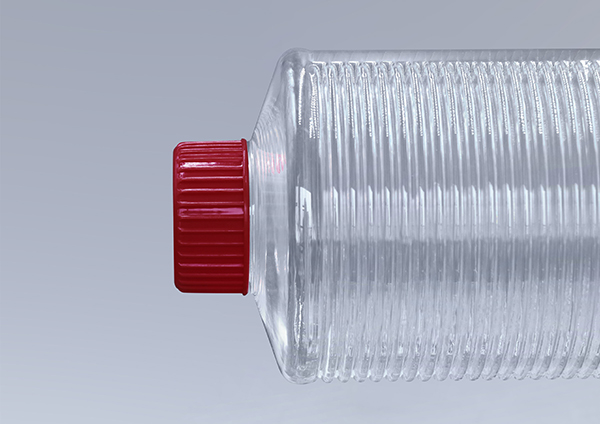
Bottle dimensions, roundness, TC-treated surface quality, cap integrity, and batch-to-batch consistency can all contribute to stable operation on the roller apparatus.
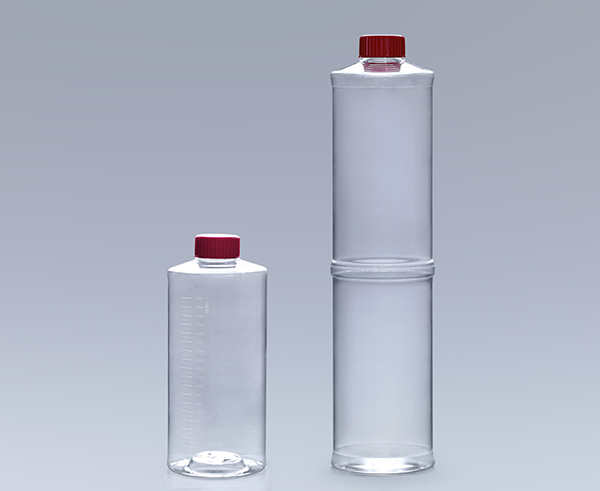
FDCELL provides sterile TC-treated cell culture roller bottles in 2 L and 5 L formats, with culture areas of 850 cm² and 1,750 cm² respectively. They are designed for adherent cell expansion, virus propagation, vaccine manufacturing, and other biopharmaceutical applications.
When establishing or transferring a roller bottle process, users should optimize roller speed and medium volume using their actual cell line, medium formulation, equipment, and production conditions. The goal is not simply to use more medium or faster rotation, but to create a stable and reproducible environment for cell growth.










