CHO cells, or Chinese Hamster Ovary cells, are among the most widely used mammalian cell lines in biopharmaceutical manufacturing. They play a critical role in the production of monoclonal antibodies, recombinant proteins, vaccines, and biosimilars.
For laboratories and biopharmaceutical companies working with adherent CHO cells, cell attachment performance is one of the key factors affecting culture efficiency and experimental reproducibility. Among the many variables involved in cell culture, surface treatment of the Cell Culture Flask directly influences CHO cell attachment, spreading, proliferation, and overall culture stability.

Why CHO Cell Attachment Matters
CHO cells require a suitable culture surface to achieve stable attachment and healthy growth in adherent culture systems. Poor cell attachment can lead to:
Reduced cell viability
Uneven cell distribution
Slower proliferation
Inconsistent protein expression
Experimental variability
Lower production efficiency
Because of these factors, selecting a high-quality Cell Culture Flask with reliable surface treatment is essential for CHO cell culture applications.
What Is Surface Treatment in Cell Culture Flask Manufacturing?
Standard untreated polystyrene surfaces are naturally hydrophobic and not ideal for mammalian cell attachment. Surface treatment modifies the flask surface to improve hydrophilicity and enhance cell adhesion.
In Cell Culture Flask manufacturing, TC treatment (Tissue Culture Treatment) is commonly used to create a surface that supports adherent cell growth.
Surface treatment can improve:
Cell attachment efficiency
Cell spreading behavior
Protein adsorption
Cell proliferation consistency
Culture reproducibility
For CHO cell culture, stable TC-treated surfaces are particularly important.
How Surface Treatment Affects CHO Cell Attachment
1. Improved Initial Cell Adhesion
CHO cells require efficient attachment during the early culture stage. A properly TC-treated Cell Culture Flask provides a more hydrophilic surface, allowing cells to attach more rapidly after seeding.
Improved initial adhesion helps:
Reduce cell loss
Increase seeding efficiency
Support uniform cell distribution
Improve culture consistency
Poorly treated surfaces may cause delayed attachment or floating cells.
2. Better Cell Spreading and Morphology
Surface treatment also affects how CHO cells spread across the culture surface. Uniform cell spreading is important for healthy metabolism and stable protein production.
High-quality Cell Culture Flask products support:
Consistent cell morphology
Stronger cell-to-surface interaction
Improved cell growth behavior
Reduced cellular stress
Inconsistent surface treatment may lead to irregular cell morphology and variable culture performance.
3. Enhanced Cell Proliferation
After attachment, CHO cells require a stable environment for rapid proliferation. Surface-treated Cell Culture Flask systems help maintain favorable growth conditions by promoting reliable cell adhesion.
Benefits include:
Faster cell expansion
Higher cell density
Improved culture stability
Better scalability for bioprocessing
This is especially important in biopharmaceutical production workflows.
4. Improved Experimental Reproducibility
Inconsistent cell attachment often leads to batch-to-batch variability. Uniform TC surface treatment helps improve reproducibility across experiments and production runs.
For research laboratories and biopharma manufacturers, consistent Cell Culture Flask quality supports:
Reliable experimental results
Standardized culture conditions
Reduced process variability
Stable biologics production
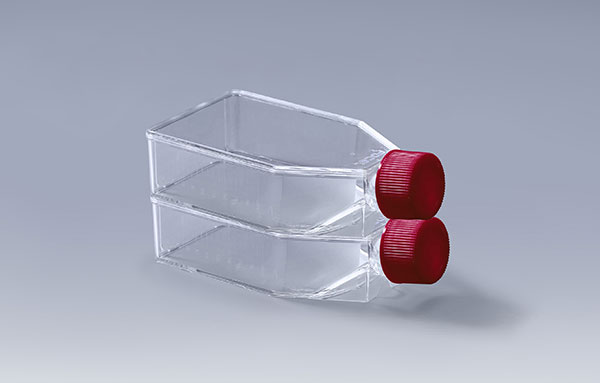
T75 TC-treated Cell Culture Flask
TC-Treated vs Untreated Cell Culture Flask
TC-Treated Cell Culture Flask
TC-treated Cell Culture Flask products are specifically designed for adherent cell culture applications, including CHO cell culture.
Advantages include:
Enhanced hydrophilicity
Better cell attachment
Stable cell growth
Improved proliferation
Reliable experimental performance
Untreated Cell Culture Flask
Untreated flasks are generally used for suspension cells or specific applications where cell attachment is not required.
For adherent CHO cell culture, untreated surfaces may result in:
Weak cell adhesion
Uneven growth
Reduced culture performance
Therefore, TC-treated Cell Culture Flask products are typically recommended for adherent CHO cell applications.
Factors Influencing Surface Treatment Quality
Not all surface-treated Cell Culture Flask products provide the same performance. Several manufacturing factors influence treatment consistency.
Plasma or Corona Treatment Technology
Advanced plasma or corona surface treatment technologies improve surface wettability and treatment uniformity.
Manufacturing Consistency
Automated manufacturing systems help maintain stable surface treatment quality across production batches.
Cleanroom Production Environment
Controlled cleanroom manufacturing reduces contamination risks and supports reliable cell culture performance.
Quality Control Standards
Strict QC testing ensures stable surface energy, sterility, and culture compatibility.
Applications of CHO Cell Culture
CHO cells are widely used in biotechnology and pharmaceutical industries, including:
Monoclonal antibody production
Recombinant protein manufacturing
Biosimilar development
Vaccine research
Cell biology studies
Drug screening
Because CHO cells are essential to biologics manufacturing, reliable Cell Culture Flask performance is critical throughout upstream cell culture workflows.
Choosing the Right Cell Culture Flask for CHO Cells
When selecting a Cell Culture Flask for CHO cell culture, laboratories and manufacturers typically evaluate:
Surface treatment consistency
Sterility assurance
Optical clarity
Leak-proof sealing
Growth performance
Batch consistency
Automated production compatibility
High-quality Cell Culture Flask products can help improve culture reliability and production efficiency.
Future Trends in CHO Cell Culture
As biologics and biosimilar markets continue growing, demand for high-performance cell culture consumables is also increasing. Future CHO cell culture trends include:
Large-scale biologics production
Serum-free culture systems
Automated cell culture platforms
GMP-compliant manufacturing
Advanced surface treatment technologies
Reliable TC-treated Cell Culture Flask products will continue supporting modern biopharmaceutical manufacturing and life science research.
Conclusion
Surface treatment plays a critical role in CHO cell attachment, growth, and culture reproducibility. High-quality TC-treated Cell Culture Flask products help improve cell adhesion, support stable proliferation, and reduce experimental variability.
For biopharmaceutical manufacturers and research laboratories working with adherent CHO cells, selecting a reliable Cell Flask with consistent surface treatment is essential for achieving stable and efficient cell culture performance.










