Experimental repeatability is a cornerstone of reliable cell-based research, process development, and biomanufacturing workflows. While biological variables such as cell line selection and media formulation receive significant attention, the physical properties of the cell culture flask—particularly surface uniformity—play a critical but often overlooked role in experimental consistency.
This article explores how surface uniformity in cell flask directly influences cell behavior and repeatability across experiments.

What Is Surface Uniformity in a Cell Culture Flask?
Surface uniformity refers to the consistency of the treated growth surface across the entire internal area of a cell culture flask. In TC-treated flasks, surface modification is applied to promote cell attachment, spreading, and proliferation.
A uniform surface ensures that:
Cells attach evenly across the flask
Morphology remains consistent throughout the growth area
Growth rates are comparable between different regions of the flask
In contrast, localized variations in surface treatment can introduce experimental variability even under identical culture conditions.
Uneven Cell Attachment and Its Impact on Repeatability
Adherent cells are highly sensitive to surface properties. In a cell flask with inconsistent surface treatment, cells may preferentially attach to certain areas while showing reduced adhesion in others.
This can lead to:
Non-uniform cell density at seeding
Variable confluency at experimental endpoints
Inconsistent response to stimulation, transfection, or treatment
Such heterogeneity directly affects experimental repeatability, especially in quantitative assays.
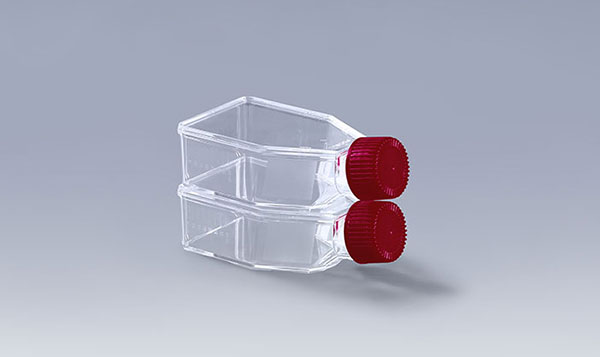
T25 TC-treated Cell Culture Flask
Influence on Cell Morphology and Phenotype Stability
Surface uniformity also influences cell morphology and cytoskeletal organization. Differences in surface energy or chemistry across a cell culture flask can cause localized changes in cell shape and spreading behavior.
These subtle morphological differences may:
Alter cell signaling pathways
Affect differentiation potential
Introduce phenotypic drift over repeated passages
For long-term studies, even minor surface inconsistencies can accumulate into significant variability.
Effects on Transfection and Assay Performance
Many experimental workflows—such as transient transfection, reporter assays, and viral vector production—depend on consistent cell attachment and density. In a cell flask with uneven surface properties, transfection efficiency may vary across the growth area.
As a result:
Expression levels may differ between regions of the flask
Data variability increases between replicates
Optimization efforts become less predictable
Uniform surface treatment in cell culture flasks supports more reliable assay performance and higher experimental confidence.
Manufacturing Precision and Surface Control
Surface uniformity is closely linked to manufacturing precision and process control. Factors such as surface treatment methods, process reproducibility, and quality inspection all influence the final performance of a cell flask.
High-quality cell culture flasks are typically characterized by:
Consistent TC surface treatment across batches
Tight dimensional tolerances
Verified surface performance through quality testing
These controls help reduce batch-to-batch variability and support long-term experimental repeatability.
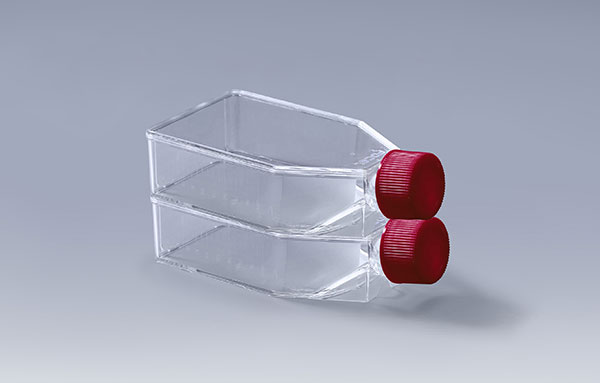
T75 TC-treated Cell Culture Flask
Choosing Cell Culture Flask for Repeatable Results
When experimental repeatability is critical, selecting the right cell flask is as important as optimizing biological parameters. Researchers should consider surface uniformity as a key selection criterion, alongside sterility, material quality, and design features.
Reliable cell culture flasks provide a stable foundation for reproducible workflows across research, development, and production environments.
Conclusion
Surface uniformity in a cell culture flask is a fundamental factor influencing experimental repeatability. Uneven surface treatment can affect cell attachment, morphology, transfection efficiency, and long-term phenotype stability. By recognizing the importance of surface consistency and selecting well-controlled cell flasks, researchers can reduce variability and achieve more reliable, repeatable experimental outcomes.










