For vaccine manufacturers, changing a roller bottle supplier is not simply a purchasing decision. When cell culture consumables are already used in a validated production process, a new source may need to demonstrate comparable performance before routine use.
Roller bottles interact directly with adherent cells and can influence cell attachment, monolayer formation, rotation stability, and downstream virus production. Supplier qualification should therefore evaluate not only product specifications, but also manufacturing consistency, quality documentation, and actual performance under the customer’s process conditions.
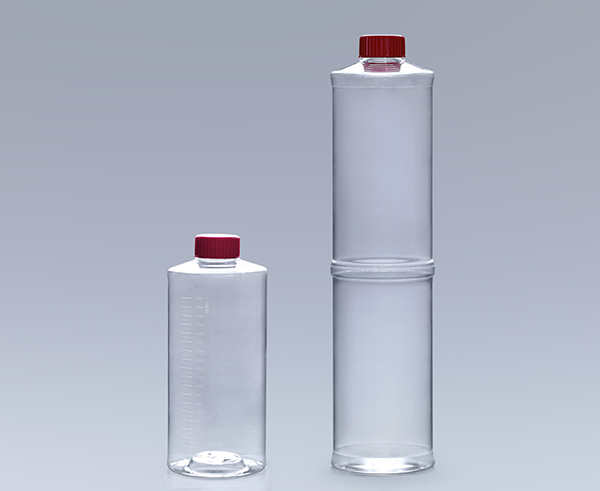
1. Start with Product Specification Comparison
The first step is to compare the proposed cell culture roller bottle with the currently approved product.
Important parameters may include:
Bottle material
Culture surface area
Nominal and working volume
Bottle diameter and length
TC surface treatment
Cap type
Sterilization method
Packaging configuration
Shelf life
For roller culture, dimensional consistency deserves particular attention. Small differences in bottle diameter, roundness, or wall stability may affect contact with the roller apparatus and lead to slipping or irregular rotation.
The goal is not necessarily to find two products that look identical, but to identify differences that could affect the existing vaccine process.
2. Review the Supplier's Quality Documentation
A qualified supplier should be able to provide clear product and quality information.
Commonly reviewed documents include:
Product specification
Certificate of Analysis
Sterilization information
Material declaration
Biological safety information
Lot traceability records
Shelf-life information
Packaging specifications
Change-notification policy
For vaccine production, documentation should also make it possible to trace each delivered batch back to manufacturing and quality-control records.
A supplier that can provide stable products but cannot support traceability or change control may create additional risks for a validated manufacturing process.
3. Confirm Compatibility with Existing Roller Equipment
A new roller bottle manufacturer should not be evaluated only through laboratory cell-growth data.
The bottle must also work reliably with the customer's existing roller apparatus.
During qualification, users should observe whether bottles:
Rotate continuously
Maintain stable contact with the rollers
Avoid slipping or jumping
Remain horizontal during operation
Fit correctly within the available equipment space
Maintain structural stability during extended culture
Equipment compatibility is especially important when many bottles are operated simultaneously. A small dimensional difference that appears insignificant during inspection may become more obvious during continuous rotation.
4. Evaluate Cell Attachment and Growth
Actual cell culture testing is one of the most important stages of supplier qualification.
The candidate TC-treated roller bottles should be tested using the same or representative conditions used in the validated vaccine process.
Evaluation may include:
Initial cell attachment
Cell morphology
Attachment uniformity
Growth rate
Monolayer formation
Cell detachment
Final cell density or recovery
Whenever possible, the new roller bottle should be tested alongside the currently approved vessel under the same conditions.
Variables such as cell passage, seeding density, medium, rotation speed, working volume, and incubation time should remain consistent so that differences can be attributed more reliably to the culture vessel.
5. Include Virus Production in the Comparison
Good cell growth alone does not necessarily demonstrate suitability for vaccine manufacturing.
When roller bottles are used for virus propagation, qualification may also need to include downstream process performance.
Depending on the vaccine process, users may compare:
Cell condition before virus inoculation
Virus susceptibility
Cytopathic effect development
Harvest timing
Virus yield or other validated process indicators
Product quality attributes relevant to the process
The exact acceptance criteria should come from the manufacturer's existing validation strategy rather than from the roller bottle supplier.
This is particularly important because a consumable can support acceptable cell growth while still producing unexpected differences later in the production process.
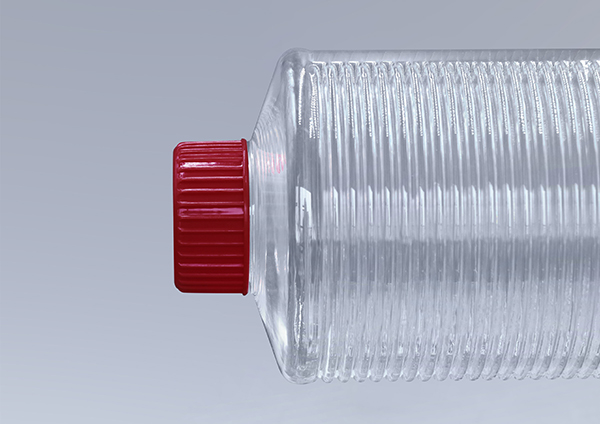
Expanded Surface Polystyrene Roller Bottle
6. Check Lot-to-Lot Consistency
Testing only one sample batch is not enough to understand long-term supply consistency.
Where appropriate, qualification should include multiple production lots of the candidate roller bottle culture system.
Users can compare:
TC surface performance
Cell attachment
Bottle dimensions
Rotation stability
Cap integrity
Packaging condition
Culture results
For vaccine manufacturers operating repeated production campaigns, predictable lot-to-lot performance is often more valuable than strong results from a single trial batch.
7. Evaluate Sterility and Packaging Integrity
Sterile roller bottles must remain protected from manufacturing through transportation and storage.
During supplier assessment, manufacturers should consider the sterilization method, packaging configuration, sealing integrity, labeling, and batch identification.
Incoming samples should also be checked for:
Damaged packaging
Incomplete seals
Bottle deformation
Cap damage
Missing or unclear lot information
A bottle with good cell-culture performance still needs a reliable sterile barrier and consistent packaging for routine use in vaccine manufacturing.
8. Review Change Control and Supply Capability
Qualification should consider what happens after the supplier is approved.
Raw materials, tooling, sterilization processes, production sites, packaging materials, or product specifications may change over time. A reliable supplier should have a defined change-control system and communicate significant changes before they affect routine supply.
Vaccine manufacturers may also evaluate:
Production capacity
Lead time
Inventory strategy
Supply continuity
Complaint handling
Technical support
Long-term availability
For validated processes, stable supply is part of product reliability.
Qualification Should Combine Documents and Process Testing
Supplier qualification should not rely on a catalog, certificate, or single cell-growth experiment alone.
A more complete assessment combines three areas:
Product review: specifications, materials, dimensions, sterilization, and packaging.
Quality-system review: traceability, documentation, lot consistency, and change control.
Process comparison: equipment compatibility, cell attachment, cell growth, and vaccine-process performance.
Together, these provide stronger evidence that a new roller bottle can be introduced without creating unnecessary variation in an established process.
Selecting Roller Bottles for Vaccine Manufacturing
For vaccine manufacturers, the best roller bottle supplier is not simply the supplier offering a comparable bottle size or lower price. Consistent manufacturing, technical documentation, culture performance, equipment compatibility, and dependable supply are equally important.
FDCELL supplies sterile, TC-treated cell culture roller bottles in 2 L and 5 L formats for adherent cell expansion, virus propagation, veterinary vaccine production, and other biopharmaceutical applications.
When evaluating an alternative source for an established vaccine process, sample testing under actual production conditions remains an important step before routine qualification.










