As the demand for vaccines, cell therapies, recombinant proteins, and biologics continues to grow, researchers and biopharmaceutical manufacturers require efficient methods for large-scale cell expansion. For adherent cell lines, traditional cell culture flasks are often sufficient during early-stage development, but they become inefficient as cell production requirements increase.
A multi-layer cell factory provides a practical solution for scaling up adherent cell culture while maintaining a familiar culture environment. By significantly increasing the available growth surface area within a compact footprint, cell factory systems have become widely used in vaccine production, stem cell expansion, and biopharmaceutical manufacturing.
This article explains how to scale up adherent cell culture using multi-layer cell factories, the benefits of this approach, and key factors to consider when selecting a cell factory system.
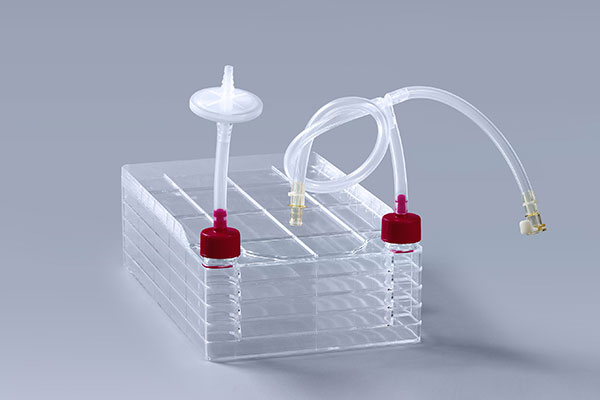
Closed System Cell Factory with Tube
What Is a Multi-Layer Cell Factory?
A multi-layer cell factory is a cell culture vessel consisting of multiple stacked culture layers connected within a single enclosed system.
Unlike traditional cell culture flasks, which provide limited growth area, a cell factory offers a large culture surface while reducing laboratory space requirements.
Common configurations include:
2 Layer Cell Factory
5 Layer Cell Factory
These systems are designed specifically for the expansion of adherent cells that require attachment to a treated surface for growth.
Why Scale Up From Cell Culture Flasks to Cell Factories?
Researchers often begin cell culture processes in T25, T75, T175, or T225 cell culture flasks. However, as cell demand increases, managing hundreds of flasks becomes labor-intensive and difficult to standardize.
Challenges of Large-Scale Flask Culture
Increased labor requirements
Higher contamination risk
Greater incubator space consumption
Complex media exchange procedures
Inconsistent process control
A multi-layer cell factory system addresses these challenges by consolidating culture area into a single vessel.
Benefits of Cell Factories
Larger growth surface area
Reduced handling steps
Improved process consistency
Lower contamination risk
Better scalability
For many biopharmaceutical processes, transitioning from cell culture flasks to cell factories is the next logical step before moving to bioreactor-based production.
When Should You Transition to a Cell Factory?
The optimal time to move from flasks to a cell factory depends on the scale of cell production.
Typical progression:
Research Stage
T25 Cell Culture Flask
T75 Cell Culture Flask
Process Development
T175 Cell Culture Flask
T225 Cell Culture Flask
Pilot Production
2 Layer Cell Factory
5 Layer Cell Factory
Commercial or Large-Scale Production
10 Layer Cell Factory
40 Layer Cell Factory
This stepwise approach helps maintain cell quality while increasing production capacity.
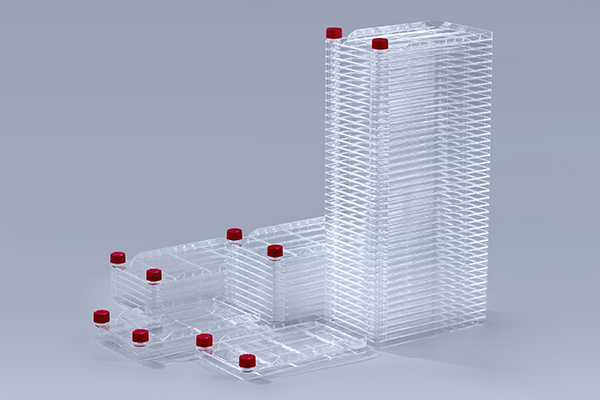
Choosing the Right Cell Factory Configuration
Different production scales require different cell factory systems.
2 Layer Cell Factory
Suitable for:
Process optimization
Cell line development
Small-scale expansion
5 Layer Cell Factory
Suitable for:
Pilot studies
Research-scale manufacturing
10 Layer Cell Factory
Suitable for:
Vaccine production
Cell therapy manufacturing
Medium-scale bioprocessing
The 10 layer cell factory is one of the most commonly used formats because it balances growth area, handling convenience, and process efficiency.
40 Layer Cell Factory
Suitable for:
Large-scale cell expansion
Commercial manufacturing
High-volume biologics production
The 40 layer cell factory provides a significantly larger culture area while minimizing facility footprint requirements.
Best Practices for Scaling Up Adherent Cell Culture
Successfully scaling up adherent cell culture requires more than simply increasing culture surface area.
1. Maintain Consistent Cell Seeding Density
Cell seeding density should remain consistent throughout the scale-up process to ensure reproducible growth rates and cell morphology.
2. Use High-Quality TC-Treated Surfaces
A reliable TC-treated cell factory promotes uniform cell attachment and growth across all layers.
Benefits include:
Enhanced cell adhesion
Improved cell spreading
Consistent proliferation
3. Optimize Media Exchange Procedures
As the number of culture layers increases, efficient media transfer becomes increasingly important.
Many manufacturers use:
Closed liquid transfer systems
Sterile tubing assemblies
Aseptic connectors
These solutions help reduce contamination risks during large-scale culture operations.
4. Monitor Environmental Conditions
Maintaining stable:
Temperature
CO₂ concentration
Humidity
is essential for achieving uniform cell growth across all layers of a multi-layer cell factory.
Applications of Multi-Layer Cell Factories
Vaccine Production
Many viral vaccine production processes rely on adherent cell lines cultured in cell factories.
Examples include:
Vero cells
MRC-5 cells
MDBK cells
Cell Therapy Manufacturing
Mesenchymal stem cells (MSCs) and other adherent therapeutic cell types are commonly expanded using multi-layer cell factory systems.
Recombinant Protein Production
CHO and HEK293 cells may be expanded in cell factories during process development and seed train expansion.
Research and Bioprocess Development
Cell factories provide an effective platform for scaling up research projects before transitioning to larger manufacturing systems.
Key Features to Look for in a Cell Factory
When selecting a cell factory manufacturer, consider the following factors:
Surface Treatment Consistency
Uniform TC treatment ensures reliable cell attachment across every culture layer.
High Optical Clarity
Transparent culture surfaces allow easy microscopic observation.
Sterility Assurance
Look for products manufactured in certified cleanroom environments and supplied sterile.
Leak-Proof Design
Reliable sealing systems reduce contamination risks during long-term culture.
Scalable Product Range
Manufacturers offering multiple configurations (2, 5, 10, and 40 layers) provide greater flexibility as production requirements grow.
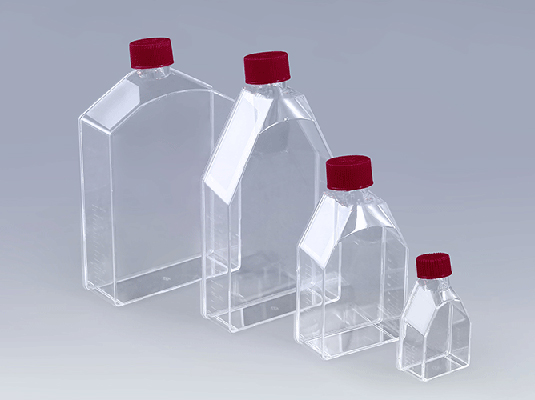
Cell Factory vs Cell Culture Flask: Which Is Better?
The answer depends on production scale.
Cell Culture Flask Advantages
Simple operation
Suitable for small-scale experiments
Cost-effective for research
Cell Factory Advantages
Larger growth area
Improved scalability
Reduced labor requirements
Better manufacturing efficiency
For large-scale adherent cell culture, multi-layer cell factories offer significant operational advantages compared to managing hundreds of individual flasks.
Conclusion
Scaling up adherent cell culture is a critical step in vaccine development, cell therapy manufacturing, and biopharmaceutical production. While traditional cell culture flasks remain essential for early-stage research, multi-layer cell factories provide a practical and scalable solution for expanding production capacity.
Whether using a 2 layer cell factory, 10 layer cell factory, or 40 layer cell factory, selecting a high-quality system with consistent TC-treated surfaces and reliable manufacturing standards can significantly improve process efficiency and cell culture performance.
By implementing a structured scale-up strategy, researchers and manufacturers can achieve higher yields, better consistency, and more efficient large-scale cell expansion.










