The United States Pharmacopeia (USP)〈1047〉provides systematic guidance on the full lifecycle management of gene therapy products, from production to application, and from quality control to regulatory compliance. The following is a summary of its core points:
I. Definition and Classification of Gene Therapy Products
Gene therapy products modify cellular genetic material through nucleic acids to exert their effects. They can be categorized into three main types based on delivery methods:
Viral vectors (such as retroviruses, adenoviruses, adeno-associated viruses (AAV), etc., mostly replication-defective and requiring helper systems for packaging);
Non-viral formulations (such as naked DNA, lipid-complexed nucleic acids, etc.);
Genetically modified cells (cell populations infused back after in vitro nucleic acid introduction, which need to comply with cell therapy-related specifications).

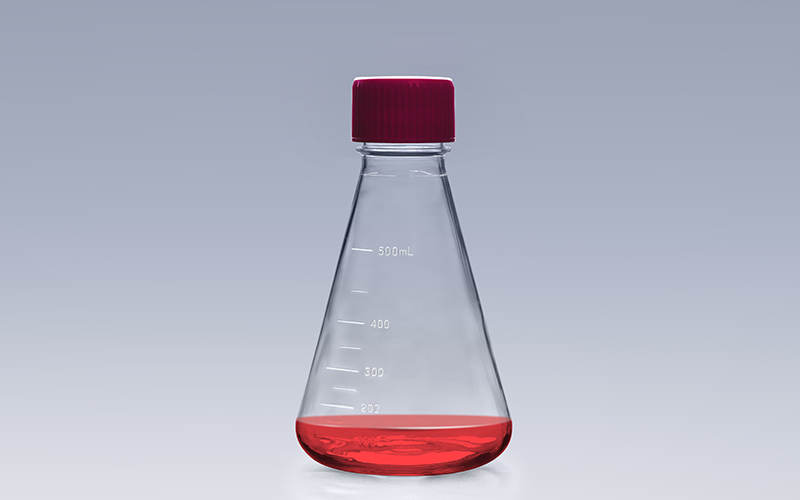
Guide to Choosing a Cell Culture Flask
II. Core Requirements for Production and Quality Control
1. Manufacturing Overview
The production process must cover five key links to ensure full controllability:
Raw material management: Including cells, viruses, culture media, etc. The compliance of sources (such as screening of animal-derived components) must be verified, with reference to the requirements for auxiliary materials in chapters such as〈1043〉;
Characterization of cell and virus banks: Establish master cell banks (MCB) and working cell banks (WCB) systems, which need to be tested for sterility, freedom from exogenous factors, genetic stability, and freedom from replication-competent viruses (RCV/RCR) contamination;
Process control: Set "pass/fail" criteria for key parameters such as viral titer, plasmid purity, and cell viability to ensure the quality of intermediates;
Specification standards: Develop acceptance criteria based on product characteristics (physicochemical properties, purity, potency, etc.), with reference to ICH Q6B principles and verification with clinical data;
Process validation: Verify process stability through at least 3 production batches, covering key steps such as virus clearance and purification efficiency.
2. Vector Design and Production Characteristics
Viral vectors: It is necessary to balance vector capacity (e.g., AAV is approximately 4-5kb, adenovirus can reach 34kb), targeting (e.g., pseudotyping modification of retroviral envelope proteins), and safety (avoiding insertional mutagenesis or immunogenicity); during production, replication-competent impurities (such as adenovirus RCA, retrovirus RCR) must be controlled, and purification mostly uses chromatography or ultracentrifugation.
Non-viral vectors: Mainly plasmid DNA, which requires control of supercoiling ratio, residual host DNA/protein, and endotoxins. The production process includes fermentation, lysis, chromatographic purification, etc., and is suitable for large-scale production.
III. Key Dimensions of Quality Control
1. Safety Control
Detection of exogenous factors: Screening for bacteria, fungi, mycoplasma, and specific viruses (such as RCR detection for retroviruses);
Impurity control: Removal of process impurities such as host cell debris, culture medium residues, and nucleases, as well as product-related impurities such as defective viral particles and nicked plasmids;
Genetic stability: Verify the integrity of vector sequences to avoid adverse genetic variations (such as loss of target cell selectivity in conditionally replicating viruses).
2. Detection of Key Quality Attributes
Identification: Confirm product identity through PCR, restriction enzyme mapping, sequencing, etc.;
Purity: Use methods such as HPLC and electrophoresis to separate active ingredients from impurities (such as viral aggregates, plasmid isomers);
Potency: Evaluate therapeutic activity through in vitro functional tests (such as transduction efficiency, protein expression level) or in vivo models;
Stability: Monitor activity decay during storage/transportation to determine the shelf life (such as testing residual moisture in lyophilized preparations).
IV. Clinical Application and Management
On-site preparation: Operations such as thawing, dilution, and filtration may be required before administration, which must be carried out in compliant facilities to ensure sterility;
Patient management: The administration route must match vector characteristics (such as local injection, intravenous infusion), and immune responses (such as neutralizing antibodies) and long-term safety (such as insertional mutagenesis risk) need to be monitored;
Labeling and traceability: Storage conditions, expiration dates, and patient information must be clearly stated to ensure product traceability.
V. Regulation and Standards
Compliance with cGMP (21 CFR 211, 610, etc.) and ICH guidelines (such as Q2, Q6B) is required, with reference to guidance documents from regulatory authorities such as FDA and EMA. Currently, there are no unified global standards, and enterprises need to develop personalized quality systems based on product characteristics and pay attention to the development of reference standards (such as ATCC's adenovirus reference materials).
USP〈1047〉emphasizes the complexity and diversity of gene therapy products, with the core goal of ensuring the safety, efficacy, and consistency of products through scientific quality control strategies, providing normative guidance for clinical application and industrial development.
Note: The content is summarized based on USP〈1047〉and is for reference only. Original text address: https://online.uspnf.com/uspnf/document/2_GUID-BB4ED358-C717-4023-AD39-36A0144F41D8_20101_en-US?source=TOC










