For adherent cell culture, the performance of a cell culture flask depends not only on its material, design, and sterility, but also on the consistency of its treated surface. When laboratories or biopharmaceutical companies purchase TC-treated cell culture flasks in bulk, lot-to-lot comparability testing becomes an important step in supplier qualification and routine quality monitoring.
A TC-treated surface is designed to improve hydrophilicity and support stable cell attachment, spreading, and growth. However, even when the same product specification is used, differences between production lots may affect cell behavior. For sensitive cell lines, process development work, vaccine research, stem cell expansion, or cell therapy-related studies, small variations in surface performance can lead to inconsistent results.

Why Lot-to-Lot Comparability Matters
Cell culture workflows often rely on repeatable conditions. Researchers may use the same medium, seeding density, incubation time, and culture protocol for months or years. If the cell culture flask surface changes from one lot to another, users may observe differences in attachment efficiency, morphology, confluence speed, cell yield, or detachment response.
Lot-to-lot comparability testing helps confirm whether different batches of TC-treated cell culture flasks deliver comparable performance under the same culture conditions. This is especially useful before approving a new supplier, switching from an imported brand to a domestic alternative, or scaling up from small laboratory use to routine bulk purchasing.
Key Parameters to Evaluate
A practical comparability study should include both physical quality checks and biological performance evaluation. Common test items include surface appearance, flask flatness, cap sealing, packaging integrity, sterility documentation, and treated-surface consistency.
For biological performance, users may compare several indicators:
Initial cell attachment after 4–24 hours
Cell spreading and morphology
Growth curve or confluence rate
Final cell density or yield
Cell viability
Detachment efficiency after trypsinization
Variation between flasks within the same lot
Variation between different production lots
The goal is not only to confirm that cells can grow, but also to confirm that the performance remains stable across lots.
Suggested Testing Design
A useful test design normally includes at least three lots of the new TC-treated cell culture flask, compared with the current approved product or reference flask. The same cell line, medium, passage number, seeding density, incubation time, and observation method should be used across all test groups.
For example, a laboratory may seed the same adherent cell line into T25, T75, T175, or T225 flasks from different lots. After incubation, the team can compare attachment rate, cell morphology, confluence, viability, and final yield. Images taken at the same time points can provide visual evidence of surface performance consistency.
For process development or biopharmaceutical applications, it is also recommended to record lot numbers, culture conditions, operator information, and all test results. This creates a traceable evaluation file that supports future supplier approval and purchasing decisions.
TC-Treated Surface Consistency
For TC-treated cell culture flasks, surface consistency is one of the most important quality indicators. A reliable treated surface should support uniform cell attachment across the growth area. Uneven treatment may cause poor spreading, irregular growth zones, or lower cell recovery.
Contact angle testing, surface hydrophilicity checks, and cell attachment evaluation can help assess whether the treated surface is consistent. In routine use, users should also pay attention to visible culture differences, such as uneven cell distribution, abnormal morphology, or slower growth in specific areas of the flask.
Choosing a Qualified Cell Culture Flask Supplier
When purchasing cell culture flasks in bulk, buyers should not evaluate price alone. A qualified supplier should be able to provide product specifications, material information, sterilization records, COA, batch traceability, packaging details, and quality control data. For TC-treated products, surface treatment control and cell culture performance testing are especially important.
For distributors and biopharmaceutical customers, lot-to-lot stability directly affects customer confidence and repeat purchasing. A lower-cost flask only creates value when it can maintain stable performance across different production batches.
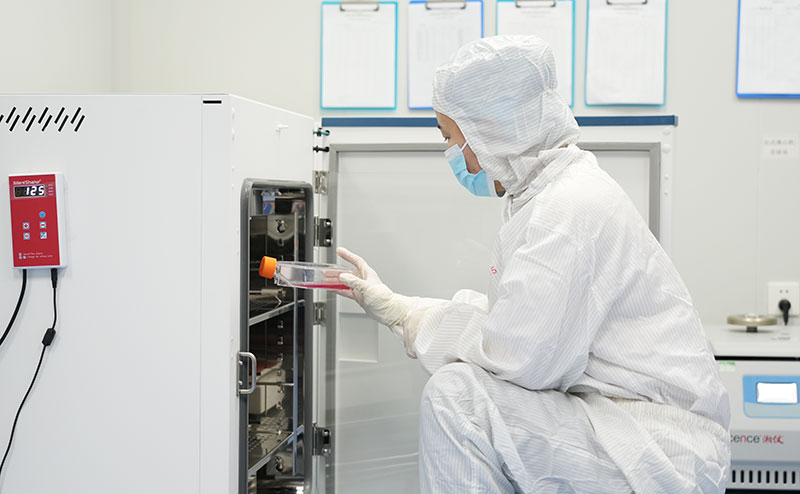
FDCELL TC-Treated Cell Culture Flasks
FDCELL supplies sterile TC-treated cell culture flasks in multiple sizes, including T25, T75, T175, and T225. The flasks are designed for adherent cell culture applications and are available with vented caps or plug seal caps to meet different culture requirements.
Through controlled production, surface treatment, sterilization, and batch traceability, FDCELL supports laboratories, research institutions, biopharmaceutical companies, and distributors that require reliable cell culture consumables for routine use and bulk supply.
For customers who are evaluating a new supplier, FDCELL can provide product information and samples to support lot-to-lot comparability testing before larger-volume purchasing.










