In vaccine manufacturing, roller bottles are often used to expand adherent cells before virus inoculation. Once the cell monolayer reaches the required condition, the process may include removing the growth medium and replacing it with fresh or infection-specific medium.
However, medium exchange before virus inoculation is not always required.
Whether this step is necessary depends on the cell line, virus, culture medium, serum concentration, infection strategy, and validated production process. For this reason, medium exchange should be treated as a process parameter rather than a routine step applied to every roller bottle culture.
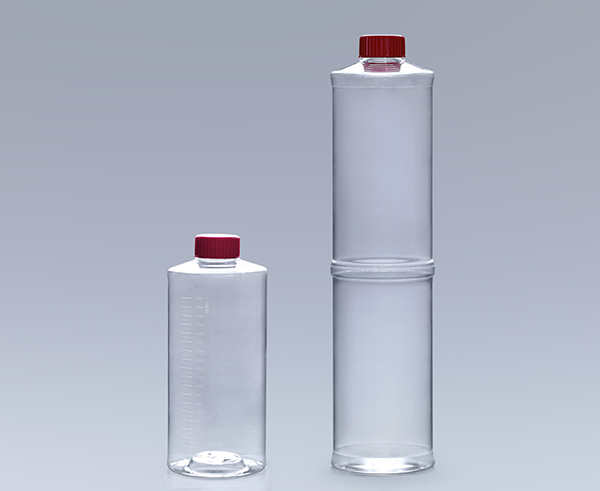
Cell Culture Roller Bottle
Why Is Medium Sometimes Changed Before Virus Inoculation?
During cell expansion, the culture medium is designed primarily to support cell attachment and growth.
Before virus inoculation, the process requirements may change.
A medium exchange may be used to:
Replace depleted growth medium
Adjust nutrient conditions before infection
Reduce or remove serum
Change to a virus-production medium
Adjust working volume
Remove accumulated metabolites
Establish more consistent conditions between bottles
For some virus-production processes, components present during cell growth may not be desirable during the infection stage.
However, if the existing medium already supports both cell growth and virus production, an additional exchange may provide little benefit and can introduce unnecessary handling.
Check the Cell Monolayer First
Before removing the medium, the condition of the cell layer should be evaluated.
Cells should generally have reached the process-defined condition for virus inoculation. Important observations may include:
>>>How to Determine the Right Seeding Density for Roller Bottle Cell Culture
Cell morphology
Monolayer uniformity
Target confluence
Presence of detached cells
Signs of contamination
Unexpected cell debris
If the monolayer is already stressed or poorly attached, a medium exchange may further disturb the cells.
This is especially important in roller bottle culture, where the liquid moves continuously across the cell surface after the bottle returns to rotation.
Consider Growth Medium and Infection Medium Compatibility
One of the main questions is whether the same medium can be used during both cell expansion and virus production.
Some processes use a growth medium containing serum and then switch to a reduced-serum or serum-free medium before infection.
Other processes use a medium system that supports both stages and therefore may not require a complete exchange.
When evaluating the need for medium replacement, consider:
Serum concentration
Buffering system
Nutrient composition
Supplements
Proteases or other infection-related additives
Cell requirements
Virus-production requirements
The decision should be based on process performance rather than on a general rule that every roller bottle must receive fresh medium before inoculation.
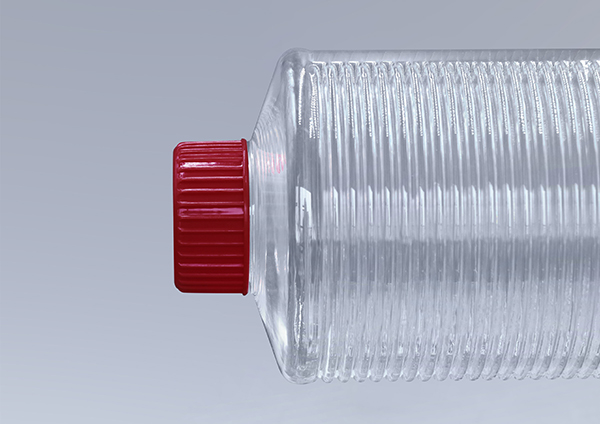
Expanded Surface Polystyrene Roller Bottle
Working Volume May Change After Infection
Medium exchange also provides an opportunity to adjust the working volume.
The volume used during cell expansion does not necessarily have to remain identical during virus production.
A different working volume can influence:
Nutrient availability
Metabolite concentration
Gas exchange
Liquid movement during rotation
Virus concentration at harvest
Downstream processing volume
For this reason, working volume should be evaluated together with rotation speed and bottle size.
Simply reducing the volume to increase virus concentration, for example, may change the culture environment in ways that affect cell condition or virus production.
Avoid Disturbing the Cell Monolayer
Medium exchange introduces mechanical disturbance.
When liquid is removed or added too aggressively, weakly attached cells may detach from the TC-treated surface.
To reduce this risk:
Handle bottles gently
Avoid directing liquid forcefully onto the cell layer
Minimize foaming and bubbles
Avoid unnecessary shaking
Maintain consistent handling between bottles
The larger the production batch, the more important operator consistency becomes.
If some bottles are handled differently from others, variation may be introduced before virus inoculation even when the same medium is used.
Control Temperature and Time Outside the Incubator
Medium exchange often requires roller bottles to remain outside their normal incubation environment.
During this period, temperature and pH may begin to change.
The replacement medium should therefore be prepared according to the established process, and the time required for handling should be controlled.
For larger production runs, the first roller bottle should not experience substantially different conditions from the last bottle simply because the exchange procedure takes a long time.
Standardizing batch size, handling sequence, medium preparation, and return to the roller apparatus can help reduce this variation.
Aseptic Risk Should Also Be Considered
Every additional manipulation creates another opportunity for contamination.
Opening roller bottles, removing medium, washing the cell layer, adding fresh medium, and introducing virus all increase the number of aseptic operations.
Therefore, process development should ask not only:
“Does medium exchange improve virus production?”
but also:
“Is the additional handling necessary?”
If comparable process performance can be achieved without a washing or medium-exchange step, a simpler process may reduce operational complexity and contamination risk.
Any change, however, should be supported by process evaluation and validation.
Should the Cell Layer Be Washed?
Some processes include a washing step between growth-medium removal and virus inoculation.
The purpose may be to reduce residual serum or other medium components.
However, washing also adds another manipulation and may expose the monolayer to additional mechanical stress.
Whether washing is necessary depends on the specific cell-virus-medium combination.
If used, the procedure should define:
Washing solution
Volume
Temperature
Contact time
Number of washes
Removal method
Unnecessary washing should be avoided simply because it was used in another vaccine process.
Standardize the Exchange Procedure
When medium exchange is part of an established vaccine process, the procedure should be consistent across all roller bottles.
Key parameters may include:
Cell condition before exchange
Timing of exchange
Medium formulation
Medium temperature
Working volume
Handling time
Washing procedure, if required
Virus inoculation timing
Rotation conditions after inoculation
These parameters should be considered together rather than optimized independently.
Medium Exchange Is a Process Decision
There is no universal rule stating that medium must always be replaced before virus inoculation in roller bottle culture.
For some vaccine processes, exchanging growth medium for infection medium is an important and validated step. In other processes, especially where the culture medium is already suitable for virus production, reducing or eliminating the exchange may simplify operation.
The correct approach is to evaluate how the procedure affects:
Cell morphology and attachment
Virus susceptibility
Virus yield
Process consistency
Contamination risk
Downstream processing
FDCELL provides roller bottles for adherent cell expansion, virus propagation, vaccine manufacturing, and other biopharmaceutical applications.
When developing or transferring a roller bottle process, medium exchange should be evaluated together with seeding density, working volume, rotation conditions, and the requirements of the specific cell-virus system.










