MDCK (Madin-Darby Canine Kidney) cells are widely used in virology, vaccine production, and epithelial transport studies. As an adherent cell line, their growth performance is highly dependent on culture conditions—especially the quality and design of the Cell Culture Flask. Optimizing these parameters is essential for achieving consistent cell growth, high viability, and reproducible experimental results.
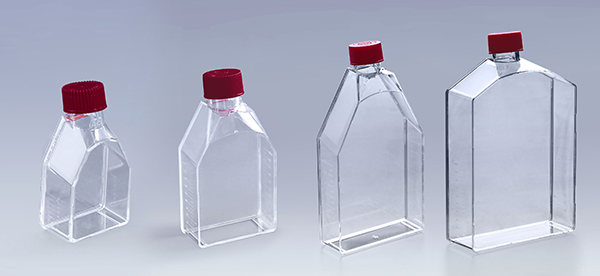
Understanding MDCK Cell Requirements
MDCK cells exhibit strong epithelial characteristics, including tight junction formation and polarized growth. To maintain these properties, they require:
Stable attachment to the culture surface
Even monolayer formation
Controlled environmental conditions
Consistent nutrient supply
A properly designed Cell Culture Flask plays a key role in supporting these requirements.
Key Factors for Optimizing MDCK Growth
1. Surface Treatment and Cell Attachment
Surface treatment is one of the most critical factors. A high-quality Cell Culture Flask with tissue culture (TC) treatment enhances hydrophilicity and promotes protein adsorption, enabling MDCK cells to attach quickly and uniformly.
Poor surface quality may result in:
Delayed attachment
Uneven cell distribution
Increased detachment during handling
2. Seeding Density
Optimal seeding density ensures proper cell-to-cell interaction and uniform monolayer formation.
Too low: slow growth and poor coverage
Too high: early confluence and altered cell behavior
For MDCK cells, starting with an appropriate density in a Cell Flask helps maintain healthy morphology and consistent proliferation.
3. Culture Medium and Supplements
MDCK cells are typically cultured in media such as MEM or DMEM supplemented with fetal bovine serum (FBS). Key considerations include:
Serum concentration for adhesion and growth
Antibiotics to reduce contamination risk
Optional supplements depending on application
Consistent media quality is essential when using any Cell Culture Flask system.
4. Incubation Conditions
Standard conditions for MDCK culture include:
Temperature: 37°C
CO₂: 5%
Humidity: >90%
Maintaining stable environmental conditions ensures optimal cell metabolism and growth within the Cell Culture Flask.
5. Subculturing and Passage Timing
Timely passaging is crucial for maintaining MDCK cell health.
Subculture at 80–90% confluence
Avoid overgrowth, which can affect cell polarity and function
Use gentle detachment methods (e.g., trypsin-EDTA)
A reliable Cell Culture Flask with consistent surface properties helps reduce variability during passaging.
6. Flask Design and Quality
Not all flasks perform equally. High-quality Cell Culture Flask systems offer:
Uniform surface treatment
High optical clarity for easy observation
Leak-proof sealing
Sterility assurance and batch consistency
These factors directly impact reproducibility and experimental success.
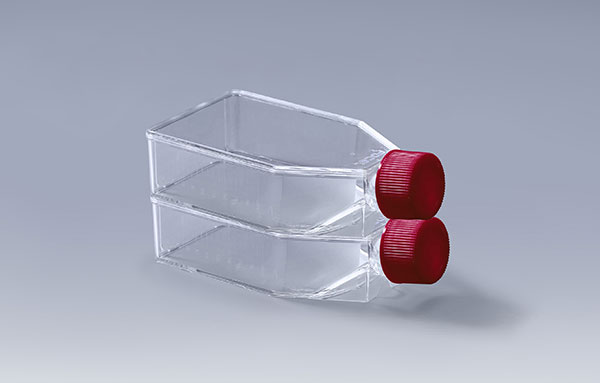
T75 TC-treated Cell Culture Flask
Common Challenges and Solutions
Uneven cell growth
→ Ensure uniform surface treatment and proper seeding technique
Poor attachment
→ Use TC-treated Cell Culture Flask and verify media composition
Cell detachment during media change
→ Handle gently and avoid strong pipetting forces
Variability between experiments
→ Use consistent flask batches and standardized protocols
Applications of Optimized MDCK Culture
Optimized MDCK growth in a Cell Culture Flask supports a wide range of applications:
Influenza and viral vaccine production
Drug permeability and transport studies
Toxicology testing
Epithelial biology research
Reliable culture conditions are essential for both research and industrial-scale processes.
Conclusion
Optimizing MDCK cell growth requires careful attention to surface quality, culture conditions, and handling techniques. A high-performance Cell Culture Flask provides the foundation for consistent cell attachment, healthy morphology, and reproducible results.
For laboratories and biopharma companies working with MDCK cells, investing in high-quality Cell Culture Flask solutions is a practical step toward improving efficiency and ensuring successful outcomes.
If you are looking for dependable Cell Culture Flask products for MDCK or other adherent cell lines, feel free to explore our offerings or contact us for more information










