Transient transfection is a widely used technique in early-stage protein expression, viral vector production, and functional cell assays. Among different vessel formats, the T75 cell culture flask remains a standard choice due to its balance between surface area, medium volume, and operational flexibility. However, achieving consistent and high transfection efficiency in a T75 flask depends on more than just reagents and protocols.
This article explores key factors related to the T75 flask itself that influence transient transfection outcomes and how they can be optimized.

Surface Uniformity and Cell Attachment
Uniform cell attachment is a prerequisite for efficient transient transfection. Variations in surface treatment across a T75 cell culture flask can result in uneven cell distribution, leading to localized differences in transfection efficiency.
A high-quality cell culture flask should provide:
Consistent TC-treated surface across the entire growth area
Predictable cell spreading and morphology
Stable attachment during medium exchange and transfection steps
These factors directly influence DNA uptake and expression consistency.
Growth Area and Seeding Density Control
Transient transfection protocols are highly sensitive to cell confluency. The defined growth area of a T75 flask allows researchers to calculate seeding density accurately, but only if the actual surface area matches the specification.
Inaccurate growth area or uneven geometry may cause:
Over- or under-confluency at the time of transfection
Increased variability between experiments
Reduced reproducibility across batches
Reliable T75 flask support precise cell density control, which is essential for protocol optimization.
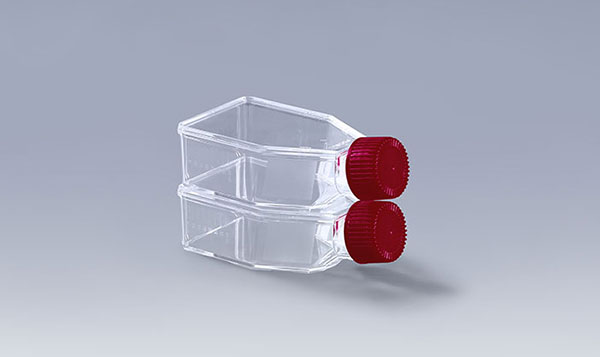
Recommended Medium Volumes for Cell Culture Flasks
Medium Volume and Mass Transfer
The recommended medium volume for a T75 cell culture flask is typically optimized to balance nutrient supply and gas exchange. Insufficient volume may stress cells, while excessive volume can dilute transfection complexes and reduce efficiency.
Proper flask design ensures:
Stable pH during transfection
Efficient oxygen and CO₂ exchange
Uniform distribution of transfection reagents
These parameters contribute to higher transient expression levels and more reproducible results.
Mechanical Stability During Handling
Transient transfection workflows involve multiple handling steps, including medium exchange and reagent addition. Poor mechanical rigidity or inconsistent flask sealing may disrupt cell layers and reduce effective transfection.
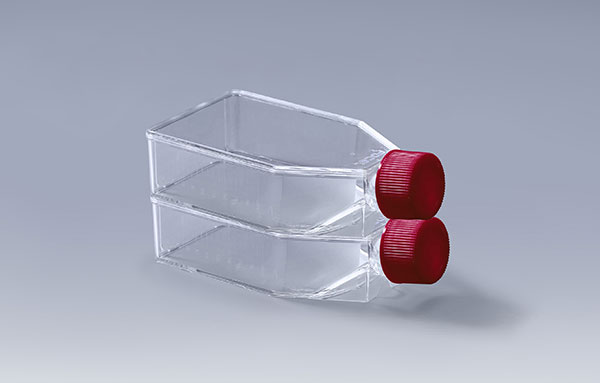
A robust cell culture flask design minimizes mechanical stress and supports consistent experimental execution.
Conclusion
Optimizing transient transfection in a T75 cell culture flask requires attention not only to biological variables but also to the physical and functional properties of the flask itself. Surface uniformity, accurate growth area, optimized medium volume, and stable design collectively contribute to higher transfection efficiency and improved reproducibility. Selecting a reliable T75 cell culture flask helps establish robust and scalable transient expression workflows.










