In modern biopharmaceutical production and life science research, the demand for scalable and efficient cell culture systems continues to grow. While the Cell Culture process often begins with small-scale systems, transitioning from a cell culture flask to a cell factory is a critical step for achieving large-scale cell expansion.

Starting Point: Cell Culture Flask
The Cell Culture Flask is the foundation of adherent cell culture. It is widely used in early-stage research, cell line development, and routine laboratory work.
Cell culture flasks offer:
Easy handling and observation
Controlled growth environment
Flexibility for small-batch experiments
However, as cell demand increases, flasks quickly become inefficient due to:
Limited surface area
Labor-intensive handling
High contamination risk when scaling manually
Challenges in Scaling Up
Scaling up is not simply about increasing volume—it requires maintaining cell viability, consistency, and reproducibility. Key challenges include:
Surface area limitation for adherent cells
Increased handling steps, raising contamination risks
Batch-to-batch variability
Time and labor costs
To overcome these limitations, advanced culture systems are required.
Transition to Cell Factory Systems
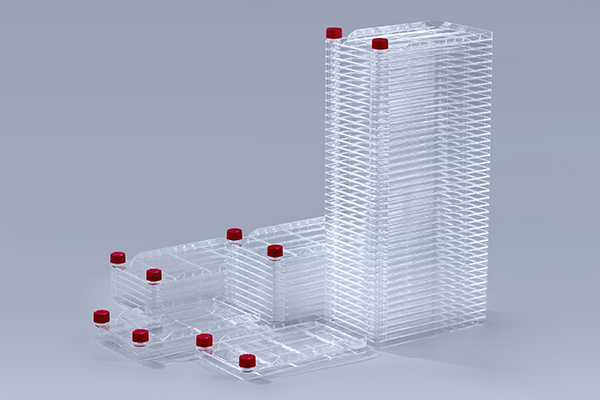
The Cell Factory is designed specifically for large-scale adherent cell culture. By stacking multiple culture layers into a single unit, it significantly increases the available growth surface without increasing the footprint.
Key advantages include:
1. Large-Scale Cell Expansion
Cell factories provide a much larger surface area compared to traditional flasks, making them ideal for:
Vaccine production
Cell therapy manufacturing
Biopharmaceutical applications
2. Improved Efficiency
Fewer handling steps mean:
Reduced labor costs
Lower contamination risk
More consistent results
3. TC-Treated Surface for Cell Attachment
High-quality cell factories feature Tissue Culture (TC) treated surfaces, enhancing:
Cell adhesion
Uniform growth
Reproducibility
4. Closed or Semi-Closed Systems
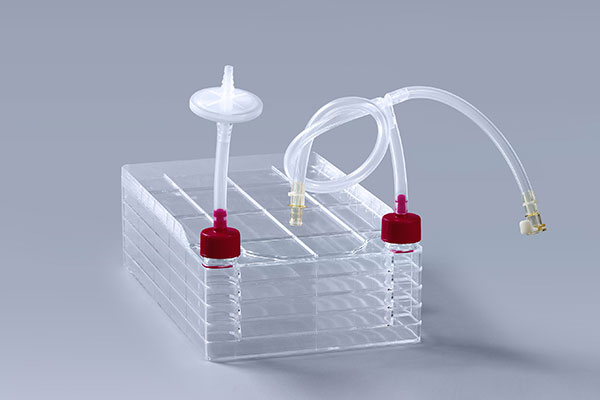
Many cell factory systems support tubing connections, enabling:
Safer media transfer
Reduced exposure to the environment
From Flask to Factory: When to Scale Up
Knowing when to transition is essential. Consider moving from flasks to cell factories when:
Cell demand exceeds flask capacity
Manual operations become inefficient
Consistency and batch control are critical
You are entering pilot or production-scale phases
Best Practices for a Smooth Transition
To ensure successful scale-up:
Start with optimized cell culture conditions in flasks
Gradually increase culture surface area
Use consistent media and protocols
Choose reliable, high-quality consumables
Conclusion
Scaling up from a cell culture flask to a cell factory is a vital step in bridging laboratory research and industrial production. By adopting the right culture systems, laboratories and manufacturers can achieve efficient, reproducible, and large-scale cell expansion.
For organizations seeking dependable solutions, choosing a trusted manufacturer of cell culture consumables ensures both performance and consistency throughout the scale-up process.










