Sterility and quality control are fundamental requirements for any Cell Culture Flask used in life science research and biomanufacturing. From early-stage cell expansion to regulated biopharmaceutical workflows, the performance of a Cell Flask is only as reliable as the sterility assurance and QC systems behind it.
This article outlines the key sterility and quality control standards that define a reliable cell culture flask—and why they matter for reproducibility, safety, and regulatory compliance.
Why Sterility Matters in Cell Culture Flask
Cell culture systems are highly sensitive to contamination. Even low-level microbial presence can:
Compromise cell viability and morphology
Alter metabolism and gene expression
Invalidate experimental data
Cause costly delays or batch failures
For this reason, sterility is a non-negotiable requirement for every Cell Culture Flask used in adherent or suspension cell workflows.
Sterility Assurance in Cell Culture Flask

Vented Caps in Cell Culture Flasks
1. Manufacturing Environment
High-quality Cell Flask is produced under controlled cleanroom conditions, typically classified environments that minimize particulate and microbial contamination during molding, assembly, and packaging.
Cleanroom manufacturing helps ensure:
Low bioburden prior to sterilization
Consistent product quality
Reduced risk of post-sterilization contamination
2. Sterilization Methods
Most Cell Culture Flasks are sterilized using validated industrial processes, such as:
Gamma irradiation
Electron beam (E-beam) sterilization
These methods effectively eliminate bacteria, fungi, and spores without leaving chemical residues that could affect cell growth.
Each sterilization cycle is validated to achieve a defined Sterility Assurance Level (SAL), commonly 10⁻⁶.
3. Sterility Testing
Finished Cell Flask typically undergo sterility testing in accordance with recognized standards to confirm the absence of viable microorganisms. This step provides confidence that each batch meets the sterility requirements expected by research and biopharmaceutical users.
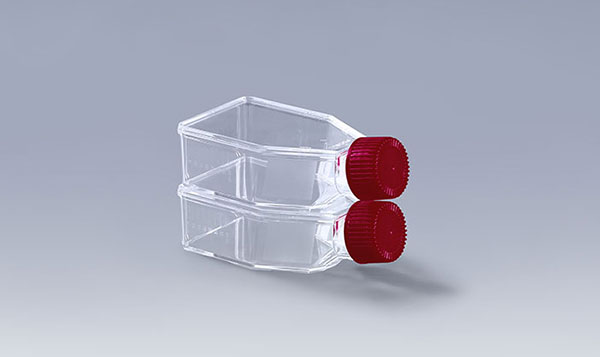
Recommended Medium Volumes for Cell Culture Flasks
Quality Control Standards for Cell Culture Flask
Sterility alone is not sufficient. A reliable Cell Culture Flask must meet multiple QC criteria to ensure consistent cell performance.
1. Raw Material Qualification
Cell Flasks are commonly manufactured from medical- or laboratory-grade polymers. QC begins with:
Verification of raw material purity
Traceability of resin batches
Compliance with biocompatibility requirements
Consistent raw materials reduce variability in surface properties and optical clarity.
2. Physical and Functional Testing
Quality control programs typically include tests for:
Dimensional accuracy and volume consistency
Leak resistance and cap integrity
Surface uniformity and absence of defects
These checks ensure that each Cell Culture Flask performs reliably during routine handling and incubation.
3. Surface Performance Validation
For TC-treated Cell Culture Flask, QC also evaluates:
Surface energy and wettability
Consistency of cell attachment performance
Lot-to-lot reproducibility
Uniform surface treatment is essential for adherent cell culture applications, where attachment directly influences growth and experimental outcomes.
4. Endotoxin Control
Low endotoxin levels are critical for sensitive cell types and downstream applications. Quality Cell Flasks are routinely tested to ensure endotoxin levels remain within acceptable limits, helping to prevent unintended cellular stress or immune activation.

Documentation and Traceability
Reliable Cell Culture Flasks are supplied with clear documentation, which may include:
Certificate of Analysis (CoA)
Sterilization validation information
Lot or batch traceability
These records are especially important for regulated environments such as biopharmaceutical development, cell therapy research, and GMP-adjacent workflows.
Why QC Standards Matter for Reproducibility
Inconsistent Cell Flask quality can introduce hidden variables into cell culture experiments. Robust sterility and QC standards help ensure:
Stable cell growth across batches
Reduced experimental variability
Greater confidence in data integrity
Smoother technology transfer and scale-up
For laboratories working across multiple projects or sites, standardized Cell Culture Flasks play a critical role in maintaining consistency.
Final Thoughts
A Cell Culture Flask is more than a disposable consumable—it is a foundational component of any cell-based workflow. Strong sterility assurance and comprehensive QC standards are essential for protecting cell health, ensuring reproducibility, and supporting reliable research and biomanufacturing outcomes.
When evaluating Cell Flask, sterility validation and quality control systems should be considered just as important as size, surface treatment, or price.










