When evaluating cell culture flasks, buyers often focus on growth area, TC treatment, cap design, optical clarity, and cell attachment performance. But for sterile laboratory consumables, several less visible quality factors are equally important.
Among them, sterility, endotoxin control, and DNase/RNase-free status are commonly reviewed when qualifying cell culture flasks for research, biopharmaceutical, vaccine, and other sensitive cell culture applications.
These indicators address different contamination risks and should not be treated as interchangeable.

cell culture flask
1. Sterility: The First Requirement for Cell Culture
Sterility means that the cell culture flask has been processed and released as a sterile product under the manufacturer's established quality system.
For cell culture, microbial contamination can quickly compromise an experiment or an entire culture batch. Bacteria, fungi, and other contaminants may affect:
Cell viability
Cell morphology
Growth rate
Medium condition
Experimental reproducibility
Downstream analysis
This makes sterility one of the basic requirements for disposable sterile cell culture flasks.
However, buyers should not evaluate sterility based only on a “sterile” label. They should also consider whether the supplier can support the product with appropriate documentation and batch identification.
Packaging integrity is also important. Even a correctly sterilized flask may become unsuitable for use if the sterile package is punctured, opened, or damaged during transportation and storage.
2. Endotoxin Control: Different from Sterility
A sterile product is not automatically endotoxin-free.
Endotoxins are associated primarily with the outer membrane of Gram-negative bacteria. They can remain present even when viable microorganisms are no longer detected.
For some cell types and sensitive biological workflows, excessive endotoxin contamination may influence cell responses and experimental results.
Endotoxin control may therefore be particularly relevant for:
Sensitive cell lines
Primary cell culture
Stem cell-related research
Cell and gene therapy research
Vaccine-related cell culture
Biopharmaceutical process development
Cell-based assays sensitive to inflammatory responses
When selecting a cell culture flask supplier, buyers should confirm whether endotoxin testing or control information is available and whether the stated limit is suitable for their intended application.
FDCELL cell culture flasks are controlled for endotoxin at
3. Why DNase/RNase-Free Status Matters
DNases and RNases are enzymes that degrade DNA and RNA. Their presence may not always produce a visible problem during routine cell growth, but they can become important when cultured cells are used for downstream molecular analysis.
DNase/RNase-free cell culture consumables are particularly useful when workflows involve:
RNA extraction
DNA extraction
PCR or qPCR
Gene expression analysis
Sequencing
Transfection experiments
Viral vector research
Molecular biology applications
For example, researchers may culture cells successfully but later extract RNA for gene-expression studies. In such workflows, controlling nuclease contamination throughout the process can help reduce unnecessary risks to sensitive downstream samples.
FDCELL cell culture flasks are manufactured and controlled to meet DNase/RNase-free requirements.
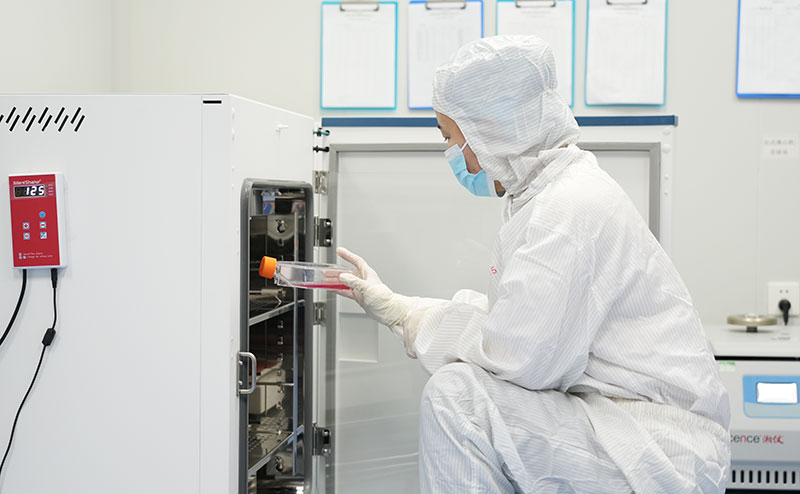
quality control and certificates
Sterility, Endotoxin and DNase/RNase Are Not the Same
These three quality indicators address different risks:
|
Quality Check |
Main Concern |
Why It Matters |
|
Sterility |
Viable microbial contamination |
Helps protect cell cultures from bacteria, fungi and other microorganisms |
|
Endotoxin |
Bacterial endotoxin contamination |
Important for sensitive cells and biological workflows |
|
DNase/RNase-free |
Nuclease contamination |
Helps protect DNA/RNA-related downstream applications |
A flask can meet one requirement without necessarily meeting all three. Buyers should therefore review each parameter separately according to the intended application.
What Should Buyers Ask the Supplier?
When qualifying cell culture flasks, procurement and laboratory teams can ask several practical questions:
Are the flasks supplied sterile?
Is sterility information available?
What endotoxin specification is applied?
Are the products DNase/RNase-free?
Is batch-specific documentation available?
Can the lot number be traced to quality records?
Is the sterile packaging clearly identified?
Can supporting quality documents be provided for supplier qualification?
For routine research, the required documentation may be relatively simple. Biopharmaceutical companies, vaccine manufacturers, distributors, and other regulated or quality-sensitive users may require a more complete documentation package.
Quality Checks Should Include the Flask Itself
Sterility, endotoxin, and DNase/RNase control are important, but they are only part of cell culture flask quality.
For adherent cell culture, buyers should also evaluate:
TC-treated surface consistency
Cell attachment
Cell spreading
Morphology
Growth uniformity
Flask flatness
Optical clarity
Cap and filter performance
Packaging integrity
Batch-to-batch consistency
A product that meets contamination-control requirements must still provide reliable biological performance under actual culture conditions.
This is why sample testing remains important when introducing a new supplier or changing from an established cell culture flask brand.
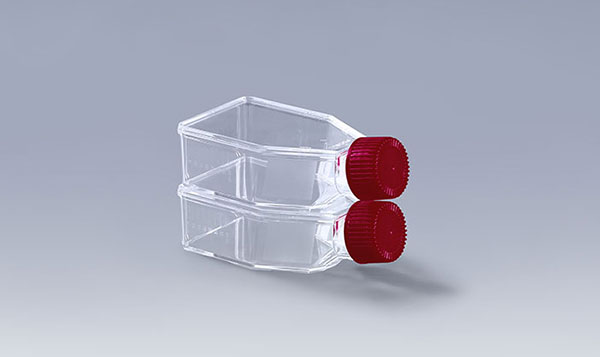
T25 TC-treated Cell Culture Flask
FDCELL Cell Culture Flask Quality Control
FDCELL supplies sterile cell culture flasks in T25, T75, T175, and T225 sizes for laboratory and biopharmaceutical applications.
Available options include TC-treated and non-treated surfaces, as well as vented and seal cap configurations. FDCELL cell culture flasks are DNase/RNase-free, with endotoxin controlled to
For customers evaluating an alternative cell culture flask supplier, product samples and relevant quality documentation can be used together with actual cell culture testing to assess suitability before bulk purchasing.










